Translators’ Introduction
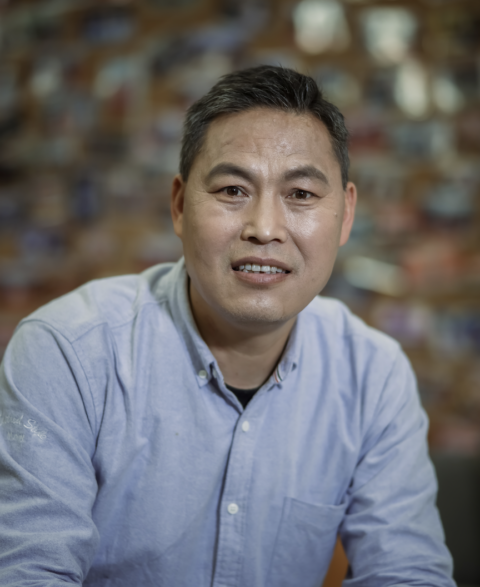 Rooted in the lived experience of labor, displacement, and survival, Nianxi Chen’s poetry gives voice to worlds too often left unseen. A former miner who spent 16 years working in northern China, Chen wrote many of his early poems underground, on discarded cardboard from boxes of explosives. The three poems in this selection reveal his remarkable ability to transform hardship into lyric witness: landscapes of mountain passes, ripening wheat, and boundless snow become sites where personal memory, collective suffering, and fragile hope converge. In Chen’s work, nature is never separate from human labor; instead, the land bears the imprint of toil, loss, familial devotion, and endurance. These poems invite readers into a poetic world shaped by the sacrifices of working people, yet sustained by beauty, resilience, and an unextinguished faith in human dignity.
/ / / /
The Gap Between Mountains
The gap’s old; grass makes it young again.
The sunset’s infinitely good; its last beams pass through the gap
to stop a gust of wind.
The sheep are descending clouds in the West.
The wild shandandan flowers hug in front and back,
pushing time’s carriage in either direction.
Those who travel far, stagger. Their backpacks are full of care.
The trip is as high as the mountain; as long as the river. One rests in the gap.
Looking back where the smoke starts: how many dead people talk again?
Where’s the world going?
Fate’s gap stretches over snow,
piggybacking over our heads.
From one gap to another,
our lives are stuck deep in the middle.
Winds and dust blow years, one after another, away.
⟐ ⟐ ⟐ ⟐
The Wheat Is Ripe
Eight hundred miles of cattle plowing the ripe grains.
Eight hundred miles of cattle lowing as dawn approaches.
The sky rises higher every moment.
On top of our heads a tile-blue hat
adds to the weight of Wanxi Basin.
From all directions laborers learn its lessons
and get more ignorant, too.
The coarse cloth of the human world
weaves wheat and mulberry silk
through dense or sparse texture where all sweat and stares are invisible.
The years pass silently. Only the grains can tell the world’s gain and loss.
Those laborers leave their surnames at home.
They disappear into wheat absorbed into stalk.
⟐ ⟐ ⟐ ⟐
Boundless Snow
The heavy snow arrives more urgently than the winter season.
There’s still a hint of warmth in the wind, leaves still cling to branches.
Like a prisoner interrogation,
as I lower my head, snow blankets the south mountains in white.
The snow is boundless but even more so
is the human world’s solid ground.
Winter wheat still tender but already stored with strength
to separate life from death making the days ahead clear.
Paper-cut window decorations illuminate the courtyard like human aspirations,
so much beauty and color.
Above the earth, the snow is warm.
Who is Snow’s forebear?
The smallpox fate-locked daughter?
The sheepherder who left and never returned?
When the north wind pushes the world’s season into a corner,
they come back to visit us.
Sparrows fly higher than snowflakes. Covering the jujube tree,
they rest in a quiet, thick layer.
The snow makes the birds peaceful, wise,
becoming a first important lesson for a group of children.
The snows are boundless vast as five hundred miles of peonies,
plus thirty mountain tunes. Is it enough to heal
sorrows that live at the foot of the mountain?
/ / / /
豁口
豁口老了 草木使它再度年轻
夕阳无限好 夕阳穿过豁口
把一阵大风拦下
羊群是西下的云朵
一片山丹丹前呼后拥
推来时间的马车
远行的人脚步踉跄 背包里打满叮咛
此去山高水远 豁口上且小歇
回望烟起处 多少亡去的人重又开口
哪里是人间的去处
命运的豁口绵延大雪
捎带飘满我们的头顶
从一个豁口到另一个豁口
中间是我们深陷的一生
风尘茫茫 吹散一茬又一茬年景
⟐ ⟐ ⟐ ⟐
麦子熟了
八百里伏牛 麦子熟了
八百里牛哞 就要亮了
天 一晌比一晌高
瓦蓝瓦蓝的帽子戴上头顶
加重了宛西的重量
让四方来的人 对它倍加熟识
又更加一无所知
人世粗布
经纬着小麦和桑麻
纹理疏密 暗藏汗水和眼神
岁月无声 唯有麦谷说出人间亏盈
劳动的人 把姓氏放在家里
隐身麦子 成为它们的一部分
⟐ ⟐ ⟐ ⟐
大雪苍茫
大雪比时令来得紧急
风还有几分暖意 叶子还在枝头
像一道拷问
低头之际 雪就落白了南山
大雪苍茫 比大雪更苍茫的
是人间泥土
冬麦还嫩 但已贮备了力量
它把生死分开 让身后的来日鲜明
窗花照亮庭院 人间的向往
总是色彩美艳
尘世之上 大雪温暖
它的前身是谁
是命锁天花的女儿
是赶羊一去没再回来的儿男
在北风把人间逼到墙角的季节
回来 看望我们
麻雀比雪花飞得高 安静的枣树上
落满厚厚的一层
雪让它们安静 明事
成为一群孩子最初的课程
大雪苍茫 苍茫得像五百里芍药
加上三十支山调 够不够医治
低处的愁苦