on they and Hafni Says, novels by Helle Helle, translated from the Danish by Martin Aitken
Commenting on Artie Dam, the high school teacher in her novel The Things We Never Say, Elizabeth Strout said, “He’s so ordinary but he’s not, because all ordinary people are extraordinary.” More pertinently for me, there is nothing stranger than the ordinary; it waits to be noticed without requiring us to lard it with charming significance. Peculiarity may yield to opacity; unfamiliarity may morph into recognition. The ordinary may inspire speculation, chance, and the unconventional. The novelists I most admire and need are those who create narratives that do something rather than labor to mean something – those who allow me to find my way, and who find their own way as they compose – those who don’t attribute more to a character than anyone can know about anyone else (unless it’s plainly speculative).
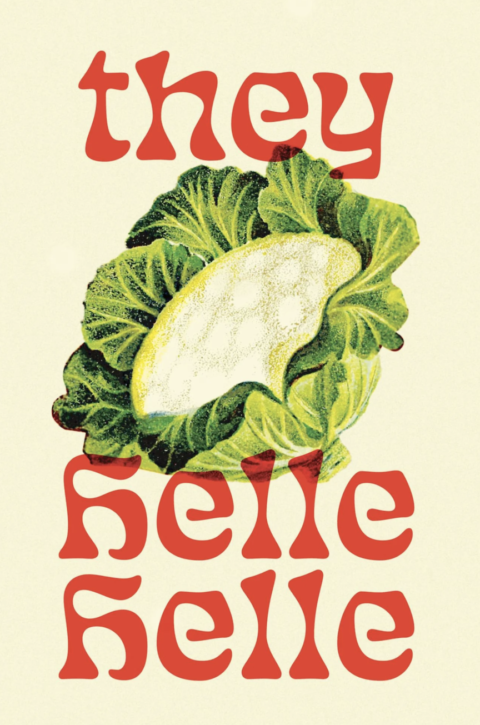 In Helle Helle’s they, a mother and her 16-year old daughter, both unnamed, live above a hair salon in the southern Danish seaside town of Rødby. They have moved around a lot; there is no mention of the father, no backstory. The mother works in a shop. They get along well, there are no flare-ups, just occasional irritations. Soon it becomes clear that the mother has a terminal illness. Even so, the daughter goes on outings with her friends and has intimate but unremarked moments with boys. Helle chose to cast the story in the present tense, such that past experiences, however briefly related, haven’t dissipated – and the present moment blocks thoughts of the future.
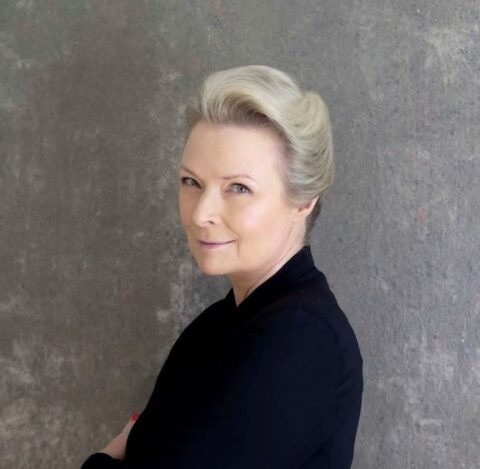
they is Helle’s eighth novel, published in Denmark in 2018. Helle (b. 1965) wrote short stories after graduating in 1991 from the Forfatterskolen art school in Copenhagen. After publishing an initial volume of short stories in 1996, she moved on to the novel, publishing House and Home in 1999. Eight more followed; three of them, translated by Martin Aitken, are available for Anglophones. From the outset, critics have been piling on adjectives to describe the seemingly modest surface of her work – “minimalist,” “unadorned,” “understated,” “observant.” And almost always, one hears the critics emphasizing her respect for the “ordinary lives” of her characters as her signature value and focus. Unable to find much to say about plots or so-called inner lives, some reviewers tag her as an “experimental” writer without remarking on what actually comprises the experiment.
On the first page of they, the daughter arrives at their apartment with a cauliflower. On the final page, the mother says, “But a cauliflower gratin would be nice for tomorrow.” In between those non-linear moments is the voice of an unnamed person who, for a reason not suggested by narrative tone or urgencies felt by the characters, relates what could be seen and heard by them and others. Dialogue is spare:
“The day before school starts she insists they stay awake and go down into the yard around midnight. There’s going to be a meteor shower, she hears someone mention it. Her mother brings a cushion. Unfortunately, the yard is partially illuminated by a floodlight at the beer depot. Her mother immediately lies down on the cushion, she folds her hands on top of her chest, her face glistens with night cream.
‘That’s planes,’ she says. ‘It hasn’t started yet.’”
Is the narrator unwilling or unable to dig in deeper? Is there even a “deeper” to dig into? No matter, the telling amounts to the same thing: a measured distance from the thing once perceived or remembered, as if (but not) recalled by the daughter now matured. A satisfaction with what seems actual, adequate. It’s a kind of poignant failure to add things up – and at the same time, a fullness, a surrender to immediacy. A refusal to attend to the impulse for resolution – while a kind of cool solace is on offer. Helle is simply less interested in shaping action and organizing information about her characters than in sustaining the shapes and sounds of feeling within the material. The mother is dying, the daughter is a teenager capable of cooking a cauliflower gratin. The reader may find the novel’s effects startling or unsettling or calming or chilling or numbing, sometimes alternately so. This is Helle’s generosity: a chance to query the source of one’s response.
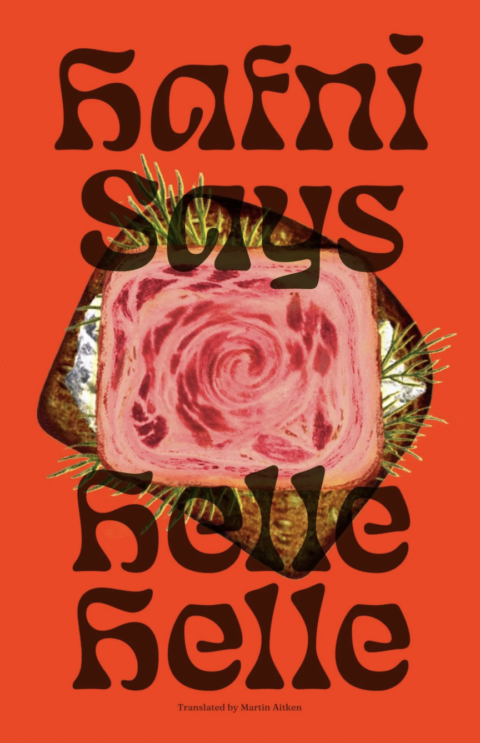 The daughter has a school friend named Hafni. In Hafni Says, which was published in Denmark in 2023, Hafni is now 48-years old. After you note the title and go to page one, the first, sentence, a fragment, reads “that she’s getting divorced.” We hear nothing about the husband. She has two children, barely mentioned. ”She’s been a telemarketer, a store assistant, a daycare assistant, on a job training program, and other things besides.” She is prone to panic attacks and angst: “In a split second, she can’t describe it any other way, the darkness descends on her and fills her respiratory tracts. But she carries on talking and can still laugh too.” And talk she does – or did, since her one-way conversation is being recalled by someone. She is depicted as driving solo around Denmark (“for as long as she can remember, she’s been wanting to go on this smørrebrød tour”) and has stopped at a rest area to make a phone call to the unnamed narrator who redirects everything toward us. It’s all pitched in the present tense.
Hafni’s habit is to enter a situation, decide how to proceed, and then change her mind. Reassessment without conclusion. She began training as a cosmetician and quit the course. “Eternal embarrassment pursues her. Or shame is probably what it is” – this isn’t the narrator’s insight but something stated by Hafni. The moment never seems quite right for anything …
“Speaking of which, she knows it’s not the ideal time to phone. She says: You’ll have better things to do on a Sunday afternoon. Some geese honk, or perhaps they’re swans. She saw a black swan in the harbor at home, she often goes down there in her old coat from Only. She gave it to the charity shop the day before going away, but changed her mind and went back for it an hour later. She told them it was her sister’s and that her sister had cried.”
If they is a novel of adequacy and acceptance, Hafni Says is a story about insufficiency and refusal: “Hafni says: I don’t want to be me. I want to change who I am. I don’t know how to change who I am.” But both novels are invested in observation – just not for the purpose of reflecting credit on the observer for having an appreciative, astute eye. Hoping to create momentum towards some settlement of her temperament, Hafni becomes an object swept up in the stream of her own energy. She mismanages her itinerary and finances. Nevertheless, she persists – and sometimes puts things in perspective. She recalls a musician she met some time ago – the last time they were together, he came to her place, she lit candles:
“After a while something had to be said, so she said: Do you like classical music? Silence. Then he said: Do I like classical music? It was twenty-five years ago as mentioned, and now she can’t understand why she had … to drag herself through this recollection that’s tormented her at least once a month ever since, and which for years was to blame for her only being able to listen to talk radio.”
 Helle and her narrator want us to experience these desires and anxieties through the steady momentum of the prose and Hafni’s eye and response, not through the intrusions of popular ideology. “It’s the way she’s been built. The word been is probably decisive here.” (Maybe the same goes for Helle.) Hafni says, “Do you know the feeling, when over the years you’ve gradually stopped looking forward to socializing …?” On her tour, she does interact with others, but cursorily. Yet here she is on the phone, telling everything to someone we must presume she knows well and trusts. By giving the same weight to every detail of the trip, the narrator creates the illusion of a total experience, both limited and heightened through this vivacious version of Hafni’s call.
[they, published by New Directions on February 10, 2026, 128 pages, $16.95 paperback; Hafni Says, published by New Directions on September 15, 2026, 144 pages, $16.95 paperback]
⟐ ⟐ ⟐ ⟐ ⟐
on Carousel by Sarah Minor
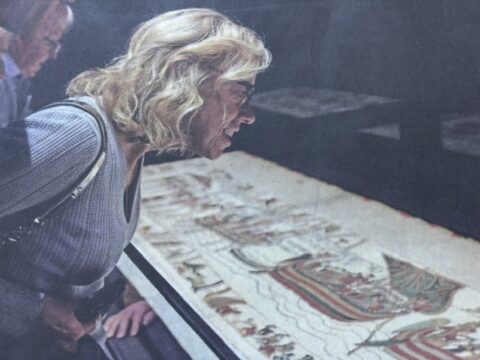
Before the exhibition of the Bayeux Tapestry at the British Museum closes next summer, more than a million visitors are expected to take a look. The 230-foot-long embroidered cloth, on loan from France, depicts events culminating with the Norman conquest of England in 1066. The first known written reference to the Tapestry is dated 1476. The Tapestry is but one of many artifacts and artworks considered by a “professor” lecturing, on both Zoom and in class, on the “History of the Panorama” in Sarah Minor’s Carousel. An unnamed narrator describes the proceedings as the “jumpy professor known for tangents” notes that for several centuries, humans have yearned for a wider, more inclusive view of things and events. As for the women who stitched together the illustrated pieces, “It was the spectacle of their labor, its sheer and continuous length, that made the not-tapestry’s message a formal one about destiny, ongoingness, cause and sacred effect. But the cloth itself was built in short pieces.”
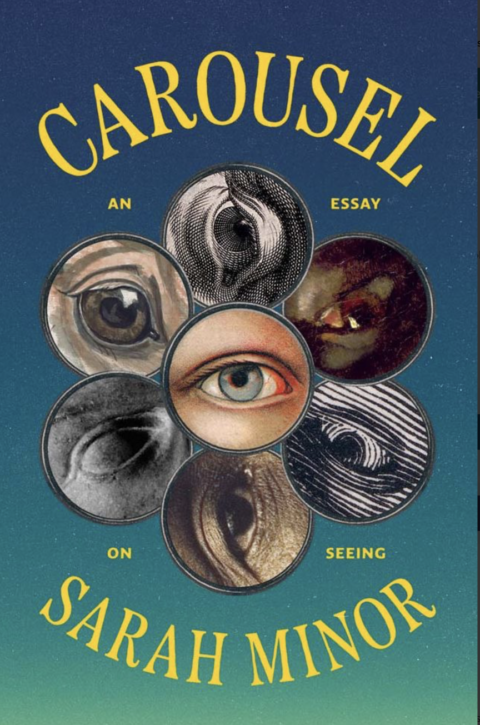 What is afforded by the lofty view, what forfeited? Why do we want to see more than our eyes can access? Even so, the professor tells her students that “Barthes insisted … that the experience of seeing a landscape from a great height, rolled out like a carpet, would always be a type of seeing broken down into smaller moments.” The macro-view may be an illusion. And that is the preoccupation of Carousel, subtitled “an essay on seeing,” a series of small but striking moments of speculation, anecdotes, and history that pass by, or that the reader passes as if on a text-carousel.
The last few years have delivered a shelf-load of books on sensory perception, especially regarding sight, sound and smell. Minor’s project has a fellow traveler in works such as Edward McPherson’s Look Out (Astra House, 2025), which considers the psychology behind aerial viewing and the fetishization of distance-seeing as a path to truth and certainty. There is an urgency embedded in these works – perhaps a fear that experience is compromised and warped by the attractions of a wide world accessible through our phones. We are querying our networked lives to ask “what comprises an experience?” For Minor, the question is “whether there exists a continuous attempt at seeing tied to an inherent, human need for overview” – and her method of instruction aligns with and enhances the question itself through incisive page-length micro-essays on an array of topics that give us much to look at, one word or glance at a time. Carousel, with its jump-cuts and fortuitous leaps, is itself a mode of seeing: “If, as the psychologist Oliver Burkeman says, our living is determined by attention, ‘We don’t have time, we are time,’ then writing is not only the conclusion of that attention. Writing is an act of looking that condenses that attention for another set of eyes.”
The narrator reiterates what the professor has to say about the Bayeux Tapestry, the Comet Book of the 16th century (each comet was a portent), the blocked window in Magritte’s The Promenades of Euclid (1955), the cyclorama in the Natural History Museum, John Henry Ronge’s experience in 1865 of drifting perilously in a hot-air balloon, the screen on the professor’s treadmill at the gym showing a video of wooded paths, sketched vistas of Napoleon’s battlefields, the first motion-picture camera, and several more subjects, all dealing with “the illusion of seeing all.”
These teaching moments are interrupted and informed by flash pieces about the students, now attending class at the post-Covid classroom, and by quick views of the professor’s life and memories, including flashbacks to the professor’s grandfather Sky whose Lewy body syndrome affected his vision and comprehension. To see more, to see differently or innovatively – the historical facts and insights stream by, but what accumulates in Carousel? And that’s just it – I’ve been trained to expect an amassed significance. But Minor wants us to experience and assess our demand for such experience – and she ultimately suggests, however on a slant, that it’s time to self-assess:
 “The climate futurists say that humans are living, temporarily, with chins set over our shoulders, longing for the unmarred planet by imagining we live there still, refusing to abandon the kind of wealth that relies on the suffering it masks. The solution is a theoretical swivel, an anti-denial, a break in that promise. Not a gaze image-stitched retroactively, but a new self-portrait, the self as a body in sequence.” In the meantime, we’re all being seen: “But what her students won’t say is that they’re tired of being recognized, seen in ways they don’t control. That for them there has only ever been persona, the self lived in parallel, bifurcated on and off screen, why not at the neck?” So they make headless art pieces.
Perhaps the impetus for the professor’s extended lecture is a memory – “The professor is a girl again, moving in a circle, carrying a long pole in her left hand. The time is 8:00 pm, the horse is wooden, and the country is France, where she’s visiting family on holiday. She’s too old for this game but the operator lets her ride anyway, even after she pierces the suspended ring twice.” The Aztecs, we hear, built their Game of Flyers, too. In Byzantium there was a carousel used for combat training. But “by the time war was faster than horses, the carousel had become a children’s toy.”
[Published by Yale University Press, on July 21, 2026, 176 pages, $28.00 hardcover]
⟐ ⟐ ⟐ ⟐ ⟐
on Blood Money by Anna Seghers, translated from the German by Lucy Jones
Several years after the defeat of Hitler’s fascist state in 1945, a man named Kurt Zeisser, who was 13-years old in 1930, recalled his time as a member of Hitler Youth: “There was no pressure on me by my father to join the Hitler Youth – I decided to join it independently simply because I wanted to be in a boys club where I could strive towards a nationalistic ideal … There were no social or class distinctions, there was no direct political indoctrination until later.” This is the world of Anna Seghers’ 1933 novel Blood Money (Kopflohn), a reference to the 500-mark bounty placed on the head of a young man who has appeared in the village in southern Germany where the action takes place. The poster seen around town reads:
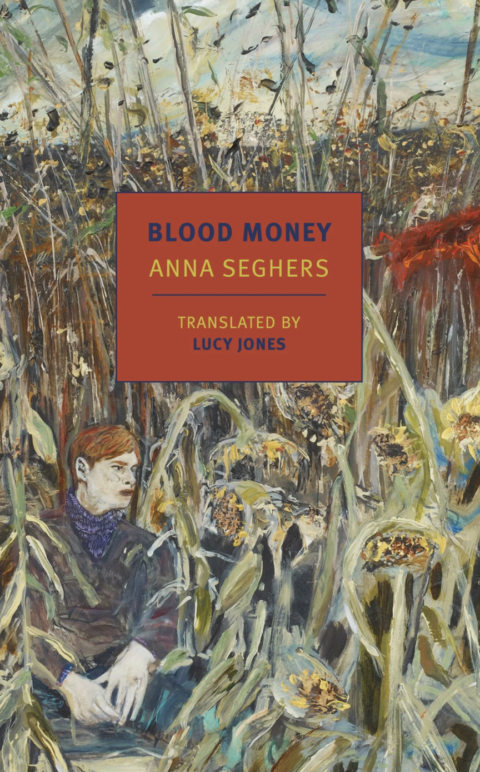 “On April 3rd, the twenty-year-old man pictured above, Hans Schulz from Leigzig, stabbed a policeman to death in the aforesaid locality during a so-called ‘Hunger March.’ The fugitive H.S. was wearing a blue shirt, a pair of shorts, a jacket, and a cap.” Calling himself Johann Schulz, the fugitive turns up at the farmhouse of Andreas Bastian and his family; they take in the stranger. The economic Depression permeates the life of the novel’s characters; the Hunger March may have been organized by the socialist SPD party. (Seghers joined the Communist party in 1928 and was married to a Hungarian Communist.)
Blood Money is an ensemble novel, devoting attention to a range of characters, most of whom have been hardened, not only by the demands of hardscrabble farming but also by the poverty occasioned by the economic distress of the early 1930’s. Some of the men, like Bastian, survived WWI only to contend with poverty. Their wives suffer from mistreatment and violence. In the background, a radio broadcasts a speech by Franz von Papen, German’s chancellor in 1932 who would go on to help Hitler grab power. The town’s inn is the story’s central location. Here a villager named Koesslin organizes a fund raising event: “You Bastians, give us fifty pfennigs for the National Socialists’ election fund. I know, it’s hard for you. But take a minute to think who you’re giving it to. It’ll be put into Adolph Hitler’s hand, where it’ll go to good use. He’ll give your children land and bread in return.” To which Bastian replies, “Son, if I had fifty pfennigs to spare, I’d buy something for my children right now.” The well-dressed Hitler Youth boys arrive in sturdy boots: “The sight of these things alone made some farmers wonder if it was a good idea to dissuade their boys so sternly from joining something that might be useful.”
 But Blood Money, for all its political portentousness, isn’t a screed-as-novel. In fact, Seghers gives more latitude to portraits of relations between men and women – girls targeted for marriage to boys who seek advantages of status, a woman who contemplates ending her loveless life, the attempts of indigent men to gain meager advantages. And then there is the uncertain future of young Schulz. Through Lucy Jones’ translation, Seghers’ narrator maintains a dispassionate tone, her unadorned language aptly suited to tart observation and overhearing brief conversation. The ultimate effect is immersive.
Anna Seghers (1900-1983) was born in Mainz to a Jewish family. The Gestapo arrested her in 1933 in response to her previous work, but she was able to leave Germany and completed Blood Money in Zurich. In 1941 with a Mexican visa in hand, she sailed westward from France with fellow escapees André Breton, Victor Serge and Claude Lévi-Strauss, and lived in Mexico until 1947 when she returned to Berlin. Publishers Weekly says Blood Money portrays the “moral unraveling” of pre-Hitler Germany – but it is the mundanity of lives that provides the force here. When the villagers commit immoral acts, they are of the ordinary kind. The actual poison seeps in from the outside.
[Published by New York Review Books on September 22, 2026, 192 pages, #$16.96US/$24.95CAN paperback]
(The Kurt Zeisser citation quoted above may be found in The Nazi Seizure of Power by William Sheridan Allen)