Translator’s Note
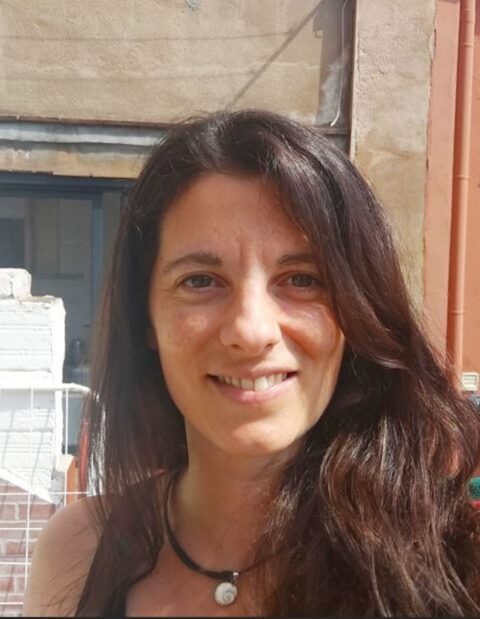 “Stop Dying” originally appeared as “Deixar de Morir” in Núvol and won the “most read story” prize as part of the Catalan digital magazine’s 2025 short story competition. Aina Cabau Vallverdú’s speculative flash fiction imagines what our world might be like were it not governed by screens and a constant feeling of never having or doing enough. Cabau’s concise yet descriptive language drew me to this piece, alongside its hope for a world that prioritizes our humanity. The story highlights the growing social disconnection among strangers through memories of a time when leaving people to die of hunger or cold was commonplace, and while the narrative does not name a particular city or town, it would be easy for readers to imagine an over-touristed Barcelona or any place money and power prevail. As she explores her new life, the story’s protagonist discovers abundance through human connection, mutual care, and empathy.
— Novia Pagone
⟐ ⟐ ⟐
Stop Dying
Day 1
When I wake up, it’s silent. Not the heavy silence of an empty hospital room, full of a machine’s urgent whispers, but pure silence, like a forest early in the morning with some bird murmuring all is well.
The bed is hard. My hands are warm. I get up and walk barefoot over a wood floor that doesn’t creak. Everything is simple: a table, two chairs, a ceramic mug. Outside, the sun is warm but doesn’t burn. The sky looks freshly washed just for me.
I’m surprised not to be in a hurry, not to feel the anxiety. My head doesn’t even feel foggy. I go out and the people I see are walking, chatting, smiling. They are on foot, on bicycles. On horseback? Well, yes, that, too. Suddenly, I realize what feels off. There are no cars. No sounds of motors.
An older woman greets me by name. I don’t know her, but she knows me. She offers me her hand hesitantly; I give her mine. She smiles at me, and her eyes communicate as if we were family. Without saying anything, she guides me slowly toward a shop. It’s a small, cozy space, with warm lighting and a playlist that matches the interior. There are food and various other products.
The woman stops in front of some shelves displaying personal care items. There are just one body soap and one shampoo. They smell like herbs. “They’re made by a local girl named Aina. She also makes balms for muscle pain and lacerations,” she tells me. I just look at her. “It could be good for your scar.” I don’t know what scar she’s talking about, but I thank her.
The fruit is in season. The vegetables, too. There’s hardly any need to choose. There are no brands, just food. Something inside me relaxes. I feel … light.
Day 5
There’s a small school on the square. The children play while the adults work in the field, in the workshop, or at the bakery. The only shrieking is that of the children.
Everything happens at its own pace. The baker closes up shop when the day’s bread runs out. Some days he goes to the park to play with his children, others to sit by the sea.
Whenever I can, I go with him. Today we talked about the wind, cloud formations and how the world was before.
Day 10
There’s a lot of talk here about “the before times.” I also remember it. The schedules, the hurry, the screens, the receipts. That constant feeling of chasing after something you would never catch.
I remember the news, the diagnosis, the word: uncontrollable.
My body betraying me, the cells multiplying out of place, as if they wanted to escape.
And after … nothing. It’s difficult to explain. It’s like I passed through a door without realizing it. There weren’t lights or tunnels, just a progressive calmness. The pain dissolving while I slept.
And when I woke up … here I was.
Here, where people look each other in the eye. Where no one dies of cold or hunger. Where everyone has shelter.
Where it’s not necessary to deserve life because life just is.
I often cry inexplicably and then laugh.
“You are thawing out,” they tell me, as if my heart were unfreezing a little at a time.
Day 15
Perhaps this place is what we could have made of our world if we hadn’t lost ourselves.
Without incentives or punishments. Just … life but lived.
Now I know. I haven’t been born again.
I simply stopped dying.
/ / / / /
Deixar de morir
Dia 1
Quan em desperto, hi ha silenci. No el silenci pesant d’una habitació d’hospital, ple de màquines xiuxiuejant la seva urgència, sinó un silenci net, com el d’un matí al bosc, amb només algun ocell que murmura que tot està bé.
El llit és dur. Les mans, calentes. Em llevo i camino descalça sobre un terra de fusta que no grinyola. Tot és senzill: una taula, dues cadires, una tassa de fang. A fora, el sol escalfa però no crema. El cel sembla acabat de rentar per a mi.
Em sorprèn no tenir pressa, no sentir neguit. Ni tan sols tinc el cap emboirat. Surto i veig la gent que camina, xerra, somriu. Van a peu, en bicicleta. A cavall? Doncs sí, també. De sobte m’adono de l’estranyesa: no hi ha cotxes. Cap soroll de motors.
Una senyora gran em saluda pel meu nom. Jo no la conec, però ella a mi sí. M’ofereix la mà amb una mica d’indecisió; li apropo la meva. Em somriu, i els seus ulls em parlen com si fóssim família. Sense dir res, em guia a pas lent fins a una botiga. És un espai petit, acollidor, amb llum càlida i un fil musical que s’hi harmonitza. Hi ha menjar i productes diversos.
La senyora s’atura davant d’uns prestatges amb productes de cura personal. Només hi ha un sabó pel cos i un xampú pels cabells. Fan olor d’herbes. «Els elabora una noia d’aquí mateix, l’Aina. També fa ungüents per a dolors musculars i talls de pell», em diu. La miro. «Et pot anar bé per la cicatriu.» No sé quina cicatriu vol dir, però li agraeixo.
Les fruites són de temporada. Les verdures també. No cal escollir gaire. No hi ha marques, només aliments. Alguna cosa dins meu descansa. Em sento … lleugera.
Dia 5
Hi ha una escola petita a la plaça. Els infants juguen mentre els adults treballen al camp, al taller o al forn de pa. No se senten més crits que els de la canalla.
Tot passa al seu ritme. El forner tanca quan ha acabat el pa del dia; alguns dies se’n va a jugar amb els seus fills al parc, d’altres, a seure a la vora del mar.
Sempre que puc, l’acompanyo. Avui hem parlat del vent, de les formes dels núvols i de com era el món d’abans.
Dia 10
Aquí es parla molt «d’abans». Jo també el recordo. Els horaris, la pressa, les pantalles, els rebuts. Aquella sensació constant de córrer darrere d’alguna cosa que mai arribava.
Recordo la notícia, el diagnòstic, la paraula: fulminant.
El meu cos traint-me, les cèl·lules multiplicant-se fora de lloc, com si volguessin escapar-se’n.
I després… res. Em costa explicar-ho. És com si hagués travessat una porta sense adonar-me’n. No hi va haver llums ni túnels, només una calma progressiva. El dolor fonent-se amb la son.
I quan em vaig despertar … ra aquí.
Aquí, on la gent es mira als ulls. On ningú es mor de fred ni de gana. On tothom té casa.
On no cal merèixer la vida perquè la vida simplement és.
Sovint ploro sense motiu, i després ric.
«Estàs desgelant», em diuen, com si el cor se’m descongelés a poc a poc.
Dia 15
Potser aquest lloc és el que hauríem pogut fer del nostre món si no ens haguéssim perdut.
Sense premis ni càstigs. Només … la vida, però viscuda.
Ara ho sé: no he tornat a néixer.
Només he deixat de morir.