“Anyway, that’s what she said.” This statement by Terese Svoboda’s husband, Steve, about his mother, Patricia Hartwell (née Lochridge), appears on the first page of Hitler and My Mother-in-Law. He references a 1945 photo that Hartwell showed Svoboda when they met. She pointed to a pile of ashes, ostensibly Hitler’s. Or were they? Working for the US Office of War information, Hartwell was in Berchtesgaden, not in Berlin where Hitler died. This photo serves as leitmotif, a signal from the start that we’re on shaky ground regarding verifiable facts.
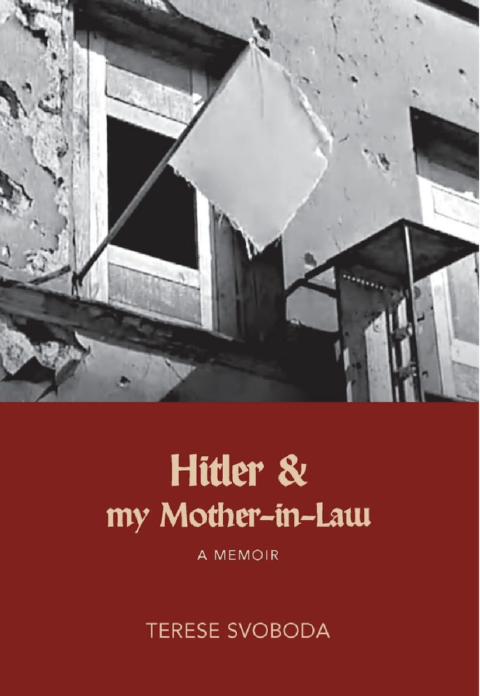 Svoboda is the author of 24 books, including fiction, nonfiction, poetry and translations. Her storyteller acumen integrates the text’s two impulses — her personal story and Hartwell’s biography, the latter supported by research skills that were first evident in her earlier biography of modernist poet Lola Ridge, Anything that Burns You. Svoboda resurrects her mother-in-law to “learn the truth about her in the context of her times, her haunting of her sons; of course some truth about me, since I suspect Steve’s attraction to me has something to do with my similarity to his mother, both of us professional writers and women who made a few foolish decisions in love, and above all, to sort the peculiarities of what truth means today.”
Eschewing chronology, the narrative moves adroitly between a number of themes and time periods. Svoboda manages these materials through artfully arranged chapters with titles like “Addiction” (alcohol in the Hartwell and Svoboda families; also a writerly pastime), “Authenticity” (fake art), “Witch Hunts” (McCarthy and the KKK), and “Hitler.” Her voice is alternately pointed — “Complicity is the shrapnel of suicide, everyone is guilty” she writes of the Germans who took their lives in the aftermath of the Holocaust — and ironic — “Now, in the age of Photoshop, images are even less persuasive because the possibility to manipulate them is endless. Hitler’s ashes? Easy.” Her mix of reportage with intimate reflection propels the reader into both women’s experience.
First, Pat’s story. In chapter two, we learn that she attended the University of Texas at age 15, graduated from Wellesley College, and earned a master’s degree from Columbia’s School of Journalism. She maintained that she had been accepted to Harvard Law School in 1936, despite the fact that Harvard did not accept women until 1950. Svoboda discloses the discrepancy but adds possible cover by suggesting Pat could have gone to the Graduate School of Education. Hartwell claimed that Eleanor Roosevelt invited her to tea at the White House, and her letters cite FDR as a “great personal friend.” Did the experience of polio she shared with the president shape this belief, even as there is no evidence for either Roosevelt connection? The author digs, questions, and comes up empty handed. But the search reveals her complex affection cum skepticism toward her mother-in-law.
Svoboda’s research establishes some indisputable facts. Hartwell was the first woman hired for a CBS radio news team, assigned to Edward R. Murrow. As a pioneering journalist in Europe during WWII, she was the first woman reporter to arrive at Dachau, and astonishingly, was a postwar mayor of a German town. She worked for UNICEF, then took a position as VP of a major public relations firm, founded the Scottsdale Art Center, and later, headed the Hawai’ian Arts Council. Along the way, she married twice and gave birth to four sons, including Svoboda’s husband. She seemed adept at balancing family life with an accomplished and varied career in an era of doors closed to women.
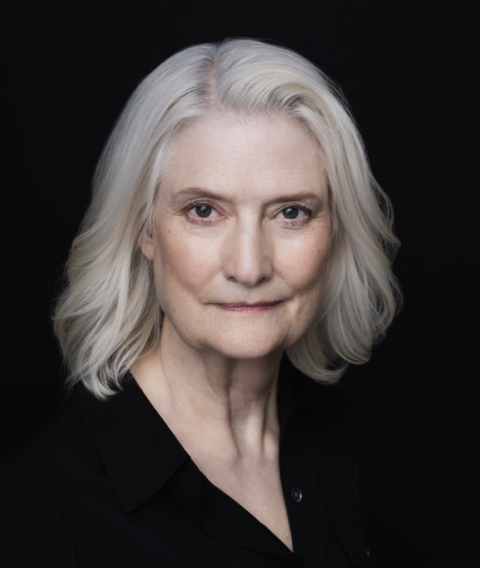 The author can match her at every turn. One of nine children from a Bohemian enclave in Nebraska — the eastern European, not Parisian-style Bohemians — Svoboda comes across as intrepid, determined, and accomplished. She married twice before meeting Steve, the first to a filmmaker with whom she shared an adventure documenting the Nuer in Sudan. Svoboda later translated their songs, an experience that formed the core of her first novel. She went on to produce and win awards for videos, and received a Guggenheim fellowship, a Pushcart Prize for an essay, the O. Henry award for the short story, and the Graywolf Nonfiction Prize. Like her mother-in-law, Svoboda balanced family life with those attainments. As the mother of three children, one of whom died young, she writes passionately of motherhood. Her devotion to her children and to Steve pulses through the book.
You might see parallel lives here, a daughter-in-law grateful for the model provided by her husband’s mother. “I should have gotten down on bended knee and thanked my mother-in-law for banging her head against that patriarchal ceiling,” Svoboda writes. “Should have” are the operative words. Hartwell often left her sons to be tended by an abusive step-father.
We’re now in murky terrain. Which way does the scale tilt in Svoboda’s mix of admiration for Hartwell with resentment at her abandonment of her sons? Svoboda witnesses the aftermath of that treatment in her husband’s life, yet she expresses sympathy for what her mother-in-law faced in a world of entrenched sexism. She probes the patriarchal effects on mothers, then and now, and the complications of inter-familial relations. Watch for the mother-in-law jokes, which might make you the toast of a cocktail party — or get you banished.
The impetus behind all memoir, the author says, is getting to the truth. She therefore interrogates her own experience along with Hartwell’s. Svoboda’s parents never acknowledged the author’s success as her own, instead crediting Steve. Her mother was an alcoholic about whom Svoboda states, “I’d learned a lot about self-silencing around my mother, but I didn’t want to sacrifice knowing Pat just because I might be hurt.”
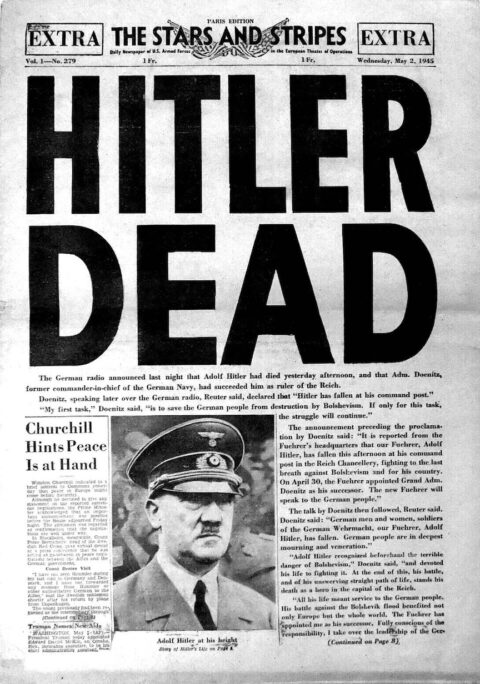 The instability of memory has generated endless debate about memoir. How much is creation, how much verifiable? Just as no one can testify to the veracity of the photo of Hitler’s ashes, who will affirm that Svoboda held her suitcase over her head as she crossed a crocodile-infested river in Sudan? Who was present when she was let go from a PBS series when her part of the program finished before the director’s? The documents from those events are gone. We eventually learn that Pat admitted she knew those weren’t Hitler’s ashes in the photo. Did she simply lie or sometimes believe her story? What about the power of the government’s directive that she claim these as Hitler’s ashes? When does our desire to believe, as individuals and as a society, mold our notion of truth? Questions beget other questions.
Biography is ostensibly fact-based. Yet even the seemingly incontrovertible evidence of archives, letters, and news reports is sometimes dubious. Regarding government propaganda during WWII, Svoboda writes, “Periods of great turmoil like war or immigration can obliterate physical evidence and suppress the emotional.” The author leads us through the war years, the McCarthy era, and inevitably to Trump and the current slide from the manipulation of facts to outright lies.
Writing a biography introduced me to the challenges of presenting stories of a life while questioning archival documents — a literary version of pulling the rug from under yourself. To meld that challenge to memoir is daunting. Svoboda deftly carries us through the complexity, challenging our assumptions at every turn. A reader comes away with new perspectives on women’s lives, the writing of memoir and biography, the nature of truth, and always more questions.
[Published by O/R Books on December 2, 2025, 280 pages, $24.94 paperback]