Now marginal in the history of music, Johan Joachim Froberger (1616-1667) was recognized in his lifetime as someone central to the inner life of 17th century Europe. His career was, however, a secular one. He never was a member of any order nor employee of any ecclesiastical establishment. As with all artists of his time, art, even in a worldly context, was inseparable from a spiritual path. Biographical data provide a patchwork in which we can glimpse his passage through capitals and courts in the unsettled period following the mass destruction of the Thirty Years War. In the same way, we can see the inner searching for which his music was the vehicle.
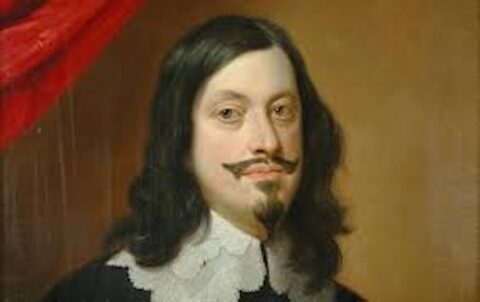 Froberger was born in Stuttgart to a family of musicians, and even at an early age, became a known as a composer and keyboard virtuoso of unique originality. At 21, he was appointed Court Organist in Vienna to Emperor Ferdinand III. That same year, he was granted leave to go to Rome to study performance and composition with Girolamo Frescobaldi who was the most famous keyboard artist of the time and the first organist at Saint Peter’s Cathedral.
At this time, Rome was flourishing during the long and extravagant papacy of Pope Urban VIII Barberini. This Pope took seriously his role as defender of the faith, extended the territory of the Vatican States, and funded Catholic armies in the devastating Thirty Years War. But even more, he was inspired by the Tridentine reforms of the counter-reformation to make Rome the undoubted center of world Christianity, a pilgrimage place of unimagined beauty and self-evident authority. To that end, he extended his patronage to the greatest architects, artists, musicians, and thinkers of the age. Froberger was fortunate to find himself immersed in the musical and cultural life of such a vibrant place at such an auspicious time. Sponsored by Frescobaldi, he was often invited to play the organ for church services and to give harpsichord recitals in private residences where he improvised as well as played his own and his contemporaries’ compositions. As Frescobaldi’s assistant, he played a secondary organ in the cathedral and also played in concerts at the palazzi of secular and ecclesiastical nobles where his teacher was often a celebrated performer.
Elaborate cultural entertainments had become fashionable in Rome. Cardinal Del Monte, Cardinals Francesco and Antonio Barberini, like Cesar D’Este before them and other secular nobles, all invited foreign and domestic dignitaries to admire the skills of writers, musicians and philosophers who were their protégés. These concerts and readings, accompanied by lavish offerings of food and drink, took place at their palaces amid the symmetrical expanses of flower gardens ornamented with pavilions, terraces, ranks of fountains, cypress glades, and great collections of ancient statuary. These were not mere indulgent displays; they were occasions in which cultivated men and women listened and contemplated as the most renowned poets, thinkers and musicians spoke and performed. The poet Fulvio Testi described it: thus “the days began with prayers then discourse, study, reading, walks through ever changing garden vistas. Music was performed …epic poems recited.” (1)
In such Arcadian settings, as idealized by Nicolas Poussin among others, Roman culture saw its aspirations flourish. The city’s streets and piazzas might be crammed with solemn processions, pageants, boisterous parades and with those who came to see them; visitors from all walks of life might wander in the palaces of the mighty, gazing open-mouthed at the tales told in tapestries, and at the illusions of seas, forests and skies framed in gilded ceilings. But it was only in the peace and harmony of these idyllic gardens that those who ruled could be truly as they wished themselves to be.
Music was not a mere accompaniment in this endeavor; it was at the heart. Lelio Guidiccioni, cultural arbiter in the courts of both Barberini and Borghese cardinals, put it this way: “the soul, which animates the universe, has its origin in music. Thus, the human soul, conscious of having heard music in heaven, delights in earthly melodies, remembering the heavenly ones.”(2) Musical performances then were part of the way in which virtue was cultivated. No doubt, this belief in music as an inherent link to and expression of humanity’s deepest spiritual nature had as much influence on Froberger as any more technical aspects of Frescobaldi’ teaching. During this stay in Rome, Froberger converted to the Roman Catholic Church.
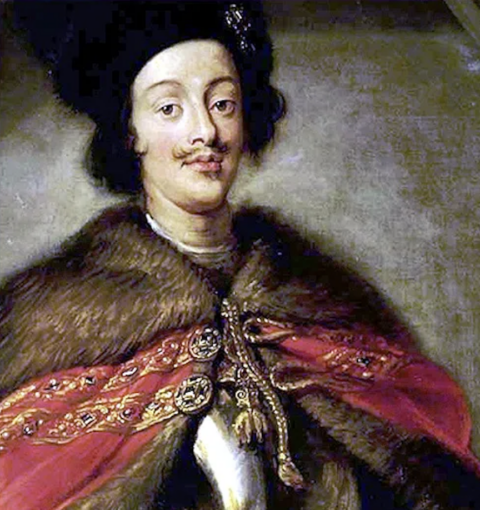 He returned to the Court of Vienna in 1641, and four years later returned to Rome. Frescobaldi had died, and the purpose of this visit, which would last for three years, was to study with the celebrated Jesuit polymath, Athanasius Kircher, a great scholar who enjoyed Pope Urban’s personal patronage. With Kircher, Froberger could explore the historical origins of music as well as well as all the acoustical considerations then known (the shape of the ear, the shape and building material in rooms, the nature of echoes). For Kircher, musical compositions were both spiritual discoveries and inventions. All the methods and conditions involved in musical expression were direct expressions of the divine. According to Ingrid Rowland, Kircher “recognized that music was … knowing the order of all things and he contemplated this world of the senses as nothing other than a brilliant mystic ten note chord.” (3) As he wrote:
“The Lord the Great Maker so established the world as an instrument that the whole is composed of an innumerable variety of motions — now slow, sometimes moderate, at last extremely rapid — so that all things in it, joined at unequal intervals yet distinguished by proportion, by the motion and impulse of the spheres produce a harmony — the sharpening with the gravest tones kept in balance — that results in a symphony of things.”(4)
And further:
“From such rules derive a marvelous variety of harmonies; for in this kind of a mirror appear as many harmonies as there are things in the universe; hence music becomes like a divine game in which the human mind seems to play artfully with God.” (5)
This was indeed Kircher’s direct experience of music even as he lived in the world. According to a colleague. “I once witnessed Kircher caught in such a trance, (and saw) how, after listening to a concert by three lutenists, Kircher was transported in an ecstatic journey through the spheres of the planets.” (6)
During Froberger’s second Roman stay, he helped Kircher complete work on a device he called the Arca Musurgia (Musarithmica) or Musical Arc. In response to the requests of Jesuit missionaries in Asia and South America, this invention drew on Kircher’s profound knowledge of mathematics and musical composition and was designed to compose musical accompaniments for liturgies translated into a wide variety of languages. It was portable and, Kircher asserted, “anyone, even the unmusical” could compose music in many forms, styles and degrees of complexity according to the needs of churches anywhere.” (7)
And he further explained:
“This Musical Ark, if used correctly, provides not just a compendium of the musical arts but also a pattern of divine harmony, in which the mysteries of God’s wisdom are revealed through contemplating number and sound.” (8)
The Thirty Years War had just ended when Froberger returned to a depleted Vienna in the summer of 1649. En route, he stopped at Florence and Mantua where he played concerts and demonstrated the Musical Arc to the Grand Duke and Duke respectively; for these services, he was rewarded lavishly. In Vienna, he brought the Musical Ark to Emperor Ferdinand III’s confessor, Father Gans. In a letter to Kircher, Froberger wrote:
“Father Gans brought (the device) to His Majesty and His Majesty sent for me. I then showed His Majesty hot is to be understood. The Emperor, however, soon grasped and understood it, and also immediately composed a number of things out of it., and was greatly delighted. Finally, after the second hour, the Emperor said to me, I should now just go home; he would send for me the next day.” (9)
Froberger also wrote to Kircher that fall to propose certain improvements he himself could make to the Musical Ark, if he had the time; he also reminded his teacher of their last meeting.
“Your Reverence will still be able to recall how I took leave of you. You led me into a room and showed me a secret, how to make a canon on the unison. I thought more about this secret on my journey and found it extraordinarily expedient but have to date revealed it to no one, and nobody will learn it from me, as I promised you …
“But I still have one more request to make of Your Reverence: could you, by mathematics invent a canon, not on the unison but on the fifth below and the fourth above, thus in four (parts)? No composer in the world has ever enjoyed the revelation of such a thing. If Your Reverence could send it to me I would remain forever in your debt for life.” (10)
Here a musical technique is called a “revelation,” something to be conveyed only in private and to be kept secret. And, when Froberger asks to be shown another method, he speaks in just the same way. Lifelong indebtedness is, he says, the only proper recompense for receiving such a secret, such a technique. These are more generally the same words used to describe conveying spiritual teachings. So, it is not just a piece of music, the result of a composer’s devotion and labor, that is here considered sacred; the means by which the piece is made is sacred. Means and their results were, for these two musicians, inseparable expressions derived from the mind of God.
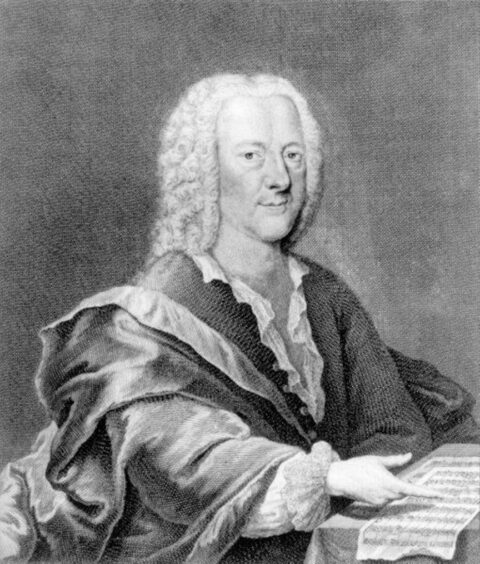 In the following year, Froberger played concerts at court where he met the English Diplomat, William Swan, who in turn introduced him to Constantijn Huygens. Then in his 50’s, Huygens was an extraordinary figure: a former ambassador from Holland to England, then France, a former secretary to two of the Princes of Orange, a noted composer and poet, a great correspondent, and indefatigable diarist. Froberger gave him lessons and the two became friends for life. Through Huygens, Froberger became acquainted with the greatest musicians of Northern Europe, with the French school of harpsichord playing and the music of John Dowland. Huygens later introduced Froberger to Princess Sibylla of Würtemberg who became his student, friend and financial supporter until his death.
When the 17-year old Empress Maria Leopoldine died in childbirth later that year, all musical activities in Vienna ceased for a year of mourning. Though Froberger would remain in the Emperor’s employ for another eight years, he was rarely in Vienna. He travelled and played in Northern Europe, with longer stays in Cologne, Düsseldorf, Zeeland, Brabant, Antwerp, Dresden, Brussels, Madrid, London and Paris. There, he most certainly met the composer, Louis Couperin who wrote in the dedication that his “Unmeasured Preludes” were made “a limitation de Mr. Froberger.” Similarly, Froberger made use of the French lute style called style brisé, irregularly arpeggiated (broken) chords and textures, in many of his later harpsichord suites. (11)
The last 15 years of Froberger’s life are poorly documented. He toured, he taught and he composed, but what little specific information remains comes from the correspondence between Huygens and the Duchess of Württemberg. Here it is clear that in the last decade of his life, Froberger lived a quiet contemplative life in a residence which the Duchess provided for him on the grounds of the Chateau of Héricourt. Jean-Nicolas Binninger, a frequent visitor to Héricourt, wrote in his Observationum: “Even-tempered, he used to recite his Hours (as the prayers are called) diligently every morning and afternoon while walking about; he suffered no one to disturb him. He regularly repeated this exhortation: watch and pray, for you do not know when your time will come — as I have heard uttered from his mouth a hundred times.” (12)
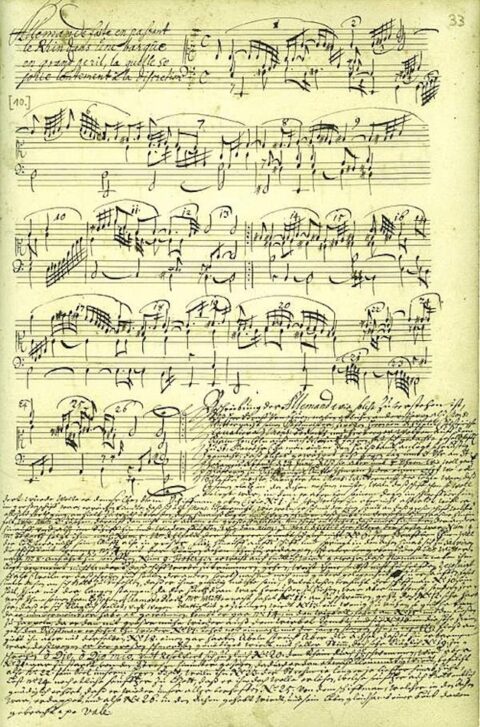 [left — Allemande faite en passant le Rhin dans une barque en grand péril] During this period, Froberger copied out and composed the pieces titled with autobiographical references that have done most to sustain his fame: Allemande, faite en passant le Rhin dans une barque en grand peril, Lamentation faite sur la mort très douloureuse de Sa Majesté Impériale, Ferdinand le troisième, An. 1657,Lamentation sur ce que j’ay été volé et se joüe à la discretion et encore mieux que les soldats m’ont traité, Lamento sopra la dolorosa perdita della Real Maestà di Ferdinando IV Rè de Romani, Plainte faite à Londres pour passer la melancholie, Tombeau fait à Paris sur la mort de Monsieur Blancrocher, and most famously of all, Méditation sur ma mort future (Mediation on My Future Death). These pieces involved meditative contemplations on the inevitability of loss, impermanence, and death; their combination of chromatic irregularities in style brisé and the temporal uncertainty in unmeasured preludes gave them their profound sense of yearning and search.
These great landmarks of Baroque music are musical reflections of the kinds of meditative prayer much in practice when devastation and sectarian conflict increased the intensity of spiritual yearning. Memento Mori, contemplations of the invariant realities of loss and death, offered a portal to the sacred within the unpredictable flow of daily life. But, unlike Bach or Biber’s compositions, where within the first few bars one hears the composer moving towards a much larger structure, in Froberger’s music. and especially in the unmeasured preludes, notes and phrases are moving into a completely uncertain space, perhaps even a void. He is looking at something that cannot, can never be completely seen. He’s looking at something that always is on the point of disappearing, and he does not turn away. Rebecca Cypess offers a deeply revealing perspective when she places these pieces in the context of contemporary literary meditation and devotional practices:
“Both the literary méditation and Froberger’s musical ‘Méditation’ embody a paradoxical understanding of time. On one hand, the literary méditation often drew on the image of the clock as a reminder of the regularity and fleetingness of time. On the other, these devotional texts also called for a suspension of time during recitation, to allow for proper concentration and to account for the needs of the individual reader. Froberger’s piece, too, embraces an aesthetic of suspended time to allow for concentrated meditation and removal from worldly considerations, especially in calling for execution with discrétion. At the same time, by dating his composition, Froberger showed an interest in time-bound autobiography — in placing himself in the passage of time … Still, during a performance or private rendering of the work, it is essential that time be suspended. Froberger expresses this requirement through the indication that the piece should be played with discrétion, a term most often defined in terms of metre and the passage of time.” (13)
Froberger died in the Chateau of Héricourt May 7, 1667. His friend and student Sybila the Duchess of Héricourt (formerly of Wurtemberg) wrote Constanijn Hugens:
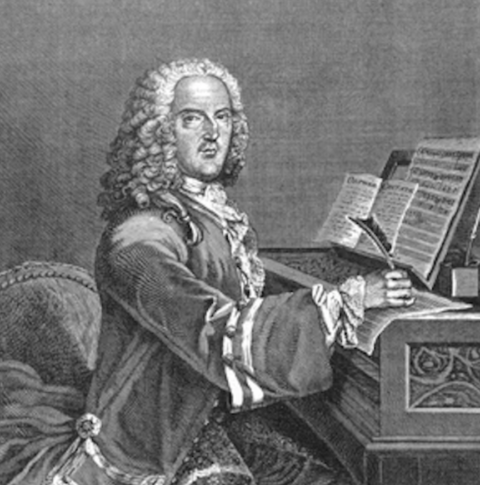 “Now I remain alone, God have mercy, a modest pupil left behind by my dear, honorable, faithful, and diligent teacher, the late Mr Joh[ann] Jacob Froberger, Imperial Chamber Organist, who died seven weeks ago today at five o’clock during his vespers prayers, struck by our dear God with a strong stroke, after which he only breathed forcefully a few times and died thereafter quietly … The day before his death, he had brought me a golden coin, for which it was recorded and written that after his death we should give it to the minister of the church he had chosen for a grave, and he asked me to do it diligently and bury him in the church of Bavilliers …” (14)
In another letter to Huygens written five months later, the Duchess continued:
“From your letter I have gathered how highly you deplore with me the loss of my dear and most worthy honorable master and teacher, whom I still mourn daily with all my heart, when I consider what art and what great skills have died with him … I would like to play for you the ‘Memento Mori Froberger’ as well as I can. Caspar Grieffgens, the organist of Cologne, also plays this piece, and learned it note by note from [Froberger’s] hand. It is difficult to figure out from the notation. I have studied it with exceptional diligence, although it has been notated clearly, and I agree with Mr Grieffgens’s opinion that whoever has not learned the pieces from the late Froberger himself could not possibly play them with the right discrétion, as he himself played them … His noble compositions I love and treasure so much, that as long as I live, I cannot and do not want to let them out of my hands. Furthermore, at his request, I have always promised not to give them to anybody…” (15)
Froberger, like Frescobaldi before him, was not entirely certain how to make his notation a true guide to his musical intentions. Perhaps he did not believe such a thing was possible. We are left wondering, just as we do with all other great composer-performers, what we would have heard if we’d listened to him play his own music. And clearly, he intended his music to be secret, at least for a while, just as Kircher had kept his sacred techniques secret. And both, as did many people in Europe then, had no doubt that, hidden within all sensoria, all calculations of gain and loss, every life was the journey of a solitary soul passing in silence through infinity.
Now, of course, we are living in an utterly secularized time, a time when scientific truths, statistical uniformities, statements about events that are, under identical conditions, identically repeatable are the only real truth. Our culture depends on innumerable kinds of identical products satisfying the expectations of consumers with identical desires. In this culture, our inner life and the outer world meet almost nowhere but in the fields of consumption and possession. In such a time, glimpses of this other world, this world of the Baroque, can only inspire amazement awe, puzzlement, possibility and despair.
***
Notes
- Andrew Dell’Antonio, Listening a s Spiritual Practice I Early Modern Ialy, Universitty of California Press, 2011, P.38)
2) A. Dell’Antonio, ibid. p. 1115
3) Ingrid Rowland, The Ecstatic Journey, University of Chicago Library, 2000, p. 14
4) Athansius Kircher, Dialog II, Caput VI: De harmonia, sublimi huius sensibiles… (Itinerarium exstaticum / An Ecstatic Journey, 1656). Latin transcription and translation online (Wichita State Univ. project). Wichita State University+1
5) Athanasius Kircher, Musurgia Universalis sive Ars Magna Consoni et Dissoni (Rome: Ex Typographia Haeredum Francisci Corbelletti, 1650), vol. II, lib. VIII, cap. III, p. 483: author translation from the Latin
6) Athanasius Kircher: A Renaissance Man and the Quest for Lost Knowledge by Godwin, Joscelyn, Thames&Hudson, 2005 p. 6
7) Kircher, A, Musurgia Universalis (1650) p. 185-https://imslp.org/wiki/Musurgia_Universalis_(Kircher,_Athanasius
8) Kircher, A, Musurgia Universalis (1650) p. 489
9) Annibaldi, Claudio, “Froberger in Rome; From Frescobaldi’s Craftsmanship to Kircher’s Compositional Secrets,” Current musicology, n, 58, 1955, P. 15
10) Annibaldi, Claudio, “Froberger in Rome; From Frescobaldi’s Craftsmanship to Kircher’s Compositional Secrets,” Current musicology, n, 58,1955, PP.16-7
11) Wikepediahttps://en.wikipedia.org/wiki/Johann_Jakob_Froberger
12) Jean-Nicolas Binninger, Observationum et curationum medicinalium: Centuriæ quinque (Montbéliard: Hypp, 1673), Centuria quarta, Observatio 39, pp. 415–16:- cited in Ruggeri, note 10
13) Rebecca Cypess, ‘Memento Mori Froberger? Locating the Self in the Passage of Time.’ Early Music, Oxford UP, 2012, p3,7)
14) Ruggeri, Yves, The “Memento Mori Sybilla” of Johan Jacon Froberger, Journal of Seventeenth Century Music, Volume 29, 2023 No. 1, 2.5
15) Ruggeri, Yves, The “Memento Mori Sybilla” of Johan Jacon Froberger, Journal of Seventeenth Century Music, Volume 29, 2023 Nos. 45,52,
https://www.newworldencyclopedia.org/entry/Johann_Jakob_Frobergerhttps://sscm-jscm.org/jscm-issues/volume-29-no-1/memento-mori-sibylla-froberger/
This essay is one of a series in “CONTINUA-Conversations, Rome and the Baroque.