“In an age when all those governing were in danger — there’s no point in explaining the nature of the threat, because all such threats have both too many sources and none at all — the ruler of this particular country was plagued with anxiety and insomnia. It wasn’t that he felt threatened ‘from below’ — from his people — no, the menace came from above, from unspoken demands and directives that he believed he had to follow even though he didn’t know what they were.”
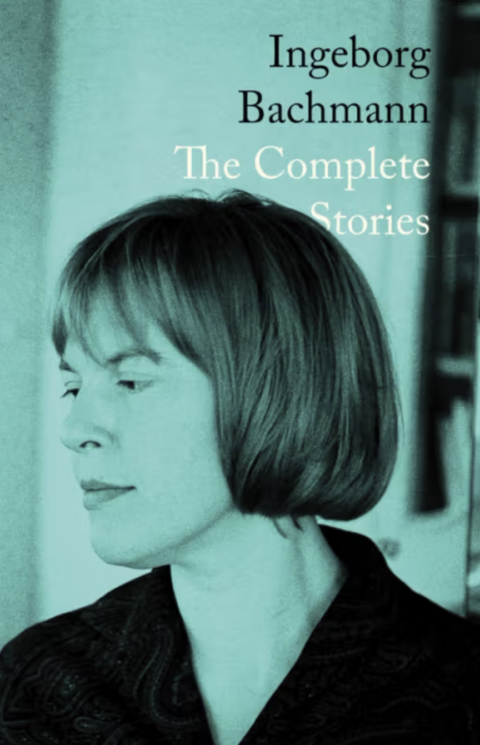 So begins “The Smile of the Sphinx” written by a 23-year old Austrian philosophy Ph.D., Ingeborg Bachmann. The anxious king finds his country under the shadow of the Sphinx and, anticipating “the battle for the survival of his land and his subjects,” preemptively complies and challenges the Sphinx to challenge him. The Sphinx wants the ruler to account for what riches the earth of his country holds, and then, for what covers the earth, including the celestial spheres. The ruler’s accountants deliver these answers easily, but the third question stumps them: “What might lie within the men you rule?” the Sphinx asks. The retainers go to work experimenting on people, ordering them to disrobe and forcing confessions, but the king becomes ever more paranoid. He lines up guillotines and murders all the people in his land, only then to face the Sphinx again, alone.
This short parable, captivating our attention by connecting the willful rulers of today to not-so-distant past, was first published in a Vienna newspaper shortly after it was written in 1949 and can be read as a commentary on Austria’s political and moral collapse after the German Nazi-driven Anschluss. It encapsulates Bachmann’s lifelong preoccupation with the nature of unchecked power, as well as hints to her ability to use specific, grounding details (“anxiety and insomnia” that trouble the ruler) to breathe life into a philosophical premise. The reader of The Complete Stories has the privilege of witnessing how, over the course of her life, Bachmann developed the physical world of her stories and her characters without either sacrificing the philosophical complexity or the political punch of her work.
Catapulted to fame by her early collections of poetry, followed by her work for Austrian radio and writing radio plays, Bachmann solidified her reputation as a major German-language writer through the publication of her prose, including two collections of short stories and her novel Malina (1971) that, though at first seen by mainstream critics as too neurotic and narrowly focused on the inner world of a middle-class woman, was championed by the feminist movement, a cult favorite before becoming a global classic. Today, Bachmann’s name is attached to one of the top literary prizes in the German world. Awarded annually for a work of prose, the Ingeborg Bachmann prize winners have included Wolfgang Hilbig, Michael Lenz, and Katja Petrowskaja, among many others.
Published during the centennial year of Bachmann’s birth, The Complete Stories is a substantial and much needed contribution to the body of Bachmann’s work available to the English-language readers. Although most of the stories had been translated and published decades earlier, the new translation allows us to absorb the power of Bachmann’s language with fresh eyes. Experienced in bringing Austrian literature to Anglophones, co-translator Tess Lewis combines her expertise with Philip Boehm’s skills as a playwright and translator of classical German literature, including Bachmann’s Malina in 1990. The English versions of these stories are accessible while retaining much of Bachmann’s sentence structures, regional particularity, and philosophical depth. They also highlight Bachmann’s flair for the dramatic. Consider the opening of short story “Word for Word,” in the original titled “Simultan” because its protagonist Nadja works as a simultaneous translator:
“Bože moj! Were her feet cold, but this must finally be Paestum, there’s that old hotel here, I don’t get it, how could I have, I’ll remember the name any second now, it’s on the tip on my tongue, but she didn’t remember, she rolled down the window and squinted to see out to the side and straight ahead, looking for the street that should, credimi, te lo giuro, dico a destra lead off to the right. So there it was the NETTUNO.”
 Quickly switching between three languages and moving from third person narration to first and back, the translators have reproduced the sense of movement, the immediacy of impressions of someone riding in the passenger seat of a car frenetically careening through the narrow streets of an Italian resort town. The story describes a brief affair between Nadja and a diplomat, Mr. Ludwig Frankel, whom she met at a conference. He’s married, and there’s nothing really in common between the two of them except language, German, and the city of origin, Vienna. Ludwig left Vienna at 18, emigrated with his family to America, and hasn’t spoken German since then, but is willing to refresh it for a romance.
Nadja’s sense of connection to Ludwig as a man “who was giving her language back to her” ultimately cannot withstand his tendency for mansplaining: “it was too much to expect her to listen to him, mostly lecturing or explaining things like thermometers and barometers, how reinforced concrete is made, how to brew beer, what rocket propulsion is and how airplanes fly, the situation in Algeria, before and after …”
There’s nothing for Nadja in this relationship — that’s clear from her cold feet in the first line of the story. Her clinging to that sense of a common language with Ludwig highlights both her loneliness as well as something fundamental to the way she exists in the world, as if she doesn’t have the right to it.
On the very last day of their trip and, clearly, the relationship, Nadja takes a solo climb in the rocks above the sea and allows herself to be free. She realizes that the work of living feels like a duty to her, and tries to correct herself: “what am I saying, what’s that supposed to mean, it’s not a duty, I don’t have to, not at all, I can. Yes, I finally have to understand that I’m allowed to, I, at every moment, and especially right here, and she continued on, jumping, flying, running … I have the right, that’s it, I have the right to live.”
Even as she makes her brave assertions, we may find them less and less possible to achieve, even as we applaud her claim to the right to live as she wishes. I recall the king who chooses to murder the citizens of his country instead of finding another way to resist the Sphinx. Nadja, like most of Bachmann’s characters, exists in a liminal space, in the country beneath the shadow of the Sphinx. For all we know, she’s always already — to borrow a term from Heidegger, whom Bachmann criticized in her dissertation — sentenced to death.
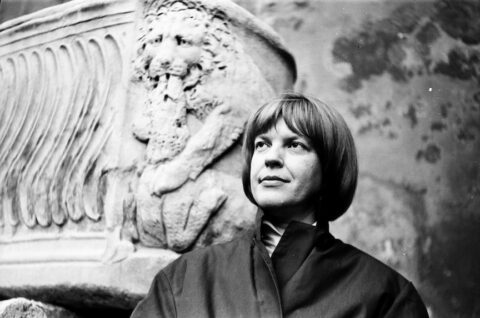
Though Nadja speaks of her connection to Vienna, Bachmann herself was born in Klagenfurt, Carinthia, and spent her summers in Gail River Valley, at the border between Austria, Slovenia, and Italy. Her mother was Slovenian; German taught Italian language and later became a school principal. He was an early supporter of the Nazi party in Carinthia, joining in 1932. The tragedy of this decision weighed heavily on Bachmann’s life, especially as she grew up and found her way to the books banned by the Nazi regime — Thomas Mann and Stefan Zweig, among others. Adding to her sense of personal responsibility for the actions of her father was, undoubtedly, mental illness, for which she was hospitalized several times in her life. Mental illness was a major factor that, eventually, contributed to her untimely death in 1973 at the age of 47.
Perhaps the best reflection on mental illness is offered in her story “Problems, Problems,” following directly after “Word for Word” in this book. Beatrix, a young woman from Carinthia, is living in Vienna with relatives she dislikes, surviving on an inheritance so small it barely covers her food expenses, yet unable to look for work or make friends because of her severe depression. All she wants to do is sleep: “Everything else was a complete waste of time and simply undressing and dressing again was a great strain, and it couldn’t compare to her addiction to the deep sleep that she had come to know, a sleep that she could fall into still dressed and with her shoes on in bed.”
Besides sleep, Beatrix ruminates on her dead-end relationship with a much older and also married boyfriend, and her hairdresser. The hair salon “was the one place in the world where she felt truly at ease, and for this she was willing to give up almost everything, even regular meals.” Eventually, she braves a trip to the salon, where the absence of her regular masseuse sends her spinning out over the edge into a total breakdown.
The admixture of untreated mental illness makes Beatrix, like Nadja and other female characters in Bachmann’s stories, incapable of escaping the toxic relationships they are stuck in. Their lack of agency, coupled with an overpowering sense of guilt, make them imperfect feminist heroines. The density and breathless pacing of the prose, where scenes frequently give way to pages of inner monologues, veer far outside of the conventions of the contemporary scene- and narrative arc-driven fiction.
In an interview for an online project, “Bachmann station,” commemorating Bachmann’s centennial, Viennese novelist Kirstin Breitenfeller, author of Maria Malt [Maria Paints], a 2022 novel about painter Maria Lassnig who like Bachmann grew up in Klagenfurt, Carinthia, comments that though she grew up reading Bachmann in her youth, “the pathos of suffering” in the writing felt antiquated in the years after Bachmann’s death. Although Breitenfeller believes Bachmann’s work cannot help us answer today’s problems because her personal and political situation was very different from ours, she suggests that the writer’s legacy is found elsewhere: she dared to raise her voice against the majority, being one of the first of her generation to ruthlessly criticize National Socialism.
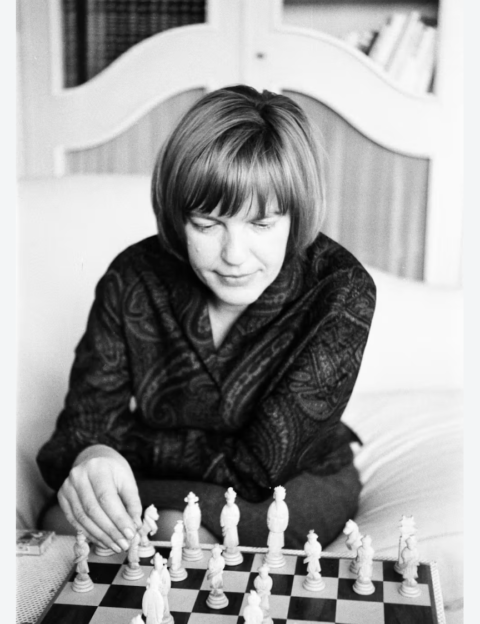 A good example of Bachmann’s work directed against Nazism is a short story “Among Murderers and Madmen,” that first appeared in 1961 as a part of her collection The Thirtieth Year. It portrays Nazis — WWII veterans — and Jews returned from the camps, perpetrators and victims, literally sitting around the same table in a pub 10 years after the war. Considerations of social cohesion and fear of retribution make Jewish members of the group unable to walk away from the table. They are stuck in the world where everyone sees them as victims, but “the victims serve no purpose.” Nazis continue to hold power and in fact actually kill a man who provokes them by professing to be a murderer even as he admits that he hasn’t seen the point of actually killing anyone. The Jewish man who narrates the story, though not directly involved with the murder, is present at the scene of the crime and finds blood on his hand. “I felt as though the blood had given me some protection, not to be invulnerable, but so that the scent of my despair, of my desire for revenge, of my anger, could not be dispelled. Never again. Never more,” Bachmann writes, irreverently using the post-war anti-genocide slogan as a cry for help from a survivor who remains disempowered.
Karen R. Achberger and Karl I. Solibakke, editors and translators of The Critical Writings of Ingeborg Bachmann, agree with Breitenfeller’s assessment that Bachmann’s perspective on literature was utopian, filled with “unshakable confidence in the power of language and the transformative nature of art.” In the German-speaking world, Bachmann’s personal example, combining a clear moral stance against Nazi power with search for truth as a vulnerable human being and a woman, continues to fascinate and inspire creators. In the past three years alone, two major movies have been made based on her life: Margarethe von Trotta’s 2023 biopic Ingeborg Bachmann — Journey into the Desert and Regina Schilling’s 2026 documentary Ingeborg Bachmann — Jemand, der einmal ich war [Someone who I once was].
Bachmann’s relative lack of popular renown in the English-language world must have influenced the publisher’s decision to bring out all of her short prose in one book, acknowledging the work’s significance while privileging our contemporary taste and genre distinctions over how Bachmann herself had understood her writing. The dense, more philosophically heavy early collection might have appeared too obscure to stand in a volume of its own, without the better-rounded and character-centered later stories. One exception is an early piece “One Step Toward Gomorrah,” a story about a woman contemplating an affair with another woman, long included in the syllabi of gender studies courses as an investigation of the power dynamic within a same-sex couple in a world defined by patriarchy.
Bachmann’s later stories, including “Word for Word” and “Problems, Problems,” actually belong to what she envisioned as an epic project she called Todesarten that in English can be translated as “Ways of Dying” or “Types of Death.” According to Achberger and Solibakke, she conceived this project in the vein of Balzac’s Human Comedy and Robert Musil’s The Man Without Qualities as stories about “all possible kids of death” that women in Austria undergo. An all-encompassing preoccupation, it also included her novel Malina, a speech she gave when receiving Georg Büchner prize, and a number of unfinished stories. The pieces are directly connected through recurring characters, places and shared themes: the protagonist of Malina, for instance, is a character in the short piece that concludes this collection, “Tour of an Old City.”
A critical edition of Todesarten project was published in German in 1995 in four volumes. It is my hope that The Complete Stories will prepare the ground for us one day to see Bachmann’s grand work altogether in English as well. As the new book lands in the American cultural landscape dominated by new wars, right-wing politics, and language further standardized by automation, Bachmann’s search for the language of genuine human connection, her radical vulnerability, and her passionate stance against fascism come across as more vital than ever. I’ll end with the words from her story “Úndine Takes Her Leave”:
“The fierce human females sharpen their tongues and flash with their eyes, the gentle human females quietly let flow a few tears, they also do their work.”
[Published by New Directions on November 24, 2026, 512 pages, $29.95 hardcover]