Translators’ Introduction
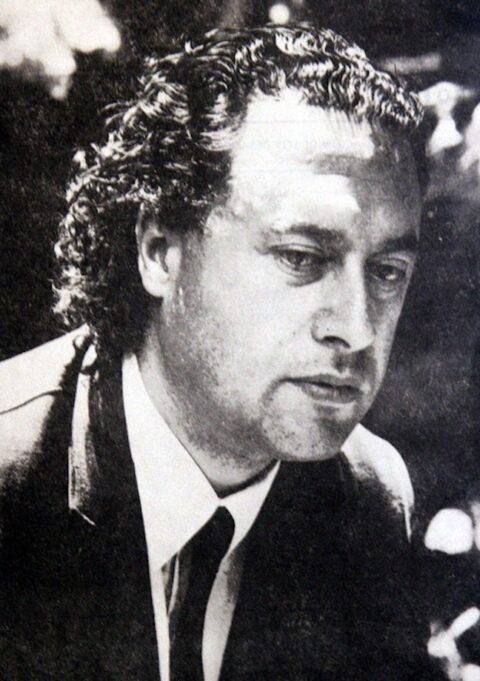 The early poems of Enrique Lihn (1929-1988), originally published in his twenties, have not been translated into English largely because he did not allow that to be done. He called his first two books — Nada se escurre (Nothing slips away, 1949) and Poemas de este tiempo y de otro (Poems of this time and another, 1955) — his “butcher’s notebooks” due to what he considered their hasty nature. Nonetheless, the poems we selected to translate are not only well-crafted but show the genius and existential intensity of his poetry. Having published his acclaimed anthology The Dark Room and Other Poems that launched him in the Anglosphere with our translations nearly 50 years ago, New Directions in fall 2026 will publish his Celeste, Daughter of the Earth and Other Early Poems that we translated. Our approach is to use a creative mix of domestication and foreignization to produce accurate equivalents of his poems.
— Jonathan Cohen and David Unger
/ / / / /
The Old Age of Narcissus
I look in the mirror and don’t see my face.
I’ve disappeared: the mirror is my face.
I’ve made myself disappear;
from seeing myself so much in this cracked mirror
I’ve lost all sense of my face
or, from talking about it so much, it’s become infinite to me
or the nothingness that in it, as in all things,
was hidden, hides it,
the nothingness that’s in everything like the sun at night
and I am my own absence facing a cracked mirror.
[J.C.]
⟐ ⟐ ⟐
Fear
I’m dead, you could say, judging by the absence
of everyone at my side
sitting in such a way
the bed becomes hard.
I toss, I turn …
I fall clearheaded into sleep, I write myself a gloomy lullaby,
I sing it, totally wide awake, I switch off
the darkness, turning on blackness;
I do everything backwards;
the sky’s hurting me.
[J.C.]
⟐ ⟐ ⟐
Prayer
Darkness of my soul, my crown, my tooth of the monster awaiting me
in the depths of a dream
when in me I become naked until I shine,
embrace me for I’m wandering alone,
for I’m on foot and wandering with no plan or place to go,
for my flame is growing cold, I confess.
Something of you, indivisible, a part
of your seed, let it fall to my mouth from heaven and earth;
mercy, a fold of your coat, a circle of your breast where the pain of being
might free me from myself.
[J.C.]
⟐ ⟐ ⟐
First Communion
Take a look at this group of boys that from afar look all alike,
dressed in black and shooting the same miserable smile
at the command of a Father Superior who is there, but not there, like God and the photographer:
the angel smile that rises and falls:
something that can’t be understood and which, nonetheless, should respond to
the command of a Father Superior, a shrunken little man with his forefinger held up in the air:
shrunken by time, in the memory of each of us, his disciples
shrunken, also, by memory and time.
[D.U.]
/ / / / /
La vejez de narciso
Me miro en el espejo y no veo mi rostro.
He desaparecido: el espejo es mi rostro.
Me he desaparecido;
porque de tanto verme en este espejo roto
he perdido el sentido de mi rostro
o, de tanto contarlo, se me ha vuelto infinito
o la nada que en él, como en todas las cosas,
se ocultaba, lo oculta,
la nada que está en todo como el sol en la noche
y soy mi propia ausencia frente a un espejo roto.
⟐ ⟐ ⟐
Miedo
Me he muerto, se diría, a juzgar por la ausencia
de todos que a mi lado
se sientan de manera
que el lecho se hace duro.
Ruedo, ruedo . . .
caigo lúcido al sueño, me escribo una canción de negra cuna,
la canto desvelado hasta la médula, apago
la oscuridad, enciendo la negrura;
lo hago todo al revés;
me duele el cielo.
⟐ ⟐ ⟐
Oración
Negrura de mi ser, corona mía, diente mío del monstruo que me espera
en el fondo del sueño
cuando en mí me desnudo hasta brilIar,
abrázame que estoy rodando solo,
que estoy de pie y rodando sin azar ni destino,
que se enfría mi llama, te digo.
Algo de ti, indivisible, una parte
de tu semilla caiga a mi boca desde el cielo y la tierra;
piedad, un pliegue de tu manto, un círculo de tu seno donde el dolor de ser
me redima de mí.
⟐ ⟐ ⟐
Primera comunión
Observese este grupo de niños que a la distancia se confunden,
todos ellos vestidos de negro y esbozando una misma sonrisa melancólica
a una orden del padre superior que está allí y no está allí, como Dios y el fotógrafo:
la sonrisa del ángel que cae y se levanta:
algo que no se puede comprender y que se debe, sin embargo, imitar
a una orden del padre superior, de ese hombrecillo diluido en la atmósfera con el índice en alto:
diluido en el tiempo, en la memoria de todos nosotros, sus discípulos
diluidos, también, en la memoria y en el tiempo.