Translator’s Note
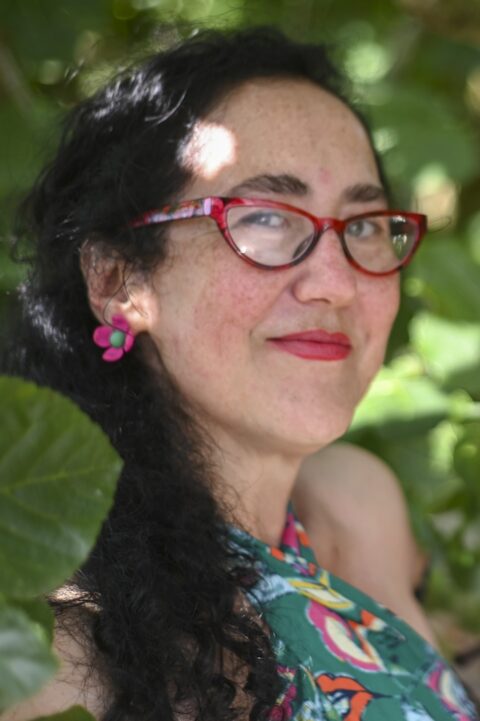
Ana Lamela Rey lives in Asturias, Spain, a region best known for its dairy farming and apple cider, jagged coastlines, and green hillsides. I spent several summers in Lamela Rey’s hometown of Gijón, a picturesque coastal city with a powerful medieval seawall where crowds gather under the summer sun and waves crash menacingly in the winter. Her poems, “No,” “Talk Less,” and “I Am Tired,” are part of her collection, La exhibicionista, in which a narrator exposes her delicate interiority as she endures and then escapes a violent intimate relationship. Like the city of Gijón, the collection depends on the power of contradictions, between public and private, resistance and resignation, strength and vulnerability.
 “No,” is the second poem in La exhibicionista, which announces the narrator’s tenacity and will to speak despite the violence she endures from one or multiple loved ones. The collection announces itself both as a triumph of voice, “I say it, I scream no,” and the result of torture long endured, “And she tightens the noose around my neck.”
“Talk Less” follows “No” in the narrative loosely woven in La exhibicionista. Here, Lamela Rey’s narrator seems resigned to her abusive relationship, yet she retains a powerful agency in the grammar of her demand. “Drown me: I still have a thread of voice left. / Spell out my torture. / Enunciate my contempt.”
Lamela Rey’s poems sometimes call out like guttural cries of revenge or submissive requests to surrender, whichever comes more readily to the depleted narrator. In “I am tired,” exhaustion overwhelms the narrator, now alone, reflecting on the repetitive cycles of her desolation: “I wanted you to know because it’s not the first time,” she writes. “And it is so long.”
The poems in La exhibicionista are urgent manifestos and sentimental love letters, suicide notes, and laments that echo Mexican rancheras. The narrator lays bare her profound vulnerability in these opening poems, not to surrender, but rather like a sea urchin revealing a tender belly hidden underneath its ready, imposing spines.
— Shilyh Warren
Credit: The three poems were originally published in Spanish in the volume La exhibicionista by Ediciones CGP in 2014. The collection was republished in 2021 by Ed. Gravitaciones (www.gravitaciones.com).
⟐ ⟐ ⟐ ⟐ ⟐
No.
I am saying no.
That it will be impossible to kill me with just any knife.
And you bend down. Clean up thousands of droplets of blood. And watch me
with eyes full of air.
They look like tears.
They are not.
They leave dirty, sticky tracks, and that’s why you bend down.
I give in.
Forget my body.
The knife damages less than the saw of a zipper.
Or all these clouds.
I say it,
I scream no.
That it will be impossible to kill me with just any word.
And she tightens the noose around my neck.
/ / / / /
Talk less.
Slowly.
Yell at me.
So I can really hear you, fully grasp what you say
and determine who is in charge.
Who paints the walls the perfect shade.
Who tramples on hair and hands.
Who passes over my years, my lives, me.
Drown me: I still have a thread of voice left.
Spell out my torture.
Enunciate your contempt.
Leave no doubt that you are the stronger woman.
And let me confirm that everyone will follow your lead.
Everyone will applaud you.
Everyone will point out my cleavage, my back.
Everyone will forget me.
/ / / / /
I am tired.
Too tired to bother leaning half my body out the window to
check the weather.
Two words. I have uttered only two words today.
The rest were from long ago transported from here
to there.
I wanted you to know because it is not the first time.
It is also not the first time I plunged my fingers down my throat and made myself vomit.
I have vomited up cloudy days. Ragged smiles. Electrically sad lights. Frosted promises.
With my dress I sweep away the earth left behind by my shoes.
And it is so long.
⟐ ⟐ ⟐ ⟐ ⟐
No.
OS DIGO QUE NO.
Que con un cuchillo cualquiera no podréis matarme.
Y tú te agachas. Limpias miles de gotas de sangre. Me miras
con ojos llenos de aire.
Parecen lágrimas.
No lo son.
Van dejando huellas pegajosas y sucias, por eso te agachas.
Yo me dejo.
Me olvido de mi cuerpo.
El cuchillo me hace menos daño que la sierra de las cremalleras.
O todas estas nubes.
Os digo,
os grito que no.
Que con una palabra cualquiera no me podréis matar.
Y ella me anuda una soga al cuello.
/ / / / /
HABLAME POCO.
Despacio.
A gritos.
Para que te oiga bien, para que entienda bien lo que dices
y pueda sospechar quién manda.
Quién pinta las paredes del color más adecuado.
Quién pisotea melenas y manos.
Quién pasa por encima de mis años, de mis vidas, de mí.
Ahógame: todavía me queda un hilo de voz.
Deletréame tortura.
Pronuncia fuerte los desprecios.
Que no me quede duda alguna de que eres tú la más fuerte.
Y pueda comprobar que todos te van a seguir.
Todos te van a aplaudir.
Todos van a señalar mi escote, mi espalda.
Todos me van a olvidar.
/ / / / /
ESTOY CANSADA
Me cuesta hasta sacar medio cuerpo por la ventana para ver qué tiempo hace.
Dos palabras. Solo he dicho dos palabras hoy.
Lo demás fue trasladar de aquí para allá palabras de hace mucho tiempo.
Quería que lo supierais porque no es mi primera vez.
Como tampoco es la primera vez que hundo mis dedos hasta
tocar mi garganta y me hago vomitar.
He vomitado días nublados. Sonrisas con esquinas. Luces eléctricamente tristes. Promesas glaseadas.
Con mi vestido voy barriendo la tierra que dejan mis zapatos.
Y es tan largo.