Translator’s Note
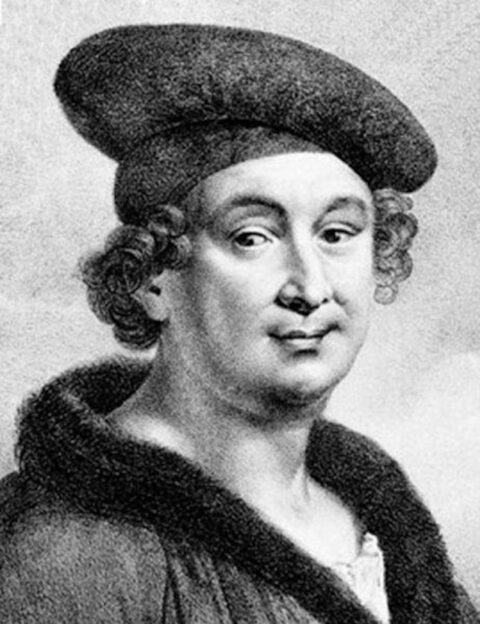 French poet Laure Gauthier’s 2018 collection I snow (between the words of Villon), a diptych of poetry and prose, engages with the poetry and literary legacy of one of France’s most notorious and storied poets, François Villon. Although he wrote during the late Middle Ages, Villon was, in 1914, heralded by French writer André Suarès as the “first modern poet.” Critic François Bordes, in the Journal de Mauss, writes of Gauthier’s new work: “Here is the figure of Villon; his language, his memory, his words become the raw material of a fresh challenge issued by Laure Gauthier.” Gauthier’s “fresh challenge” is a deft work of intertextual research and lyric expression.
Gauthier asks how we read this medieval poet if not through inferences based on his historical life and times, inferences often based on scarce facts. These lyric essays seek to read “between the words of Villon,” reflecting on memory, echo and silence, translation, and other textual afterlives. In the first prose poem, Gauthier describes her aim:
“To recapture the undulation between the poet’s life and his work, that which falls silent between the facts recorded in the numerous biographies and the ballads of the Lais and the Testament. To speak the becoming poem. A striped white space. A line of energy between the person of Villon and his written work.”
— Heather Green
□ □ □
Villon’s movement
Movement inhabits all the poetry of Villon
But the solution: it’s not to retell the ballade, not to retell the words of the ballade, nor to remake a biography on the basis of the ballade. Not to interpret the sweat of the poetry. To state the facts later. Not to collect what oozes from the stanzas like honey. No, instead seek the snow before the snow, at the moment it condenses, still in the cloud, still a hybrid of water and vapor. And look from the depths of water to the surface of the ocean to see the wave forming, the wave before the wave, or, perhaps, beside the wave. That’s the idea. To exist in a perpetual tracking shot, from off-camera, equidistant between the biography and the Complete Works
I admire the strength of a line that also expresses its own absence or its edge. Yet, Villon offers us the blank, the white, the holes, the gaps, the stops, the margins. I like this phrase from Jacqueline Cerquiglini-Toulet, in the subtle preface to the Complete Works published by Pléiade, which says that his poetry has the “tone of the anacoluthon,”
that there is in his work an omnipresence of white, “where doubt, and anger, are engulfed.”[1] Yes, I rush in and gaze at all I can find there: to plunge under the surface through the gap in the ice and see what makes it shimmer
Yes, in the work there are so many sentences abandoned along the way to keep the verse from freezing up, these strokes of grammatical oars that deliver so many kicks to the anthill of usage
Movement, always new. To avoid in his work the stasis of paper, preferring an abandoned phrase to a collected phrase. To avoid the poetry collection, no obsession with collection or with paper, not with the paper bible or with La Pléiade, but with oral writing, a movement between talking and writing that obsesses and haunts
To write and to say. Two verbs that overflow the basin of Villon’s strophes, that splash the work, set it in motion, make it rear up. Or as J Cerquiglini-Toulet says, dire and escripe. To write in all its forms. “Prescribe,” “rescribe,” or “interdict,” “predict,” or “contradict.” The tension between these two shores, this movement from one to the other and the water between them, which sings! This absence of rest. Eddies of the life. Without paper. Eddies of exile. This, for me, is where a song arises
◆ ◆ ◆
To ex-ist? To be …
Thinking about existence. The persistent question. Still. Which recurs in medieval thought, in Anselm who meditates, debates, and grapples with the possible reconciliation between the created being and the “modalities of its presence in an essence foreign to the ontological conditions of the creature.”[2] Sure, I’m bounding into this page like a dog in a bowling alley, and I’m about to take off running, carrying a few torch-terms under my arm, and race back to Villon’s stanzas
But as it turns out, essence, being, and existence still signify, for a while, the same thing. They are, as Anselm writes, still linked,
by the same light
Existence, like being, hasn’t yet become estranged from essence. Bardout evokes in Anselm an analogy with light:
“Just as light (lux), shine (lucere), and glow (lucens) relate to one another, so do essence, existence (esse) and being (ens), i.e. the existing or the subsistence (existens sive subsistens), which are connected. In short, supereminent essence, supereminent existence (summe esse) and supereminent being (summe ens), i.e. supereminent existing or supereminent subsisting will not correspond to one another unlike light, shine, and glow. [3]”
And so? Allow me to see Villon’s words as this particular consciousness that the circle of light is beginning to break. But hasn’t it already started with the risk of no longer being circular, and haven’t we heard the tearing of the page? And doesn’t Villon tell us that we can only incant, incant, using words, the circularity of light and the disappearance of the supereminent in existence? What’s left?
And if the nature of light, then, is not to be made luminous by something else, by another source, if the nature of light, is to be lit by itself, then I propose that Villon’s words aspired to be this light. To be of themselves and through themselves. To be snow. To be wind. And it seems to me there is in Villon a movement that seeks to push the shine and glow away. Sensing they want to monopolize the light. I hear in Villon this movement of bequest. To divest, disperse, yes, this movement in the words of Villon, among them
If “existence” could be designated, in philosophy, as a term for those who are “really,” “creatures as opposed to those who don’t exist outside words or thoughts,” so therefore that which exists outside of mind and language. Then? Isn’t that the stuff that crowds the octaves of the “Testament”? The bedpans, the kettles, the hundred cloves of ginger, the ham and andouille, the four handfuls of loose change?
To set off into language to give it away
To hang, playfully, the “having” not the feet, and rhetorically shake the coconut tree of precedence
Pointing to the ground the sound of dangling charms
To exist is the real deal,
And to write, to describe, all that having, which makes a sound while falling for
To bequeath the little bit accumulated since the impoverished childhood, having arrived at the age of seven, white with fear, empty-handed at the home of the “gentler than mother,” having then accepted́ existence in the whisper, whispering what he doesn’t have and being what he says
Yes, these legacies he build and which “without my consent” others wanted to call a “testament”: “It was their will and not mine.”[4]
To pierce the mystery of being by dispersing, Hear Villon when he writes:
I don’t say this to revoke the bequest
Though all my land could go away[5]
How everything passes and yet doesn’t pass away. That noise, the sound of poetry without earth. To take the tuber and shake it, tear off the earth around the roots, shake the rootless plant, beat the clod, bequeath “things as they are,” to see being emerge in its new fragility of light.
Don’t use the wrong word,
Then, with a smile, un-do the Éco-list,
Unlist. And “list” in German connotes cunning,
Playing to play the player
And send the clod flying
And snow is consistent in the sentence. It’s this cold — this near-silence — in the heart of Hafez, no doubt, like the desert, all sand, in Villon’s heart, the metaphor of being;
Once you shed the rags, it reappears
And when the grains of earth have fallen, a few words, jewels, remain in the sieve
What remains is the invention of a syntax that links them without circle
“In loving too much, I’ve squandered nothing”[6]
[1] François Villon, Œuvres complètes, edition compiled by Jacqueline Cerquiglini-Toulet, in collaboration with Laetitia Tabard, Paris, Gallimard, 2014, p. XXXIII.
[2] Jean-Christophe Bardout, Penser l’existence. L’existence exposée à l’époque médiévale, Vrin, 2013, p. 191.
[3] See Bardout, op. cit., p. 195.
[4] François Villon, OC, op. cit., Le Testament, Huitain LXXV, p. 80.
[5] Id., Huitain LXXVI, p. 80.
[6] Id., Le Testament, Huitains XXIV, p. 40.
/ / / / /
le mouvement villon
C’est le mouvement qui habite toute la poésie de Villon
Mais la décision, c’est de ne pas redire la ballade, ne pas redire les mots de la ballade, ni de refaire une biographie à partir de la ballade. Ne pas interpréter la sueur du vers. Pour en dire des faits. Ne pas recueillir l’exsudation des strophes comme du miel. Non, plutôt chercher la neige avant la neige, lorsqu’elle se condense, encore clans le nuage, encore hybride entre eau et vapeur, c’est aussi regarder par les profondeurs de l’eau vers la surface de l’océan et voir se former la vague avant la vague, ou dire l’à côté de la vague. C’est ça l’idée. Être en travelling permanent, depuis le hors champ, à équidistance entre la biographie et les Œuvres complètes
J’admire la force d’un trait quand il dit aussi son absence ou son à côté. Or, Villon nous tend le blanc, nous tend les trous, les béances, les arrêts, les marges. J’aime cette phrase de Jacqueline Cerquiglini-Toulet dans la subtile préface aux Œuvres complètes parues clans la Pléiade qui dit que sa poésie a le « ton de l’anacoluthe », qu’il y a chez lui omniprésence d’un blanc « ou s’engouffrent le doute, la colère >>[1]. Oui, je m’y engouffre et vois tout ce que j’y trouverai, le trou clans la glace
pour plonger sous la surface et voir ce qui l’irise
Oui, il y a chez lui toutes ces phrases abandonnées en route, afin d’éviter que le vers ne se fige, ces coups de rames grammaticaux qui donnent autant de coups de pieds dans la fourmilière de l’usage
Mouvement, toujours à nouveau. Éviter chez lui la stase papier, préférer une phrase abandonnée à une phrase recueillie. Éviter le recueil de poésie, ne pas avoir l’obsession du recueil ni du papier, pas celle du papier bible, ne pas faire pléiade, mais écrire oralement, ce mouvement entre dire et écrire qui
est obsédant
Écrire et dire. Deux verbes qui débordent le bassin des strophes de Villon, qui éclaboussent l’œuvre, la mettent en mouvement, la font se cabrer. Ou comme le dit J. Cerquiglini-Toulet « dire » et « escripre ». Sous toutes ses formes. « prescripre », « rescripre » ou « maudire », « desdire ». La tension entre ces deux rives, ce mouvement de l’un vers l’autre et l’eau entre les deux, qui chante ! Cette absence de repos. Remous à la vie. Sans papier. Remous d’exilé. C’est là que pour moi, s’élève un chant
◆ ◆ ◆
Ex-ister ? Être …
Penser l’existence. La question qui taraude. Toujours. Qui re- vient dans la pensée médiévale, et Anselme qui médite et se dé- bat, aux prises avec la possible conciliation entre l’être créé́ et les « modalités de sa présence dans une essence étrangère aux conditions ontologiques de la créature »[2]. Bien sûr je rentre dans cette page comme un chien dans un jeu de quille et je vais partir en courant, emportant quelques termes-torches sous le bras pour courir ensuite vers les strophes de Villon
Mais il se trouve que l’essence, l’être et l’existence signifient encore alors, pour quelques temps, une même chose, qu’ils sont alors qu’Anselme écrit, encore liés,
par une même lumière
L’exister tout comme l’être ne sont pas encore devenus étrangers à l’essence. Bardout évoque chez Anselme une analogie à la lumière :
« De même en effet que se rapportent l’un à l’autre la lumière (lux), le luire (lucere) et le luisant (lucens), de même l’essence, l’être (esse) et l’étant (ens), c’est-à-dire l’existant ou le subsistant (existens sive subsistens), qui sont l’un pour l’autre. Bref l’essence suréminente, l’être suréminemment (summe esse) et le suréminemment étant (summe ens), c’est-à-dire le suréminemment existant ou le suréminemment subsistant, ne se conviendront pas mutuellement de manière dissemblable à la lumière, le luire et le luisant. »[3]
Alors ? Qu’on me permette de voir les mots de Villon comme cette conscience que le cercle de lumière commence à se briser, mais n’a-t-il pas toujours commencé à risquer de ne plus être cercle, et n’avons-nous pas entendu la déchirure du drap ? Et Villon ne nous dit-il pas qu’on ne peut qu’incanter, incanter en mots la circularité́ de lumière et la disparition du suré- minent dans l’existence ? Que reste-t-il ?
Et si le propre de la lumière, alors, est de n’être pas rendue lumineuse par autre chose, par une autre cause, si le propre de la lumière, alors, était d’être lumière par soi-même, alors je dis que les mots de Villon ont voulu être cette lumière. Être de soi et par soi. Être neige. Être vent. Et qu’il me semble sourdre chez lui un mouvement cherchant à éloigner le luire et le luisant. Voyant qu’ils veulent s’accaparer la lumière. J’en- tends chez Villon ce mouvement de legs. Se départir, oui ce mouvement-là dans les mots de Villon, entre eux
Si l’existence alors pouvait désigner dans la philosophie ce qui est « réellement », les « créatures par opposition à ce qui n’a pas d’être hors de la parole ou de la pensée », donc ce qui existe en dehors de l’esprit et du langage, alors ? N’est-ce pas tout ce qui encombre les huitains du « Testament » ? Les bassins, les bouilloires, les cents clous de gingembre, le jambon et les andouilles, les quatre poignées de monnaie ?
Partir dans la langue pour se départir
Pendre, joueur, les « ayant » pas les pieds, et secouer rhétoriquement le cocotier des préséances
Désigner au sol le bruit des breloques qui choient
Exister la belle affaire,
Et écrire, décrire, tout l’avoir, ce qui fait du bruit en tombant pour
Léguer le peu accumulé depuis la pauvre enfance, arrivé à sept ans, blanc de peurs les mains vides chez le « plus doux que mère », alors avoir accepté́ d’ être dans le murmure, murmurer ce que l’on n’a pas et être ce que l’on dit.
Oui, ces legs qu’il fit et que « sans mon consentement » d’autres voulurent appeler « testament » : « Ce fut leur volonté́ et non la mienne »[4]
Percer le mystère de l’être en dispersant Entendre Villon quand il écrit :
je ne dis pas cela pour révoquer le legs
Toute ma terre dût-elle y passer [5]
Que tout passe et alors ne trépasse pas. Ce bruit-là, le bruit de la poésie sans terre. Prendre le tubercule et le secouer, arracher la terre autour des racines, secouer la plante sans racines, battre la motte, léguer l’existant, pour voir surgir l’être dans sa nouvelle fragilité́ de lumière
Ne pas se tromper de mot,
Alors en souriant, dé-faire la liste-Éco,
Délister. Et puis « list » en allemand, cela veut dire ruse,
Jouer pour déjouer
Et rendre la motte aérienne
Et la neige est consistante dans la phrase, elle est ce froid, ce presque silence, elle est sans doute dans le cœur de Hafez ce qu’est le désert de sable dans le cœur de Villon, la métaphore d’être ;
Alors en se départissent des oripeaux, ça réapparaît
Et quand sont tombés les grains de terre, restent dans le tamis quelques mots joyaux
Rester à réinventer une syntaxe qui les relie sans cercle
« En aimant trop, je n’ai rien dilapidé »[6]
[1] François Villon, Œuvres complètes, edition établie par Jacqueline Cerquiglini-Toulet, avec la collaboration de Laetitia Tabard, Paris, Gallimard, 2014, p. XXXIII.
[2] Jean-Christophe Bardout, Penser l’existence. L’existence exposée à l’époque médiévale, Vrin, 2013, p. 191.
[3] Voir Bardout, op. cit., p. 195.
[4] François Villon, OC, op. cit., Le Testament, Huitain LXXV, p. 80.
[5] Id., Huitain LXXVI, p. 80.
[6] Id., Le Testament, Huitains XXIV, p. 40.