Susan Cheever claims in her strange and strangely compelling new book, When All the Men Wore Hats, that “a story read without context has a better chance of taking the top of your head off than a story weighed down with information about its creation and its creator.”
I happen to believe that this is true. But what a perverse thing to say in a book whose (supposed) main purpose is to give us information about a story’s creation and creator!
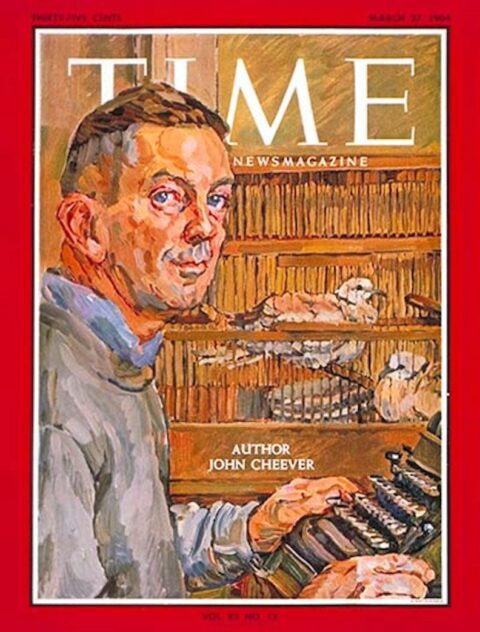
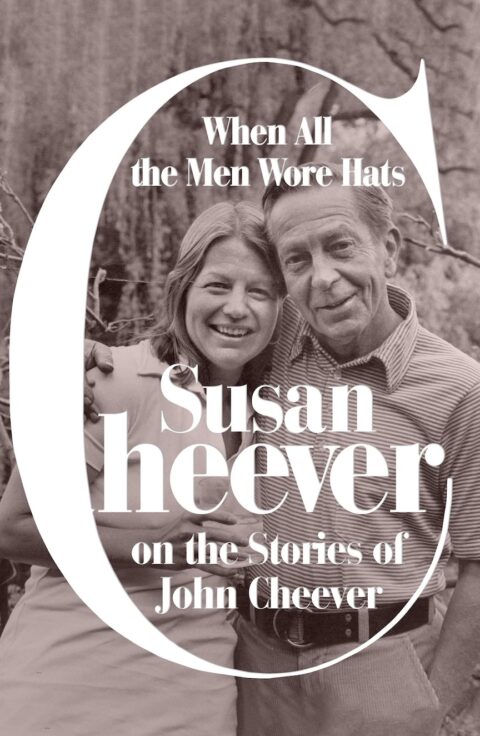 This “creator” in question is, of course, fiction writer John Cheever (JC), Susan Cheever’s father. He was also the subject of her 1984 memoir, Home Before Dark. This new book is, as Susan Cheever (SC) announces at the outset, “a sequel of sorts.” The difference between the two books is as follows: “That book is about my father’s life. This is a book about his work — particularly The Stories of John Cheever.”
This should be excellent news to those of us who care about JC’s work in general, and The Stories of John Cheever in particular.
Let me say right off that there are lots of wonderful things in When All the Men Wore Hats, but SC’s discussions of JC’s stories are not always among those wonderful things. To oversimplify: there are two kinds of literary analysis in this book. One is the statement so broad that it might apply to any story: “One of my father’s great talents as a writer was to write a scene that could be understood in many ways.” And two is the identification of all the things in JC’s stories that actually came from his life. For instance, the reader might be interested to know that the lowboy in JC’s story “The Lowboy” was based on a lowboy in JC’s life. Which is to say, SC’s life, too.
But what I’m doing so far is unfair and petty, and I don’t want to do any more of it. I’m sure that there are spot-on versions of SC and her brothers and mother in JC’s stories, and that in those stories there are scenes and details lifted from life. I know that must be painful, and infuriating for SC, and for her family. If that pain and that fury sometimes prevent SC from giving the stories the nuanced treatment they deserve, who cares?
Well, I care. Or would have, if I hadn’t been distracted — agreeably so — by SC’s own stories. And this is the main reason to read When All the Men Wore Hats: in reading SC’s stories about her father, we learn a lot about SC. I don’t mean about her life; I don’t even mean about her relationship with her father (which seems to be equal parts troubled and loving); I mean about her writerly style, her sensibility, her sense of humor.
For instance, early on in the book, SC tells us a story about the time in 1979 that The New York Times Magazine was running feature on JC, and he called SC to say that he was afraid the journalist, Jesse Kornbluth, had gotten the wrong impression about JC, and would SC call the Kornbluth and set him straight? It turns out that JC was worried that the journalist would say that JC was gay. Which, of course, JC was. But SC didn’t know that at that time; neither, as it turns out, did Jesse Kornbluth. And neither did SC know what, exactly, her father wanted her to set straight. Nonetheless, she called the journalist:
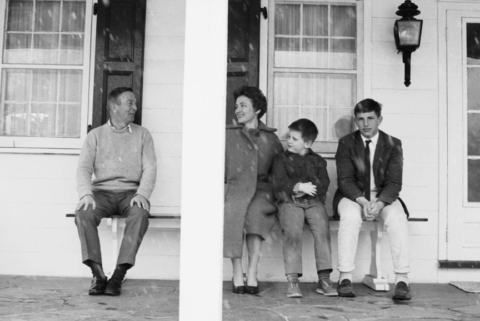
 “One of the strangest telephone conversations I have ever had was the one I then had with Jesse, a conversation in which I sternly advised him not to reveal a secret that neither of us knew — we didn’t even know there was a secret. I was tough with Jesse, as my father urged me to be, but I was totally in the dark about what I was asking of him, and he was also totally in the dark. The profile was admiring and loving and ran with photographs of my parents chatting on the lawn.”
I laughed hard at this anecdote. And I love the way it’s put together, the narrator blundering her way through her task, compelled by someone else’s vague, veiled wishes, until we reach the wonderfully wry image of JC and Mary Cheever chatting on the lawn. I’m tempted to say that it’s an image right out of a John Cheever story. But no, in a JC story there would be some rhetorical flourish, some lovely grace note that would somehow both call attention to itself and be self-deprecating. But this story is more straightforwardly told. And in it, JC is a character, not the writer. SC is the writer, and the story is all hers.
Why do we read? We read to find out what the writer is up to. We read to find out what the writer brings to the story that other writers do not or could not. SC brings to this story an eye and ear for absurdity, for aberrance, for cockeyed wisdom. For example, her father’s advice, after his embarrassing appearance on a television show: “Never eat a heavily sugared doughnut before you go on TV.” Likewise, the moment when SC and her siblings were staying with their parents in a Woods Hole motel, and a drunk JC “came to kiss us goodnight and, on the long row of bedroom doors, stumbled into the wrong bedroom, waking two strangers. Far from being apologetic at his mistake, he was horrified to find that his children had aged prematurely, turning into a couple of unattractive, overweight travelers. After some unpleasant accusations and counteraccusations, the confusion was settled, and my father went to the right door.” Which is not to say that JC is the only subject of SC’s keen eye for detail: consider, for instance, the marvelous revelation that “My brother Ben was afraid of buttons.” And then there’s…
 I realize I’m making this book sound like it’s a collection of anecdotes, and at its best, that’s exactly what it is. In this, it reminds me of JC’s glorious late story “The Jewels of the Cabots,” which is guided not by plot but by associations, by whatever pops into the narrator’s head. When All the Men Wore Hats pretends to be organized around discussions of Cheever’s stories, moving from early stories to late, from early life until the end. But it often ignores its own structure and chronology; it swerves from a discussion of a JC story to an anecdote that may have very little to do with that story under discussion, often then forgetting to return to the story supposedly under discussion. Or it does remember to return to the story but then repeats something it’s already said about that story, or about another story. This is what I meant earlier when I said that the book is strange. And this is what I meant earlier when I said that it’s strangely compelling: the more the book goes off track, the more entertaining it is, and the more likely it is to veer into profundity, into fondness, into insight.
Even when I don’t agree with the insights, I’m interested in the argument. For instance, SC claims that “the tendency to be minor and obscure, brilliantly obscure, brilliantly minor, was my father’s curse.” But in what way was JC minor, or obscure? Was it because he wrote many more stories than novels? And that stories are more minor, more obscure, by nature, or at least by genre? I don’t agree with that categorically, and I especially don’t agree with it when we’re talking about JC, whose many stories were published in the country’s most famous cultural magazine, and whose collected stories won a Pulitzer and was a best seller. SC then goes on to say that her father was “a man who could recreate a moment more vividly than he could recreate a life.” But when it comes to fiction, what is a life made of if it’s not made of vivid moments? Still, I’m interested in SC’s book itself, in what it has to say, in how it says it, in where it ends up going, even as I’m often infuriated by it. Which, interestingly enough, is what SC says it was like — is like — to be the daughter of JC. This, by the way, is the memoir’s ultimate goal, and its highest accomplishment: to make the reader feel exactly what the writer must feel.
Anyway, this is my point: this book is full of pleasures, and the pleasures all have to do with Susan Cheever as a writer. True, I don’t think she gives particularly compelling readings of her father’s stories. But who cares, when she has given us so much else.
[Published by Farrar Straus & Giroux on October 28, 2025, 400 pages, $30.00 hardcover]