For Belgian poet Gaspard Hons (1937-2020), poetry was “a blade of grass that thrives despite a scant amount of water.” Honorée Fanonne Jeffers has described poetry as “that eternal literary stepchild.” Indeed, Abdourahman A. Waberi, from Djibouti, whose three volumes of poetry I’ve translated, intentionally favors writing prose over poetry: “I write poetry, but as it doesn’t sell, I dress it up like a novel.” In a world where poetry struggles to find an audience, it’s reassuring to know that the position of “Poet Laureate Consultant in Poetry,” originally endowed in 1936 by philanthropist Archer M. Huntington as “Consultant in Poetry to the Library of Congress,” has survived for ninety years.
 U.S. Poets Laureate from the recent past have included such luminaries as Ada Limón (2022-2025), Joy Harjo (2019-2022), Tracy K. Smith (2017-2019), Juan Felipe Herrera (2015-2017), Charles Wright (2014-2015), and Natasha Trethewey (2012-2014). Assigned duties are kept to a minimum; Poets Laureate are expected to give a reading and lecture at the Library of Congress. The overall mission of this position is to raise the profile of poetry in the U. S. Community-building poetry projects on a national scope are encouraged. For example, the mission of Billy Collins’s “Poetry 180” project was to make poetry more accessible to high school students by providing a poem for each of day of the school year. Robert Pinsky’s “Favorite Poem” project gathered poems recommended by readers from across the U.S. for an anthology. Joy Harjo’s “Living Nations, Living Words” project showcased work by 47 contemporary Native Nations poets in the U.S.
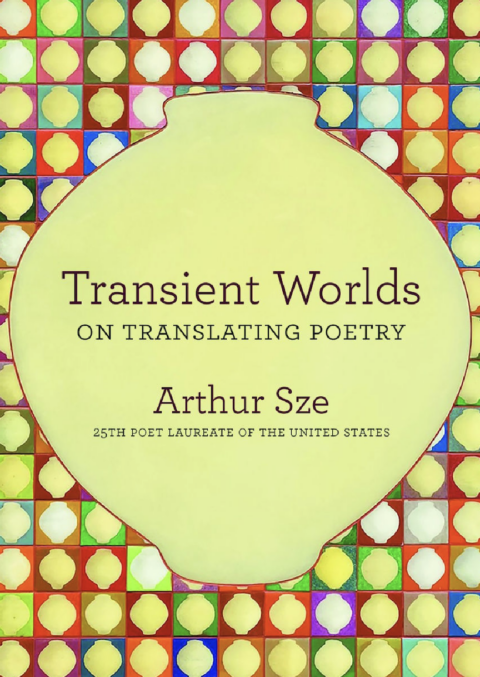
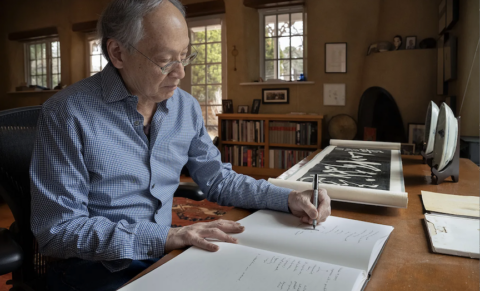
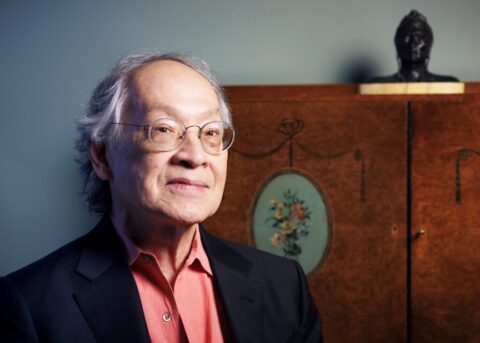
Arthur Sze is the 25th Poet Laureate, appointed on September 15, 2025. In addition to having authored 12 books of poetry, he has translated classical Chinese poems into English. He credits his translation work for helping him hone his poetic craft. In an interview in January 2026 with Mandana Chaffa, sponsored by the National Book Critics Circle, Sze stated that translation “is the deepest form of reading” and that he was able to feel language “deep inside his body.” Poetry in translation, a subject no previous Poet Laureate has ever chosen for their signature project, is Sze’s focus, embodied in his Transient Worlds: On Translating Poetry. The multipart mission of this book is to help readers 1) develop and/or deepen their appreciation of poetry through poetry in translation; 2) understand what literary translation entails; 3) appreciate how English has been enhanced through translation; 4) write their own translations and/or non-translated poems. This compact book is written with a broad audience in mind, encompassing those new to poetry, aspiring and experienced literary translators, as well as those who are merely curious about what happens behind the scenes when a poem is translated. To keep this book accessible, Sze does not emphasize translation theories and philosophies, though sometimes he can’t resist “digressing” (as he calls it) to discussions of great interest to practiced translators, such as the one where he describes, at length, a particular Chinese character which figures prominently in the Tao Te Ching. A glossary of terms accompanies the book, ranging from basic information, such as the meaning of a “stanza” (“a basic unit of poetic lines organized by a specific principle, with blank space between each unit”) to more in-depth concepts, such as “pinyan” (“since 1949, the standard system of romanized spelling for transliterating Chinese”).
Transient Worlds is a non-linear book covering work from ancient to modern times, with an emphasis on evocative texts that have withstood the passage of time. Translated and interpreted so many times over so many years, each of these cumulative translations becomes a “transient world.” The source texts are organized into 15 “zones,” a concept that derives from Guillaume Apollinaire’s use of the term. The 15 zones are designed to be “surprising and endlessly “interpollinating” — to be read according to the reader’s taste:
“If you have an interest in Surrealism, you can start with Pablo Neruda in Zone 8, jump to Aimée Césaire in Zone 11, and go on from there … If you are interested in Asian poetry, you can start with Tao Qian in Zone 1, go to the opening chapter of the Tao Te Ching in Zone 3, then move on to Issa’s haikus in Zone 6.”
 Sze’s zones draw on source poems originally written in Arabic, Braj Bhasha, Chinese, Danish, French, German, Greek, Hebrew, Japanese, Navajo, Russian, Spanish, and Tzeltal. The authors themselves are equally diverse: Guillaume Apollinaire, Aimée Césaire, Inger Christensen, Búffalo Conde, Najwan Darwish, Homer, Kobayashi Issa, Mirabai, Pablo Neruda, Tao Qian, Rainer Maria Rilke, Sappho, Marina Tsvetaeva, and Orlando White. Most of the translators are critically acclaimed, including Robert Bly, whose The Winged Energy of Delight: Selected Translations, recommended to me many years ago by Michael Collier, inspired me to become a translator. Some are especially known in the context of one particular author they’ve translated for years, such as Kareem James Abu-Zeid (Najwan Darwish) and Chloe Martinez (Mirabai). Some are editors (Michael Wiegers, the publisher of this book) and some translate their own work (Búffalo Conde). Some of the translators are gifted poets in their own right, such as Anne Carson, Carol Moldaw, Stephen Mitchell, and Alice Oswald. Other translators include Sze himself, Mary Barnard, Guy Davenport, Clayton Eshleman, Robert Fagles, Marcia Falk, Elaine Feinstein, David Hinton, D. C. Lau, Susanna Nied, M. D. Herter Norton, Alice Oswald, Stephen Owen, Red Pine, Jim Powell, Nanao Sakaki, Roger Shattuck, Annette Smith, Donald D. Walsh, and John C. H. Wu.
Most of the zones present an original poem in the source language, followed by multiple translations of the same text. Sze then offers an in-depth discussion contextualizing the author and the source text in question, as well as an analysis of the different versions, highlighting which elements were successfully rendered into English, and which might not have done justice to the original. It should be noted that Sze is not measuring how faithful any translation is to the original in terms of meaning, but rather how effective the translation is in bridging languages to get at the essence of any given poem. He offers advice to would-be translators, warning that “literally following the source language is no guarantee of success” and that “a translator needs to take imaginative risks and imbue the translation with emotional vitality.”
One of the more controversial topics covered in Transient Worlds is whether someone can translate a poem written in a language in which they’re not proficient. The issue is complicated, and literary translators are divided on this question. Some favor translations written by “heritage” translators, making a case that they have a better grasp of the language, culture, and historical/political context of the poem than someone who is not a native speaker. Sze contends that familiarity with the source language is not necessarily a requirement to successfully translate it:
“It’s clear a memorable translation can be made even if you don’t know the language the poem is written in. You will need to find someone fluent in the language who can collaborate closely with you, and it’s important you care about, better yet, love the poem you translate. Translation involves building bridges, and here it can be between people.”
 Sze encourages the readers of Transient Worlds to attempt to translate for themselves the original source language texts from each zone. He describes the process that Carol Moldaw used in translating a poem originally written in Russian — a language she doesn’t read or speak. She worked with a native speaker of Russian who provided her with a recording of the poem, a literal translation of the text, plus a transliteration of the Cyrillic script. Moldaw then looked for the music of each line, including its sonic texture, and tried to infuse these qualities into her translation. Her impressive translation of Marina Tsvetaeva’s poem is included in Zone 10 of this book.
I found Moldaw’s experience validating, in that I have translated the Swedish writer Stig Dagerman’s “Birgitta Suite,” using a similar process to what is described above. I don’t know Swedish, but I was in awe of the author, a literary wunderkind who tragically died at the age of 31. In the four years between 1945-1949, he published four brilliant novels, a collection of short stories, five plays and a trove of satirical verse. Lo Dagerman, the author’s daughter, invited me to collaborate with her; the tools and the encouragement she provided helped us bring this capstone poem to an Anglophone audience.
The theme of collaboration imbues Transient Worlds, whether it’s in the context of working with a co-translator or working from previous translations of a given text. Sze presents Rainer Maria Rilke’s “Archaïscher Torso Apollos” (“Archaic Torso of Apollo”) in Zone 15, in two different English versions. What is notable is that this poem has been translated by dozens of people. I’ve even used a sampling of these versions to introduce literary translation to my students and demonstrate the myriad different ways translators may “see” a poem. I would imagine that most new translations of this particular poem are informed by those that have preceded them. And likewise, these new Rilke translations will inform those that follow.
Poetry in translation is certainly a subject about which Sze is quite fluent, and we are the eager beneficiaries of this project. Hopefully at least one additional volume will follow, as was the case with other Poet Laureates, such as Billy Collins and Robert Pinsky. The Rilke poem mentioned above ends in wisdom: “You must change your life.” I suspect Sze aims to help us do the same, one poetry translation at a time.
[Published by Copper Canyon Press on April 14, 2026, 160 pages, $17.00 paperback]