on The War Within a War: The Black Struggle in Vietnam and at Home by Wil Haygood
“What was happening in Vietnam was happening in America,” writes Wil Haygood at the outset of The War Within a War, “and what was happening in America was happening in Vietnam – the Afro, the debates about heritage, the balled fist as the Black Power salute.” With the verve of a seasoned feature writer (we Bostonians read his columns in the Globe from 1984-2002 before he left for The Washington Post), Haygood interweaves vignettes of seven Black participants in the war with broader scenes from the homefront. As he notes, this was a war in which less than two percent of officers were Black – even as Robert McNamara and the Pentagon looked to Black neighborhoods to fill General William Westmoreland’s request for hundreds of thousands of young men. The average age of a Black recruit was nineteen.
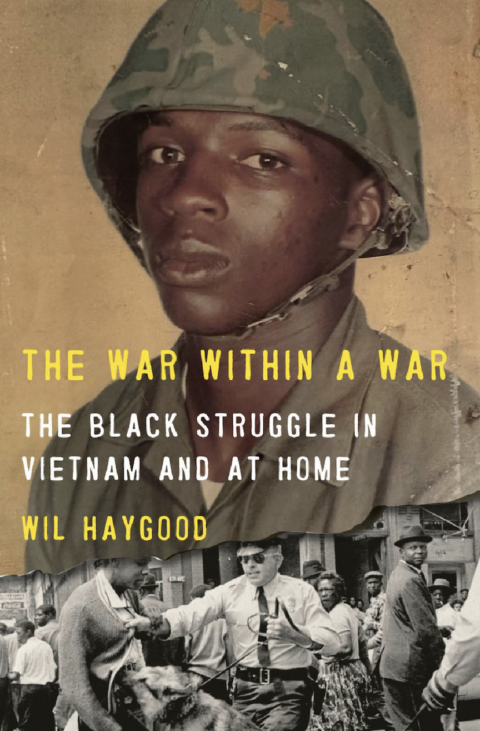 In the first chapter, Haygood introduces the figure of Elbert Nelson, drafted in 1967 right after his graduation from med school. But before we hear about his experiences in Vietnam, Haygood tells us what Nelson witnessed on the news at home and took with him to war – Selma and Watts in 1965, the latter described by Billy Graham as evidence of a plot “whose objective is the overthrow of the American government.” To illustrate what awaited Nelson in Vietnam, Haygood describes what happened when Lavell Merritt, a Black Army officer, stepped up to the mic at a daily press briefing in Saigon to say, “The American military services are the strongest citadels of racism on the face of the earth” and “I could get a good efficiency report from a racist because I have been a good nigger.” His statement made headlines back home. Dr. Nelson was assigned to a base camp in the jungle; his account comprises both descriptions of wounds and his interactions with disaffected and frightened soldiers.
In 1973, I worked at a liquor store alongside a white guy recently returned from Vietnam who resented how Black men would dap while in line at their mess hall. Haygood mentions that Stewart Kellerman, a UPI International correspondent trusted by some Black soldiers, traveled to Camp Holloway in the Central Highlands “in search of the meaning of this news-making gesture.” He came upon a Black soldier named Gary Terrell whose commanding officer had ordered him to cut his Afro and stop dapping. “I tell them no,’ he told Kellerman and the others. ‘You ain’t gonna take my soul away from me, you dig? So what happens? I got every rotten job the rabbits can think of.’” (“No rabbits allowed” was a sign hanging in his tent, meaning “whites not welcome.”)
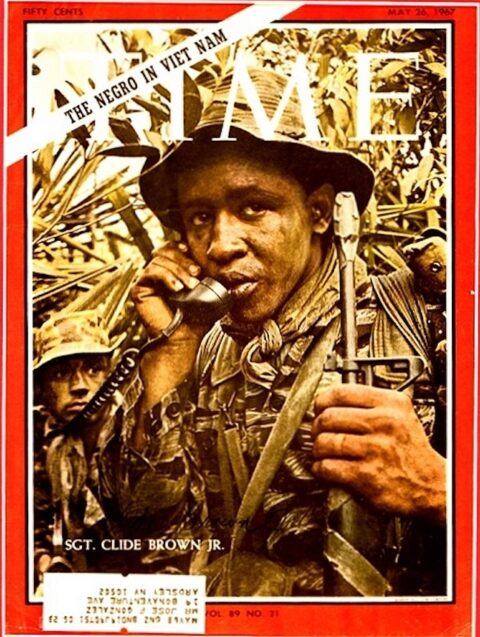 Chapter four brings Joe Anderson, born in Topeka, Kansas in 1943, whose classmate was Linda Brown, named as a lead plaintiff in a desegregation lawsuit suit brought by the NAACP and ruled in their favor in 1954 by the Supreme Court. Anderson entered West Point in 1961 – one of five Black cadets in a class of 900. “It seemed that every Black cadet who entered West Point had to pass the ghost of Henry Ossian Flipper – the first Black man to graduate there, who fought in the 1880 Indian War in Oklahoma and was accused of stealing funds from a commissary; he was found innocent of the theft but then dishonorably discharged for “conduct unbecoming of an officer and a gentleman.” Haygood then pivots back to Anderson who quickly gained a reputation for excellence as a platoon leader, and who said, “I was an officer and a gentleman by act of Congress. Where else could a Black go and get that label just like that?” Pierre Schoendoerffer’s film La Section Anderson premiered on French National Television in February, 1967; it opened in America in July as The Anderson Platoon and was awarded an Oscar for best documentary. But more popular was another film, The Green Berets, described by Renata Adler in The New York Times as “so unspeakable, so stupid, so rotten and false in every detail that it … becomes an invitation to grieve …”
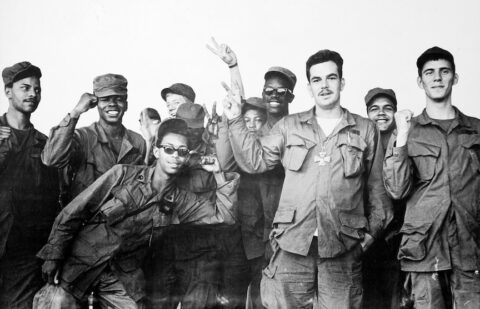 I mention Adler’s response to indicate that Haygood has much to say about American culture throughout the narrative – such as the effect of Time magazine’s cover story on May 26, 1967, “The Negro in Vietnam.” American media were publishing photos and stories unlike those of past wars, showing white and Black soldiers fighting together. Haygood says the photos “seemed to say that this racial experiment was working. Even if there were mighty deep fissures in race relations that were being kept from the American public.” The Time story ended with a similar summary: “By channeling the energies and accommodating the ambitions of the returning Negro veteran, the nation can only enrich its own life and demonstrate that democracy can work as well in the cities and fields of America as in the foxholes of Vietnam.” But Julian Bond, in liner notes written for the 1972 album “Guess Who’s Coming Home: Black Fighting Men Recorded Live in Vietnam,” put it his way: “Black soldiers, trained in the violent arts of guerilla warfare as no Blacks before, are coming home, determined to bring the war with them if America doesn’t change her racist ways and given them the democracy they were sent to defend.”
[Published by Knopf on February 10, 2026, 384 pages, $35.00 hardcover]
◆ ◆ ◆ ◆
on The Chosen and the Damned: Native Americans and the Making of Race in the United States by David J. Silverman
In 1887 and 1898, Congress passed the Dawes and Curtis Acts, then the latest in a century’s worth of actions and legislation intended, so they said, to integrate indigenous people with the White* mainstream. As David Silverman notes in The Chosen and the Damned, the point of the laws “was to privatize the land of all Indians* of whatever blood quantum, eliminate all laws giving Indians special status, and make citizens of all Indians, eventually. The assumption was that the government would no longer need an Indian policy by the early to mid-twentieth century.” Land was divided into lots (Indians had always lived communally without private property) and assigned to these new Indian citizens. But because penury was rampant, Indians often sold their portions. The Acts, says Silverman, “functioned as a giant White land grab that left tens of thousands of Indians destitute.” In 1881, there were over 155 million acres of Indian land; by 1900, just around 78 million remained.
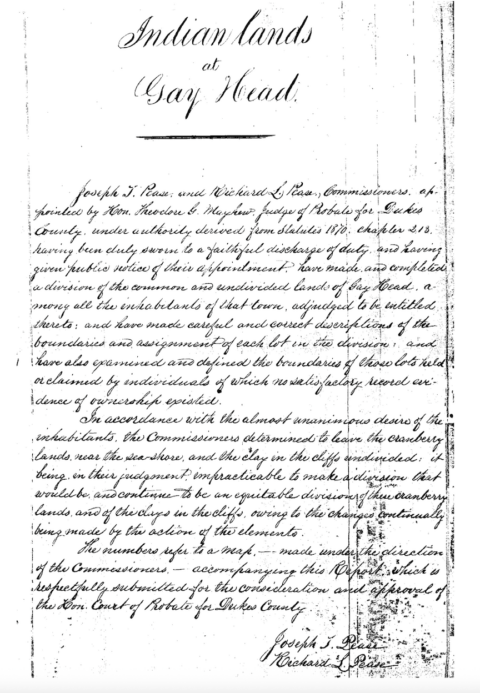 I learned elsewhere that in 1842, the state of Massachusetts divided Wampanoag tribal land into 60 lots to force assimilation and encourage subsistence farming. Later, the lots were further divided – which facilitated tax and debt collection — and led to a broad sell-off of parcels to Whites. I live on such a lot in Aquinnah, formerly called Gay Head by the colonists. Silverman notes, “The blanket granting of citizenship to Indians would not take place until 1924, sometimes over the opposition of Native people who saw it as a breach of tribal sovereignty and an unwanted tax burden.”
Making apt and generous use of citations, gleaned mainly through existing studies, Silverman not only assembles a history of extermination, but lets us hear the language of betrayal, greed and fantasized racial superiority. The book succeeds both as a general history of Native/White events and relations (the battles, treaties, removals), a cultural profile of White Christian mentality and Native habits, and an examination of governmental actions, mainly failures, to enact supposedly humane laws while appeasing the demands of settlers and profiteers.
By 1924, Natives had endured 300 years of facing two stark choices: extirpation or assimilation. Silverman illuminates the goal-orientation of racism, in this case the violent seizure of land. Here we find government officials “who openly advocated for eliminating Native people, not just as tribes, but as a race, almost always with an eye toward seizing their land … The primary argument of this book is that Indians always have been and remain central to the history of race-making in America.” As the governor of the Massachusetts Bay Colony phrased it in the early 1600’s, “For the Natives, they are all near dead of the smallpox, so the Lord hath cleared our title to what we possess.”
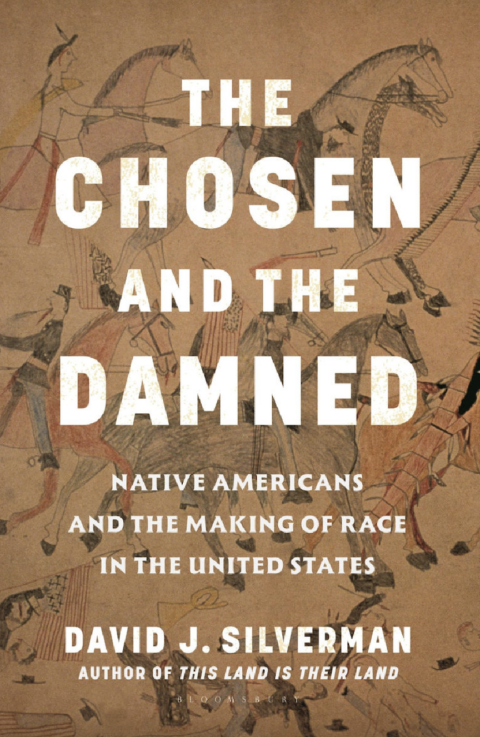 This is also a history of the interactions between cultures. Silverman takes us through the 1700s and “a new racial order in New England” (just as it developed in Virginia) in which “the surviving Wampanoags, Pequots, and Mohegans would have to cede the colonists land whenever they demanded it, toil for them as debt peons, and provide them with soldiers for their wars against the French and other Indians.” As the conversion of Natives to Christianity began, Natives “began petitioning for freedom to test the colonists’ principle that Christians should not hold one another in bondage” – the moment when White identity eclipsed markers of religion.
Chapter Two, “Race Wars,” brings the westward migration of Whites: “By 1710, Pennsylvania was already home to 25,000 people, and by 1760 its population had reached nearly 180,000.” The Seven Years’ War began with attacks on Whites and monetary bounties placed on the scalps of Indians. Coalitions developed between tribes, giving them the clout to sack British forts and raiding farmsteads during what became known as Pontiac’s War near Detroit. Silverman tracks the hostilities and retaliations throughout the country. The next chapter, “Undistinguished Destruction,” extends the antagonisms through the War of 1812 which “consolidated mutually hostile White and Indian racial identities and made Whiteness fundamental to United States national identity.” The federal government’s acquisition and sell-off of Native land, and collecting taxes on it, became central to its economic policy. This chapter is followed by “Whitewash” which begins Silverman’s take on enforced removals (and its relevance to “Manifest Destiny”) and various attempts to integrate Natives culturally through schools, farm employment, and trade.
 By 1910, when the thirteenth census occurred, “just under half of all Indians in the country were of mixed White ancestry.” In 1928, the country’s average annual per capita income was $1,362; for Natives, it was less than $200. The federal Indian Offices own 1918 data showed that 46 percent of Indians were infected with trachoma and 36 percent with tuberculosis. The best the federal government would do is pressure “Indians to leave their reservations for the cities with promises of jobs, education, material comfort, and ample support, a policy known as Relocation.” Some 160,000 Natives were compelled to participate out of distress, though they discovered that urban landlords “were unwilling to lease to them.”
The Chosen and the Damned is both revelatory and shocking. It has but one flaw – its too frequent reiterations of aggrieved assessment, as if Silverman can’t trust the reader to follow the path he has cleared for us. On the other hand, he writes with the awareness that the struggles of Native peoples are far from resolved, and that their continuing efforts to preserve their cultural heritage and reclaim some modest portions of their lands deserve our attention.
[Published by Bloomsbury Publishing on February 10, 2026, 512 pages, $35.99US / $47.99CAN hardcover]
About White* & Indians*: Silverman says, “I use ‘Indian,’ ‘Native,’ and ‘Indigenous’ interchangeably, though I employ ‘Indian’ the most … the majority of Native American people whom I know personally or have encountered through professional events and media continue to favor the term.” he capitalizes White “for stylistic simplicity.”
◆ ◆ ◆ ◆
on Stay Alive: Berlin 1939-1945 by Ian Buruma
Ian Buruma opened Year Zero: A History of 1945 (2013) with a story about his father. A Dutch citizen and student at Utrecht University in 1943, Leo Buruma was rounded up with others by German police. To protect his family, he decided to sign a loyalty oath to the Third Reich, and was then transported from The Netherlands to east Berlin’s Lichtenberg district where he was forced to work at the Knorr Brakes factory and lived in a lice-ridden barracks. That year there were 6.5 million foreign industrial and agricultural workers in Germany. (Buruma notes that almost 2.5 million non-Jewish foreign workers died in Germany from 1942-1945.) Leo reappears in Stay Alive where we learn that “he was spared from doing hard manual labor by working in the accounts department” since his fluency in French, German and English allowed him to translate for managers and laborers. Leo was even permitted to walk freely beyond the work camp and attend concerts and football matches. In March 1944, he was appointed as an air-raid warden, responsible for maintaining order as people rushed into shelters.
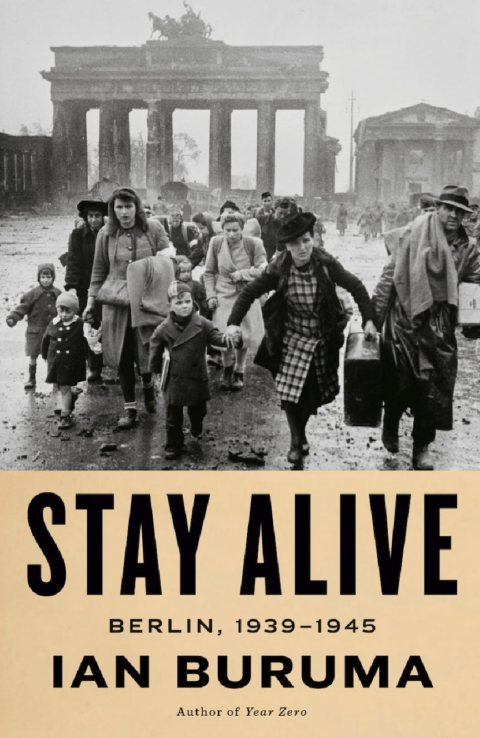 Leo represents a prototype of the conflicted Berliner, opposed to fascism but trying to live as decently as possible. “Leo, as a Dutchman compelled to work in Berlin, didn’t have to cope with collective guilt,” Buruma writes. “But he wasn’t in the resistance either. He felt guilty about working for the Germans, even if it wasn’t voluntary. But the sense of feeling squashed between opposing forces affected him too.” Leo wrote to his parents, “The great danger of our long stay here is that we become skeptical of everything to do with politics. We feel that we are not just threatened by one state, but from all sides.” There were those like the novelist Frank Thiese who, having decided to remain in Berlin, coined the phrase “inner emigration,” meaning “there was something enriching, indeed heroic, for an artist to maintain an inner life that was untouched by Hitler.” Thiese was responding to Thomas Mann, then in Los Angeles, who claimed that “any books published in Germany between 1933 and 1945 bore the ‘smell of blood and shame.’” Buruma notes that Mann’s books were sold there through 1936. As Buruma puts it, “You could not be inside a criminal state without being corrupted, and open resistance meant death.”
As its subtitle suggests, Stay Alive comprises a year-by-year narrative of Berlin during siege, evincing a thorough and judicious use of source materials. But the core of the text is based on Buruma’s interviews with some of the period’s survivors. As for the main title, it echoes the phrase “bleiben Sie übrig” or “stay alive,” the new farewell in a city under fire.
The narrative begins with September 1, 1939, when the German army invaded Poland and Britain declared war in response. For a year of eerie stillness, Berliners would talk of the Sitzkrieg, the “sitting war” or “phony war” – but even then, Joseph Goebbels noted in his diary (often quoted by Buruma) that coal supplies during an especially harsh winter were very low. The first bombing raid by the RAF occurred on August 25-26, 1940 – and the city was prepared, having established 7,000 shelters. This is what shook me hardest: Hitler et al, juiced up on Nazi orthodoxy and paranoia, were willing from the start to expose their precious volk to extreme hardship and violent death. I was reminded of our American far right’s fascination with the apocalypse and end of days. Nevertheless, Buruma approaches his topic as the ultimate humanist. The main antagonist in this story is Goebbels; the profiles of Berliners range from the heroic to the credulous to the innocent.
The narrative pivots between the regime’s attempts to manage the temperament of the population — exhorting citizens to carry on during austerity in support of the Reich and Volksgemeinschaft, the Nazi concept of a racially pure and classless national community – and profiles of what people were actually experiencing. Howard K. Smith, then reporting for CBS, wrote, “The graph of German morale is not a graceful, snaky thing which slithers upwards in long rises and downwards in slow, calm declines like the graph of almost any people living in peace. It is a low, jagged line which leaps spasmodically upwards in one instant and collapses into sharp depressions in the next.”
Goebbels personally reviewed movie production, and people flocked to the theaters. He would ban dancing in clubs, then days later rescind the order. Meanwhile, between January and March 1942, German forces suffered nearly 550,000 casualties; although such news wasn’t broadcast to Berliners, families were usually informed. As “fashion magazines offered useful tips on how to save money by making one’s own funeral clothes,” the populace coped with the disparities between Goebbels’ officialese and the whine of air raid sirens. In August 1944, he shut down all theaters and cabarets for good.
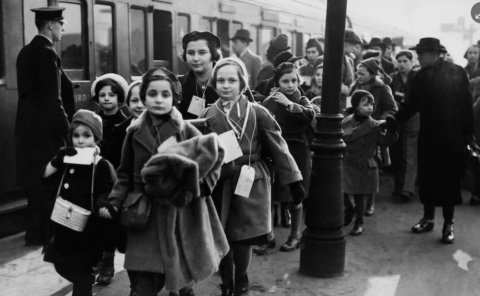 Meanwhile, Goebbels’ anti-Semitic rhetoric continued, blaming Jews for everything. There were 90,000 Jews living in Berlin in May 1939 (down from 160,000 in 1933), by which time emigration was virtually impossible. But deportations to the death camps had not yet begun. Then, during the fall of 1941, more than 7,000 Jews were transported out of the city. In February 1943, more than 10,000 Jews were rounded up at their workplaces. By war’s end, even those Jews protected by the Nazi’s erratic racial codes were performing slave labor. Unwelcome in the shelters, Jews hid in cellars during bombing. Buruma writes, “Jews were not only deprived of ration coupons for meat and eggs but they were not allowed to buy any food unless it was available in abundance, which was rarely the case. Tobacco was no longer available for Jews. And out of sheer petty spite Jews were not allowed to keep their pet animals.”
But Stay Alive is more than a book of disquieting facts. Buruma has provided a range of responses to those increasingly harsh and lethal conditions, often excerpted from interviews and archived letters. One Marie Jalowicz, a Jewish woman surviving as a “U-Boat” (an epithet for Jews living in hiding), wrote in 1944 that the windows of all the neighboring houses were thrown open to let in the early spring air, and song rang out from radio sets. But then she recalled, “We heard the screams of tortured inmates of the prison camp – and all the windows closed at the same timer as if by previous agreement … These were the same people who claimed, later, not to have known anything of what was going on.” By the end of the war, there were less than 2,000 U-Boats in Berlin.
In April 1945, the Russians arrived. Leo Buruma ended up in a displaced persons camp run by the Red Army at Karlshorst. “Hospitals estimated that more than one hundred thousand Berlin women were raped,” Buruma reports, “and about ten thousand victims died, often by killing themselves in shame.” Horst Selbiger, interviewed by Buruma, recalled of May 1945, “All of a sudden, the fascist killers and criminals had become fine upstanding democrats. Everyone had helped a Jew.”
[Published by Penguin Press on March 17, 2026, 400 pages, $32.00US/$42.00CAN hardcover]