After Toni Morrison died in 2019, amid eulogies and encomia from celebrities and cultural figures, her friend Fran Leibowitz offered a candid comment: “I know it sounds like a crazy thing to say, but I always thought Toni’s writing was underappreciated. Because people looked at it through the prism of her being black and being a woman. But Toni was a very experimental writer. There were a lot of things Toni did through her writing that just went unremarked upon.” The Zambian author and critic Namwali Serpell recounts this anecdote in her graceful, exhilarating On Morrison, announcing her intention to remark upon — to excavate — the strata of the Nobel laureate’s career, a wonder to behold as it emerges like the contours of an ancient Greek temple, Serpell measuring it from all angles, an array of tools on hand.
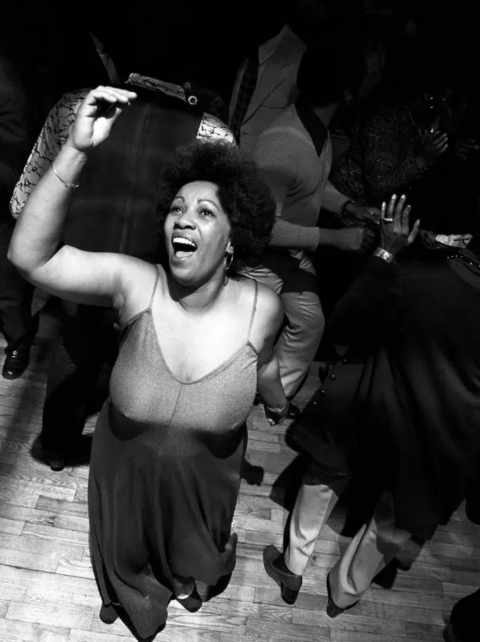 On Morrison is best understood as a theory of reading, though less architectural and rigid, more a flow of ideas and language from author to critic to us, back and forth, memorably captured in a 1974 photo of Morrison at a disco, with full Afro and hoop earrings, “a long, tight, shimmery dress.” We sense her quicksilver movement, emblematic of that freewheeling decade. In her introduction, Serpell defines a few parameters, starting with race: “Morrison and I both lucked into the strange privilege of zooming out from or boomeranging around race. This perhaps explains why neither of us, for example, tends to capitalize the word black when referring to people in our writing. It concedes too much; it protests too much.” (For clarity I will follow Serpell’s lead here.) She links her own project — the quest for a black aesthetics — to Morrison’s, picking through the oeuvre, chapter by chapter.
As a Howard undergraduate, and later as a graduate student at Cornell, Morrison was immersed in high modernism; she wrote her MA thesis on Woolf and Faulkner. (A sentence from her novel Jazz, “The hurt hurt her,” echoes Joyce’s “love loves to love love” riff in Ulysses.) She parlayed her academic credentials into an editorial job at Random House, bringing the Toni to a tony white culture, teaching and writing on the side. Her debut, The Bluest Eye (1970), plumbs one black girl’s desire for blue eyes, tapping Morrison’s education while imbuing modernism with a new lyrical register, a kind of reverse engineering. “Morrison once described irony as the most ‘authentic’ feature of black style,” Serpell writes. “Incompleteness, fragmentation, irony, and tragicomic feeling are the shared notes, or overtones, between modernist techniques and the black music of The Bluest Eye.” The harm inflicted on Pecola implies collective blame and shame, how tragedy stains us, rippling across families and communities — “Nobody is responsible; everybody is responsible” — a theme Serpell develops throughout On Morrison.
Sula probes the binaries of friendship while Song of Solomon piles on Biblical allusions; each considers race and class in a nation weighed on the scales of justice and found wanting. Serpell underscores Morrison’s growing confidence in her voice and tributaries of influences, drawing on patterns of syncopation and repetition, “the Afrodiasporic crossroads where mythic, folk, and religious lore from various parts of the world collide in a cross-cultural games of the dozens.” Set on a Caribbean island, Tar Baby unfolds like a fable, allowing Serpell to detour among visual artists such as Kara Walker and Harlem Renaissance painter Malvin Gray as well as Picasso and Duchamp. (Last month I viewed a Man Ray retrospective at New York’s Metropolitan Museum and recalled Morrison’s use of blurred surfaces and negative spaces — plot lacunae, erasure of punctuation — as I absorbed his innovative rayographs and provocative Noire et Blanc, a photograph of his sometime muse, Kiki de Montparnasse, posed with an African mask.)
 Beloved (1987) — “regarded by most to be Morrison’s masterwork,” Serpell notes — layers genre devices atop modernist techniques atop Afrodiasporic motifs, thrusting it above other summits of postwar literature, broadening the possibilities of neo-slavery narratives. (Contemporary novels such as Colson Whitehead’s The Underground Railroad, Ta-Nehisi Coates’s The Water Dancer, and Jesmyn Ward’s Let Us Descend fall squarely within this lineage.) Inspired by the 1856 account of Margaret Garner, a fugitive who killed her child to prevent a return to slavery, Beloved toggles between freedom and bondage, survival and infanticide, the dead and the living, trapped amid a haunted house and generational trauma. Sethe, Morrison’s stand-in for Garner, grapples with forces beyond her control. “Morrison’s own earlier works are littered with corpses, thronging with ghosts, spiked with witches, and shimmery with sorcery,” Serpell observes. “She just didn’t apply genre labels like Gothic or horror or magical realism to them. For her, comfort with the supernatural was a part of black life.” Genre-bending opens the door to urgent moral quandaries: “For Morrison, to raise the dead was more than a diverting, lucrative, or apposite experiment with genre fiction. It was an ethical imperative.” This mash-up, too, is a key step toward a black aesthetics: “The haint becomes an aesthetic principle.” Jazz (1992), Morrison’s most fractured narrative, skitters across landscapes and timelines in seemingly improvisational twists. Paradise (1998) reveals the depth of Morrison’s Catholic faith, reflecting, Serpell suggests, the crescendo of a Dantean odyssey. Serpell approaches Morrison’s lesser 21st century novels carefully, treating the author’s creative decline with tact: “freedom and failure haunt each other.”
Morrison published only one short story, “Recitatif” (1983), which first appeared in an anthology edited by Amiri and Amina Baraka, and then as a stand-alone hardcover in 2022, with an introduction by Zadie Smith. This entertaining tale about two lifelong friends — Twyla and Roberta, one white and one black — is pure vaudeville; Morrison confuses racial identities in a nod to Abbott and Costello’s iconic comedy sketch, “Who’s On First?” (It’s worth mentioning that black performers, such as Hattie McDaniel and Sammy Davis, Jr., treaded the boards in their youth; while grounded in black aesthetics and modernism, Morrison also finds antecedents in carnivals and sideshows .) It’s impossible to keep track! When I read the story a few years ago, I jotted notes paragraph by paragraph, brow furrowed, an invisible imp perched on my shoulder, mocking me..
But “Recitatif” is more than just slapstick; it implicates the reader in a shell game. It challenges fixed notions of reading itself, harking back to Wolfgang Iser’s reader reception theory, in vogue among English departments at the time Morrison wrote her story: the text exists only if the reader scans it into his brain. He reads, therefore it is. Without that reciprocity the text vanishes, a mirage, like the biological fiction of race. Further, “Recitatif” highlights tensions between non-colorist fiction and the assertion of a black aesthetic, showcasing Serpell’s superb sleuthing as she maps the chronology of the story against Gayl Jones and Nettie Jones (no relation) and the orphaning of Nettie’s contracted manuscript, Fish Tails, when Morrison departed Random House to write full-time. (On Morrison brims with publishing yarns, catnip for gossips like me — Fish Tails was recently reissued by Farrar, Straus & Giroux.)
 In later years, showered with accolades, Morrison couldn’t resist the impulse to revisit her earlier work, commenting on it as a critic or a seasoned editor would, another trick up her sleeve. She clearly relished a game of wits with her reader: beneath her serious tone we hear a murmur of laughter. She knows when to throw “shade” at “the entire, fragile enterprise of white liberal humanism,” and even at Oprah Winfrey, whom she credited with making her a wealthy woman. Serpell alludes to Morrison by referencing her own first novel, The Old Drift, multiple times, also delighting in puns, including one spun from the atrocities of Beloved: “Paul D and Sethe both experience having a ‘bit,’ or tongue restraint, forced into the mouth, literalizing how enslavers reduced human beings to dumb beasts, so to speak.” (Italics mine). Serpell circles back repeatedly to the term metafiction, a principle prevalent throughout Morrison’s books and her own, a kind of literary oversoul.
The act of writing is many things: a baptism by fire, an exorcism of demons, a waltz, a wrenching confession, a hall of mirrors, a fake-out. Perhaps Morrison summed it best: “’Writing is to me an advanced and slow form of reading.’” Which teases the questions at the heart of On Morrison: can she be read or only misread? And what does it mean to be a reader? Serpell cites the critic Elaine Scarry’s argument that reading is a manual of “procedures for reproducing the deep structure of perception”; she affirms Morrison’s body of work as a profound philosophical investigation. Now, amid breakthroughs in neurobiology and the science of consciousness, does reading transcend the scope of the humanities, a cortical function encoded in the folds and neurons of our brains? AI is already impacting literacy rates — what does Serpell make of that?
For raising these questions, Serpell deserves consideration for a major prize. Mostly she deserves our gratitude and admiration: On Morrison gives us, in precise yet supple prose, a close reading in action and an exemplar of literary criticism (distinct from book criticism, a journalistic form). This book will spur you to pore overt the master’s achievements. As Serpell observes of Morrison, “reading was more than a happy meeting of minds; it was what she called ‘the dance of an open mind when it engages another equally open one,’ which I’ve always read as a twining of the wills, or a commingling of them, an epiphanic union of literary and human relation — all at once.”
[Published by Hogarth on February 17, 2026, 384 pages, $32.00 hardcover]
3 comments on “on On Morrison by Namwali Serpell”