Best Literary Translations 2026, guest edited by Arthur Sze, is a vibrant, urgent, and deeply resonant anthology that foregrounds the art and politics of translation as much as the original works themselves. What sets this anthology apart is its transparency and celebration of the translation process. Each piece is accompanied by a translator’s note, offering readers a window into the creative, ethical, and at times collaborative negotiations behind the English versions.
This third edition, drawn from over 450 submissions in 62 languages, is not just a showcase of global literature but a living document of how translation can resist xenophobia and amplify marginalized voices. Best Literary Translations 2026 includes works from 21 source languages, both widely spoken and endangered. Among the rarest living languages featured is Latgalian, spoken by fewer than 160,000 native speakers primarily in Latgale, the easternmost region of Latvia; this Baltic language faces a modern language shift despite being heavily protected as a historical variant of Latvian. Its inclusion underscores how vital literary translation is to cultural and linguistic preservation. In her translator’s note, Jayde Will praises the poem “Borderlands” by author Ligija Purinaša as a new generation of writers in Latvia “who are not content with the status quo” and “are able to provide razor-sharp commentary about society today.”
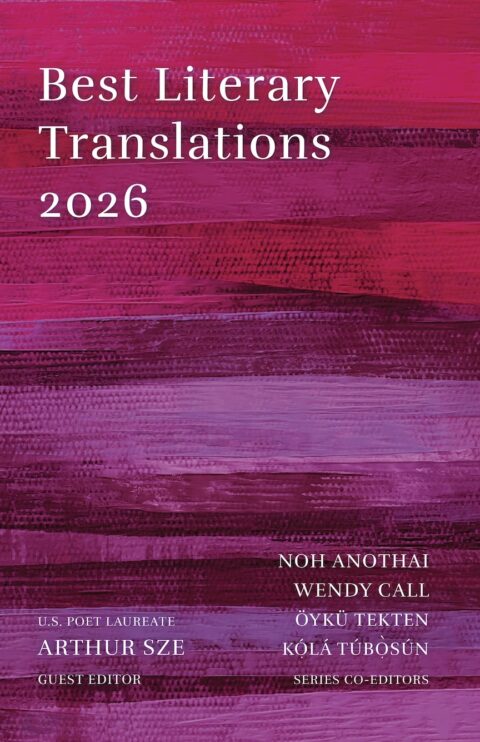 Arthur Sze’s touch is felt in this collection. In his recent book Transient Worlds – On Translating Poetry he writes, “A good translation appeals to our ears, eyes, and heart; it is a singular endeavor and a humanizing act that makes the ancient contemporary, the foreign accessible, and the emotional, intellectual, and spiritual music of the human interior universal.” He further asserts that the word translate originates from the Latin translates, meaning “to bring over, carry over,” and “if the translator recognizes the many possibilities for meaning that this carrying-over affords them, they will embrace the process of transformation and renewal that is translation […]”
Best Literary Translations 2026 and its editors — Noah Anothai, Wendy Call, Öykü Tekten, Kólá Túbòsún — pose a critical question about the meaning and stakes of translating into English in a politically charged climate. Translation here is framed as an act of care, resistance, and preservation — “a radical act” in a “burning world.” The beating heart of this collection, then, is inherently and necessarily political, with every editorial choice representing a boundary drawn or crossed. Works featured from Middle Eastern communities focus on war, displacement, loss, and the fracturing of personal and collective histories. This aligns with a recent surge in translations from Palestine and Ukraine, prompting the editors to question why devastation so often must precede recognition — and why certain voices are only amplified in times of crisis and despair. For example, “The Bullet” by Sahar Rabah, translated by Ammiel Alcalay, is a poem from Gaza that uses deceptively simple language to convey the emotional weight of living under siege and violence.
Beyond the variety of languages represented, one of the anthology’s strengths is how it demystifies translation, reframing it as a collaborative, dialogic, and intuitive art form. Many of these translators operate in direct partnership with living authors — a dynamic that becomes vital when navigating texts from politically sensitive or historically underrepresented regions. This is evident in Salar Abdoh’s translation from the Farsi of Alireza Iranmehr’s “Firefly,” where the boundary between editorial curation and translation dissolves into a shared creative vision. Set within the rigid confines of military barracks, this moving story explores themes of alienation, camaraderie, and the surreal undercurrents of everyday life. Blending gritty realism with subtle surrealism, the story injects moments of beauty and strangeness into an otherwise bleak environment. The translation offers English readers a rare perspective from within Iran itself rather than from the diaspora. This collaborative ethos is mirrored in Jennifer Feeley’s translation of “Overseas Bride” by Wong Yi (Chinese/Cantonese), relying on an active dialogue with the author to adapt culturally specific idioms and colloquial nuances for an English-speaking audience. Collectively, these pieces illustrate that translation is rarely a mechanical conversion of text, but rather a dynamic, living conversation.
Contributors navigate the delicate — often agonizing — tension between fidelity and creative freedom. Rather than binding themselves to a rigid, word-for-word translation, poetry translators like Yuki Tanaka (Japanese) and Chloe Martinez (Braj Bhasha) prioritize the “rhythm of thought and feeling” and the “lively immediacy of speech.” When working with historically or culturally distant texts, these translators recognize that a literal transposition may strip a piece of its vibrancy. Honoring the oral and inherently performative nature of the original source material, they loosen formal constraints out of respect for the breadth of the original voices they have been entrusted with. This deliberate choice captures the soul and emotional gravity of the text, ensuring that the author’s original intent resonates with modern English readers.
For other contributors, translation is an avenue for radical formal experimentation, where complexity is enriched rather than diluted. M.L. Martin, for instance, approaches the linguistic distance of Old English by leaning directly into the ambiguity of the poem “We &.” Rather than sanitizing the text, Martin utilizes experimental structures and “code-switching” to capture the intricate, layered density of the original work.
 [Left — Chen Yuhong] This methodology finds a parallel in the translation of Chen Yuhong’s poem “Geometry,” translated by George O’Connell and Diana Shi (Chinese), who purposely favor raw poetic energy and the underlying authorial impulse over literal semantic accuracy: “Our goal is not only fidelity to the source language, but to the poem’s spirit, to the creation of a living and poetically dynamic poem. For us, “fidelity” often demands the effort to inhabit the moment of original authorial impulse before feeling or image are reduced to language. Honoring this sense of what’s actually “original,” we try to create the poem the author might have made from that impulse had she been a native-speaking contemporary American poet.” Together, these literary co-creators demonstrate that to truly honor an experimental or complex text, the translation itself must sometimes break the rules, transforming the archive into a living, breathing poetic force.
The anthology also carries distinct geopolitical weight, positioning translation as an act of cultural advocacy and historical preservation. For practitioners working with endangered languages or texts emerging from active conflict zones, the work carries an acute awareness of high ethical stakes. Max Weiss (Arabic) and Jay Boss Rubin (Swahili) approach their work with a sense of urgency, viewing the translation of voices from Palestine and Tanzania as a necessary disruption of Western literary hegemony.
Meanwhile, Vonani Bila’s translations from Xitsonga, alongside Whitney DeVos and Valeria Meiller’s navigation of Guaraní and Spanish, function as vital acts of linguistic preservation against the threat of cultural erasure. Bila writes, “I firmly believe that ‘the dance,’ which offers rhetorical and musical shapes drawn from the African oral tradition, will serve as a useful resource to de-minoritize the groups that often suffer from historical and economic marginalization and inferiority, and to construct and affirm cultural identities, awareness, and negotiate identity value and harmony for neglected groups like Vatsonga.”
To ensure that vulnerable narratives resonate globally, translators like Hüseyin Alhas and Ulaş Özgün tailored Turkish punctuation, syntax, and imagery of Rüştü’s poem “The Journey” — ensuring the text’s political and emotional gravity is preserved in English.
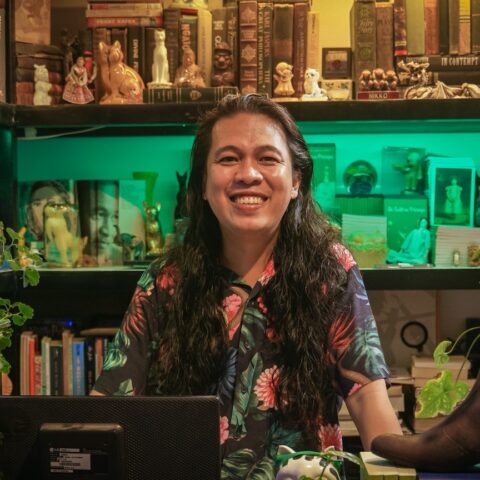 [Left — Kristian Sendon Cordero] Best Literary Translations 2026 refuses to reduce these marginalized or crisis-stricken communities solely to their trauma; it leaves equal room for joy, resilience, and the beauty of the mundane. The collection balances its heavier themes with moments of light: the devotional lyricism of the historical poet Mirabai (Braj Bhasha); the lively, communal, and sometimes festive atmosphere of the cemeteries in Kristian Sendon Cordero’s Sagkód (Bikol); the subtle wit embedded in contemporary Japanese tanka; and the colloquial language of “Flash Flood” (Guaraní/Spanish), where humor serves as a tool for resilience.
By organizing these vastly different works into what the editors define as “a constellation of voices and a space of encounter,” the anthology invites pieces from entirely different eras, genres, and continents to converse with one another. As Damion Searls asserts in the Philosophy of Translation, “Translation always admits, and revels in, the differences between languages, versions, cultures, and people, and at the same time always claims, and aims at, a common language able not just to ‘bridge’ but to actually remove these divides.” Many translators in this collection emphasize the ongoing dialogue and process of negotiation and discovery rather than a quest for definitive answers. This sentiment is echoed in the introductory comments by the series co-editors and guest editor Arthur Sze, which frame the act of “carrying over” as “the deepest form of reading.” The result is a relevant and urgent curatorial collection that prompts readers to discover meaningful human connections across time and space.
[Published by Deep Vellum on April 14, 2026, 225 pages, $23.95 paperback]