The one who is laughing defines what is funny, including comedy that is provocative or nasty. But at what point does comedy become hate speech issuing from xenophobia, misogyny, bias, or rage? Jacques Berlinerblau’s Can We Laugh at That?: Comedy in a Conflicted Age examines this issue. The writer notes those comedic controversies that “ignite outrage in certain audiences” and enrage other comics. A recent example: Chelsea Handler, Shane Gillis, and Tony Hinchliffe are feuding. During The Roast of Kevin Hart (2026), a Netflix special, Handler, a liberal comedienne, was roasted by Gillis and Hinchcliffe, right-wing comedians, who also made confrontational jokes about lynching, Zionism, and suicide. Handler called them racist, sexist, and bigoted, which led to a barrage of personal attacks from Gillis and Hinchcliffe. Soon after, while being interviewed by Deon Cole for his podcast Funny Knowing You, Handler claimed that Gillis and Hinchliffe crossed the line and that some subjects are not to be ridiculed.
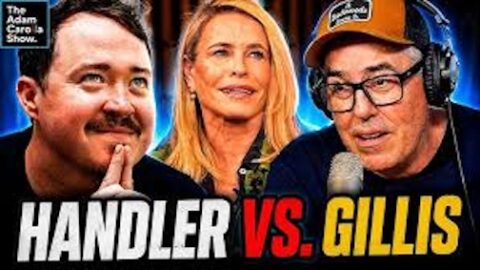 Comedic controversies per Berlinerblau are cultural flashpoints leading to tangible “dissatisfaction,” meaning audiences will express their disapproval through “(1) various forms of media, (2) the legal system, and/or (3) acts of intimidation and violence.” In the case of Chandler et al., the fighting occurred through mass-mediated venues; however, audiences have witnessed such frustration go as far as Chris Rock getting slapped by Will Smith at the Oscars, Dave Chappelle getting physically attacked while performing stand-up, and Charlie Hebdo satirists getting gunned-down while working in their office building in 2015. Humorous people (what Berlinerblau calls “The Consensus”) have the right to say what they want and then circle the wagons for protection; but to be fair, so do those who become enraged by the material and/or “The Consensus,” as long no bodily violence ensues. Berlinerblau calls this the sociology of comedy: The audience becomes an active participant in the performance to the point of “public remonstrance,” a more contemporary way of experiencing the bits and gags presented on screen or stage.
Contextually, Berlinerblau’s conversation concerns 21st century comedy. But he briefly mentions that discontent has been seething for decades. Satire, controversial comedic material, and brash insults have been a comedic cog in the mass-media machine for generations. The Smothers Brothers and their disdain for the Vietnam War. The Dean Martin Roasts with Don Rickles and Foster Brooks. The politically charged sketch comedy of Rowan and Martin’s Laugh-In. Mort Sahl. Dick Gregory. George Carlin’s “seven words you cannot say on television.” Saturday Night Live sketches. Lenny Bruce. Richard Prior. Eddie Murphy. Redd Foxx. The list continues — and as suggested, dissatisfaction has always been connected to the art of comedy, whether intentionally invoked or not. But this disdain for such performances has become more problematic in a world where fear, anxiety, frustration, and anger, rather than civility, have become the norm. So far, in the United States, the vitriol has been tamer: drunk hecklers screaming out profanities during live shows, talk show hosts being fired for their political leanings, and freelance writers penning essays about how comedians need to stay in their lanes.
But in other countries, this is not the case. Can We Laugh at That? also weighs comedy outside of the United States, in both democratic and authoritarian nations, that are dealing with similar questions about what is and is not considered funny. Along with in-depth discussions about American comics like Gillis, Chappelle, Sarah Silverman, and Kathy Griffin, Berlinerblau also speaks about the “seditious” behavior of Indian comedians Vir Das, Kunal Kamra, and Munawara Faruqi; the terrorist plot against and murder of France’s Charlie Hebdo’s staff; the targeting of Jews by France’s Dieudonné M’bala M’bala; and Egypt’s equivalent to Jon Stewart, Bassem Youssef; the stripping and beating of Zimbabwe’s Gonyetti; and a film that nearly caused fighting with North Korea, The Interview (2018).
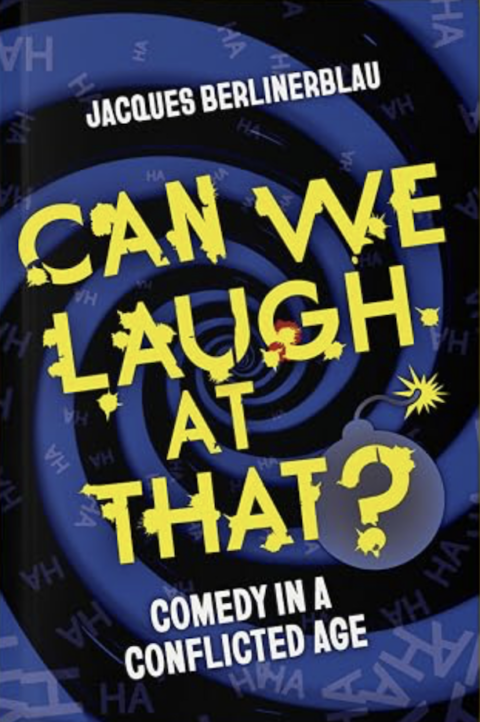 According to Berlinerblau, extremist groups and governments are becoming more brazen in the squelching of humorous material intended to satirize regimes, religion, or propaganda. Threats of harm, beatings, murders, incarceration, cyberbullying, censorship, and civil unrest have occurred in the name of the state or a god. With a keen understanding of politics, parody, and pastiche, Berlinerblau shows how dangerous this can get for those trying to stir up their audiences, or trying to point out the clownish or dangerous natures of national systems and industries.
Yet I find that Can We Laugh at That? could have been more precise about where the line should be drawn. For instance, Berlinerblau speaks about Louis C. K. and sexual misconduct, and Kathy Griffin’s insinuation that Donald Trump be beheaded. However, one also thinks about Michael Richards and his racist attacks on hecklers at the Laugh Factory, Al Franken’s inappropriate touching of a female soldier, Gilbert Gottfried’s jokes about Japan’s tsunami which led to his firing as the AFLAC duck, Sacha Baron Cohen’s public fights with Rebel Wilson, and other notorious incidences. How does “The Consensus” play into issues such as these, and if “The Consensus” deems this appropriate, what does that say about the state of comedy as a whole? Berlinerblau does say in his conclusion that comics face certain dangers, half-jokingly claiming that “The Guild” should be formed to help comics strengthen their connections with audiences. Generally, most of us believe that comedy is subjective and free speech should be a fundamental right. Comedy can be polarizing without being too savage. Berlinerblau feels the same, but more about “The Line” would have been helpful.
[Published by the University of California Press on March 24, 2026, 240 pages, $24.95 paperback]