 Translator’s Note
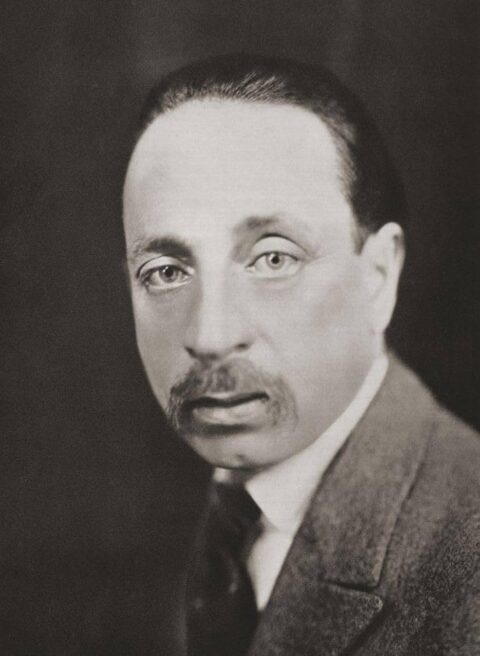
These three versions of late poems by Rainer Maria Rilke seek to “carry over” the great German poet’s intentions both vitally and formally into English language poems that are deeply resonant with the originals though nonetheless resound as credible poems in the target language. I say versions, because as the term implies these are “turns” on Rilke’s poems, just as the word “translation” literally means “to carry over.” They are not, emphatically, “imitations” in Robert Lowell’s use of that term, in which whole stanzas may be added in a more extensive conversation with the original. “Moon Rise” is a version of “Wie das Gestirn, der Mond, erhaben, voll Anlaß,” “Once” is a version of “Einmal nahm ich zwischen meine Hände,” and “The Vast Night” is a version of “Die Grosse Nacht.” All will appear in Late Songs: A Suite of Poems for the Work of Rainer Maria Rilke, forthcoming from Staircase Books. — Daniel Tobin
◆ ◆ ◆
The Vast Night
Often, I gazed out at you, me standing by the window
as if from the day before, standing, before you, marveling.
The new city still appeared barred to me, and the landscape,
reticent, took umbrage, as if I did not exist. Even the closest
things cared nothing of whether I would understand them.
The laneway rushed up to the lamplight: I saw it was full
of remoteness. Across the way — a room, as if I was there;
they must have felt me, and drew closed the shutters.
I was standing. And then a child cried. I knew about
the mothers in the houses all around, what they could do,
and in that moment knew the source of all that crying.
Or a voice sang and its note lifted a little beyond
anticipation, or an old man coughed reproachfully below,
as if his body hurled its rectitude at the privileged world.
Then an hour struck, uncounted by me and, belated,
fell away. Like a strange boy when he’s picked at last and
fumbles the ball and feels himself lost among the easy play
of all the others running together and he stands apart
and looks off — where does he look? So, I stood stunned
to feel you playing with me, coaxing me, grown-up night,
and I understood, and stared out at you in amazement.
Where the towers fumed, where the city of my halted
fate hemmed me in and impassible mountains stationed
themselves in front of me, and the stringent shackles
of my feelings of homelessness, ravenous, flared wildly
without reason, so it was then that you, Immensity,
without any condescension, showed me that you knew me.
Your breath passed over me. Your smile, spreading
across all the vast staggering gravities, entered into me.
◆ ◆ ◆
Moon Rise
Like a single constellation, destined, sublime,
suddenly the moon surmounts the heights,
tranquilly completing the night’s design:
so: behold, my voice lifts in resonance
from the far ranges of Never Again.
And every station, from which you’ve moved on,
aches after you in clarity and astonishment.
◆ ◆ ◆
Once
Once, I took your face in my hands.
The moon fell on it. And of all
things under the preponderance
of tears, it was the least knowable.
Like those who accept, and still endure,
it was almost something to be held.
And yet, in all that night’s deep cold,
nothing existing escaped me more.
Oh, we flood ourselves, our desire
into these strongholds, all the swells
of our hearts, all out lusts and failure,
to penetrate the surfaces, slim, little.
To whom do we finally give them over?
To the garble-eared, we called stranger,
to the absconded, we called wholly other,
the slaves caging us, those self-made slavers,
to the spring winds rushing past in a blur,
and the broadcasts of silence — nothing quieter.
/ / / / /
Die Große Nacht
Oft anstaunt ich dich, stand an gestern begonnenem Fenster,
stand und staunte dich an. Noch war mir die neue
Stadt wie verwehrt, und die unüberredete Landschaft
finsterte hin, als wäre ich nicht. Nicht gaben die nächsten
Dinge sich Müh, mir verständlich zu sein. An der Laterne
drängte die Gasse herauf: ich sah, daß sie fremd war.
Drüben – ein Zimmer, mitfühlbar, geklärt in der Lampe -,
schon nahm ich teil; sie empfandens, schlossen die Läden.
Stand. Und dann weinte ein Kind. Ich wußte die Mütter
rings in den Häusern, was sie vermögen -, und wußte
alles Weinens zugleich die untröstlichen Gründe.
Oder es sang eine Stimme und reichte ein Stück weit
aus der Erwartung heraus, oder es hustete unten
voller Vorwurf ein Alter, als ob sein Körper im Recht sei
wider die mildere Welt. Dann schlug eine Stunde -,
aber ich zählte zu spät, sie fiel mir vorüber. –
Wie ein Knabe, ein fremder, wenn man endlich ihn zuläßt,
doch den Ball nicht fängt und keines der Spiele
kann, die die andern so leicht an einander betreiben,
dasteht und wegschaut, – wohin – ?: stand ich plötzlich,
daß du umgehst mit mir, spielest, begriff ich, erwachsene
Nacht, und staunte dich an. Wo die Türme
zürnten, wo abgewendeten Schicksals
eine Stadt mich umstand und nicht zu erratende Berge
wider mich lagen, und im genäherten Umkreis
hungernde Fremdheit umzog das zufällige Flackern
meiner Gefühle -: da war es, du Hohe,
keine Schande für dich, daß du mich kanntest. Dein Atem
ging über mich. Dein auf weite Ernste verteiltes
Lächeln trat in mich ein.
/ / /
Wie das Gestirn, der Mond, erhaben, voll Anlaß
Wie das Gestirn, der Mond, erhaben, voll Anlass,
plötzlich die Höhn übertritt, die entworfene Nacht
gelassen vollendend: siehe: so steigt mir
rein die Stimme hervor aus Gebirgen des Nichtmehr.
Und die Stellen, erstaunt, an denen du dawarst und fortkamst,
schmerzen klarer dir nach.
/ / /
Einmal nahm ich zwischen meine Hände
Einmal nahm ich zwischen meine Hände
dein Gesicht. Der Mond fiel darauf ein.
Unbegreiflichster der Gegenstände
unter überfließendem Gewein.
Wie ein williges, das still besteht,
beinah war es wie ein Ding zu halten.
Und doch war kein Wesen in der kalten
Nacht, das mir unendlicher entgeht.
O da strömen wir zu diesen Stellen,
drängen in die kleine Oberfläche
alle Wellen unsres Herzens,
Lust und Schwäche,
und wem halten wir sie schließlich hin?
Ach dem Fremden, der uns mißverstanden,
ach dem andern, den wir niemals fanden,
denen Knechten, die uns banden,
Frülingswinden, die damit entschwanden,
und der Stille, der Verliererin.