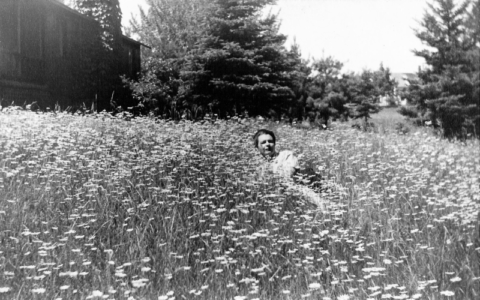
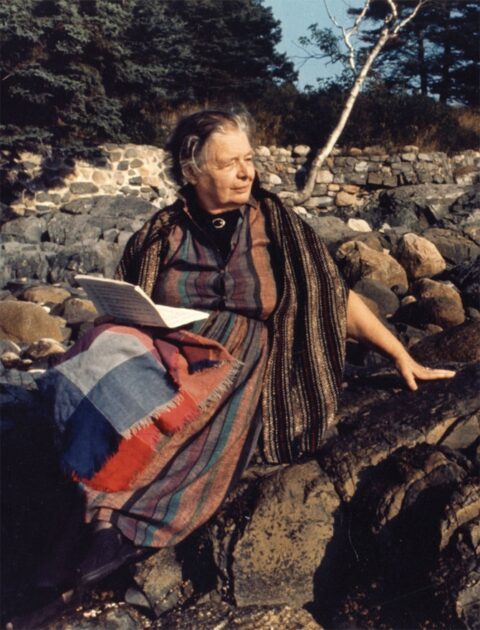
I never actually met Marguerite Yourcenar, but one August morning in 1986, I found myself naked beside her as we changed into our bathing suits in the raw, uncurtained changing room of the Northeast Harbor pool club. We emerged onto the pool deck of a large basin where Maine seawater warmed under a tepid sun. She was a strong-looking elderly woman in a black one-piece losing its elasticity. Her face was leonine, wide at the cheekbones and narrowing to a determined chin. Her chest was wide – perfect for the butterfly – above short slim legs, flesh sagging at the knees. She stood a head shorter than I, but her erectness signaled far more confidence than I would ever muster – especially in my early 20s.
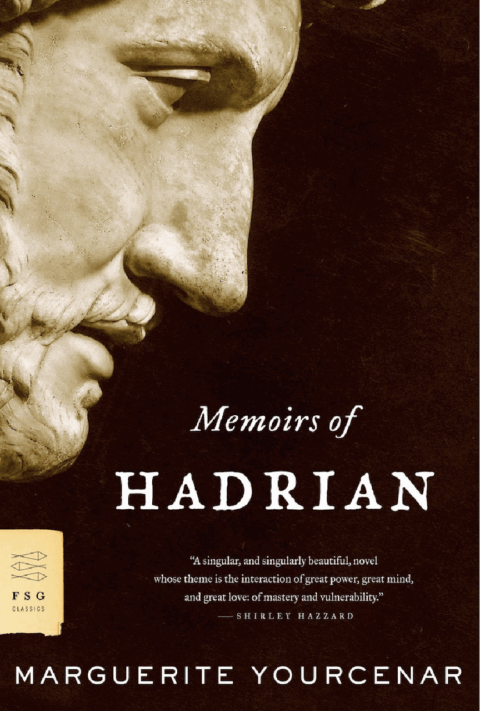 Yourcenar ignored me as she began a crawl, her small feet making small splashes. As briny waves lapped the exterior pilings, I paddled about imagining myself a lobster in one of those tanks you see in restaurants. When, 20 minutes later, I climbed out, my thighs were flushed and my feet numb. Yourcenar continued her slow laps, impervious to the frigid water. This was during the first summer I spent with my fiancé on Mount Desert in downeast Maine. On my first day, he had pointed out Yourcenar’s cozy white house and said he’d collected her mail from the post office on snowy afternoons when he was a kid. I was curious to know more about her. My future father-in-law told me she had been the first woman to “join the immortals” – that is, the French Academy. Swimming beside her was kind of exciting (though I hadn’t rated a nod) so I decided to read Memoirs of Hadrian, just in case we met again. And I did read it, pulling it off the shelf of the tiny public library, but Yourcenar’s prose soared way over my head. Sure, a 2nd-century Roman emperor is dying and this is a long letter to his adoptive heir, Marcus Aurelius – but what did people see in it? How did it become a bestseller? I’d read Robert Graves’ I, Claudius and loved its lively conversations, colorful characters and deadly intrigues. But Memoirs of Hadrian offered no eccentric personalities, no snappy dialogue, and very few actual scenes. What it offered – and what 1980’s me couldn’t appreciate – was a voice confidingly, reflectively alive.
Hadrian is 59 years old when he begins, “Dear dear Marc … This morning it occurred to me for the first time that my body, my faithful companion and friend, truer and better known to me than my own soul, may be after all only a sly beast who will end by devouring his master.”
What follows is the story of this sly body and its master, the changeable, sensual, ascetic, curious Hadrian. “Different persons ruled in me in turn,” he writes,“though none of them for long; each fallen tyrant was quick to regain power. Thus have I played host successively to the meticulous officer, fanatic in discipline, but gaily sharing with his men the privations of war; to the melancholy dreamer intent on the gods; the lover ready to risk all for a moments’ rapture; the haughty young lieutenant retiring to his tent to study his maps by lamplight, making clear to his friends his disdain for the way the world goes; and finally the future statesman.”
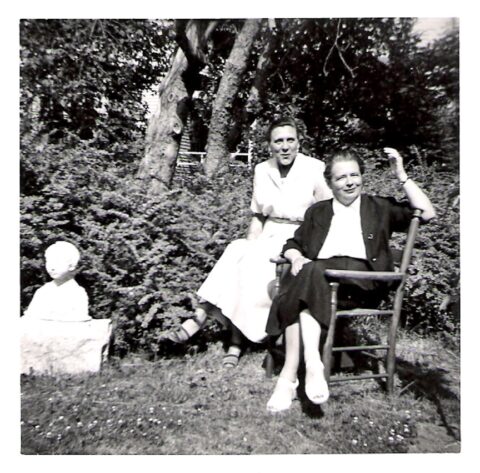 Marguerite Yourcenar was in her twenties when she first attempted the memoirs of this “statesman.” She had studied classical languages and history under her father’s tutelage during a girlhood spent in a Belgian chateau. She’d published novels with Gallimard in Paris and was making her name as a writer when life was interrupted by war. In 1939, she escaped to the US with Grace Frick, an American academic she’d met in Paris. The de Creyencour fortune (Yourcenar is both anagram and pseudonym) was dwindling, but she drew it out by teaching French and, eventually, she and Frick bought a house in a little village on Mount Desert Island. One day in 1948, a battered trunk arrived from Europe and inside it Yourcenar found some of her books and a letter. “Dear Marc,” it began. Marc? It was a few moments before she remembered that “Marc” was Marcus Aurelius, and in a flash of inspiration, she knew that her next project would be to complete this recovered beginning. She would write a novel-length letter dictated by the dying Emperor Hadrian to his heir – and to the world.
***
When I returned to Northeast Harbor in 1988, I discovered that Marguerite Yourcenar had died and that her house was now a small museum. I made a reservation for a tour.
Writer’s houses – what is there to see? I have visited Haworth, the Brontës’ vicarage, and camped in its graveyard. I stood at the window where Dickinson lowered baskets of gingerbread to Amherst urchins. Touring Nabokov’s apartment in St. Petersburg, I peered into the vitrine displaying young Vladimir’s exam books and his father’s furled umbrella forgotten when the family fled the Revolution. But it’s Yourcenar’s house that has stayed with me.
Petite Plaisance – small pleasure – is a gracious house with gables, dormer windows and a side porch draped in ivy. It’s the kind of house professors lived in: cluttered but orderly, a bit shabby, with a few colorful souvenirs of foreign travel. That pre-Martha Stewart functionality. Small rooms are lined with bookshelves, even above and below the windows, under the window seats, and on the backs of doors.
In the kitchen, I was struck by the way Yourcenar slotted her china into pigeon holes above the sink. It reminded me of the measured construction of her sentences – each noun, verb, and article judiciously sequestered like china plates from bowls. In her study, I encountered a large desk with chairs on either side where Yourcenar composed Memoirs of Hadrian, passing each page to Grace Frick, who translated it into English. I came away imagining the winter winds howling down from Canada and the women working inside, walls insulated by books, armchairs cozy by the woodstove. The locals called them “Frick and Frack.”
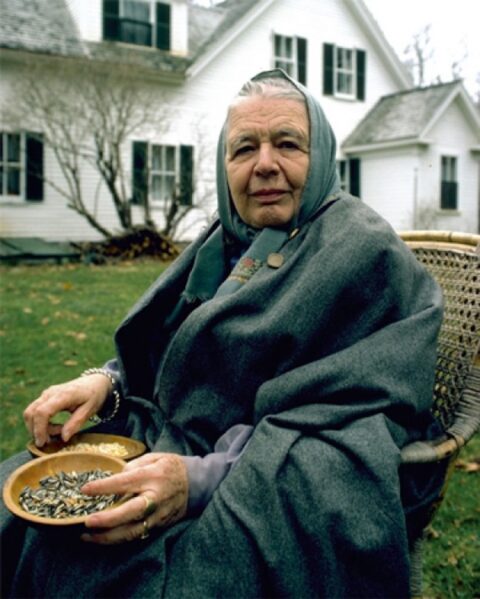 I admired the elegant sufficiency of Yourcenar’s life, the way the study felt like a well-lit room expressly organized for writing. It inspired 20-something me to reconsider the course of my life. Which is why, at the age of 61, I returned to Memoirs of Hadrian. Reading it today when so much of my life has passed – I won’t say ‘passed me by’ – I empathize with this man struggling to understand his past, calibrating ambitions against accomplishments – even if he is an emperor. “My ideal,” Hadrian says,” was contained within the word beauty, so difficult to define despite all the evidence of our senses. I felt responsible for sustaining and increasing the beauty of the world. I wanted the cities to be splendid, spacious and airy, their streets sprayed with clean water, their inhabitants all human beings whose bodies were neither degraded by marks of misery and servitude nor bloated by vulgar riches.”
What an absurdly humanist vision! How different from the world-dominating, gold filigreed, Botox-fueled greed exhibited by our present leaders. Was he – could he have possibly been – successful in his dream of a “beautiful” society? I wondered.
“[N]othing is slower than the true birth of a man,” Hadrian counters, and the story of his “true birth” is remarkable. Like David Copperfield, Hadrian seems uncertain as to whether he will be judged the hero of his own life; it is only in the process of writing that he will, he says, come to that understanding. And to judgment. With his urbane voice in my ear, I didn’t so much lose myself in this novel as begin to reconsider our national narrative.
Born to a patrician family in Spain in 76 AD, Hadrian came to Rome as a dandified young courtier, but he was soon, thanks to his cousin the Emperor Trajan, an effective general and territorial administrator. Under the tutelage of Trajan’s wife, Plotina, Hadrian learned diplomacy. It was Plotina who orchestrated his succession – as well as, rumor has it, Trajan’s unexpected death. In 117 AD, at 41 years of age, Hadrian inherited an empire stretching nearly two million square miles, from Europe to Asia to Africa. And he had a radical new vision of the Roman Empire’s future: it should shrink. He surrendered recent conquests in the East, pulled in his legions, and fortified boundaries (see Hadrian’s Wall). Expansion, he reasoned, is not worth the cost in human life. He replenished civil coffers depleted by decades of war and licentious leaders (Tiberius, Caligula, Nero, et al.) He laid out an agenda that now seems to prefigure the foundation of the European Union:
“I desired that the might and majesty of the Roman Peace should extend to all, insensibly present like the music of the revolving skies; that the most humble traveler might wander from one country, or one continent, to another without vexatious formalities, and without danger … that everything should go smoothly, whether workshops or temples … This ideal, modest on the whole, would be often enough approached if men would devote to it one part of the energy which they expend on stupid or cruel activities; great good fortune has allowed me a partial realization of my aims during the last quarter of a century… Rome would be perpetuating herself in the least of the towns where magistrates strive to demand just weight from the merchants, to clean and light the streets, to combat disorder, slackness, superstition and injustice, and to give broader and fairer interpretation to the laws. She would endure to the end of the last city built by man.”
At this point in the Memoirs, I was filled with awe. What would it be like to have a leader who valued honesty and peace and made things “go smoothly”? What a sense of security and possibility – and efficiency! – his subjects must have had. Hadrian built new aqueducts, harbors, dykes, cisterns, military posts, highways, and even cities. He valued the citizenry, he worked for the public good. But as his story unfolded, I began to doubt his enlightened autocracy.
 Autocrats, by definition, rule with a ruthless efficiency; no back and forth with senators calling for democratic checks and balances, just do this (a sentence finished implicitly with or die). Hadrian got things done, but he never shared the stage, not with his detested wife nor with his lovers; not with his secretary, the historian Suetonius – and certainly not with his heir apparent, Marcus Aurelius. No character gets a word in. If Hadrian weren’t, in Yourcenar’s incarnation, a world-beater, we might – 200 pages in – call him a blow-hard. No one resists his will. (No one, that is, except for the Jews of Judah, who, after the emperor’s heavy-handed treatment, fought a long bloody rebellion. As Hadrian tells it, they were at fault for putting faith above reason.) The more I got to know Hadrian the more I recognized the outlines of a technocrat. The well-spoken Tech Bro. Hadrian even admits that he craved power as others “crav[e]… love, which keeps the lover from eating or sleeping, from thinking or even from loving …”
It may seem silly to judge a Roman emperor by standards formed in a democratic America – and yet, I think the Memoirs reflect upon Yourcenar’s postwar America as well as Hadrian’s 200 AD and our 2025’s. We readers may wish that Hadrian conveyed more of the warp and weave of Roman life: the numbers of animals he killed hunting, the numbers of men he saw torn apart at the coliseum (historians estimate 300 in a single night!), his colorful travels through the Empire. Instead, as the novel progresses, reflection, rumination and regret become the dominant chords, and perhaps this echoes Yourcenar’s sense of a world recovering from world war and in the grips of the Cold War. There are some mitigating details, however. Perhaps setting her novel in ancient Rome allowed Yourcenar to describe an empire that was not anti-gay? Hadrian, a bisexual character imagined by a bisexual woman, makes no excuses for his sexuality. His attitudes are historically accurate, liberating – and, for the 1950s, wildly titillating (which may account, in some part, for the novel’s bestseller-dom. Like a high class Forever Amber, the Memoirs made a fortune for the small firm of Farrar, Straus and Giroux). Yourcenar does not condemn Hadrian’s enlightened dictatorship but balances it with frank accounts of a “love that dare not speak its name.” In the Memoirs, that love becomes a focus of the narrative.
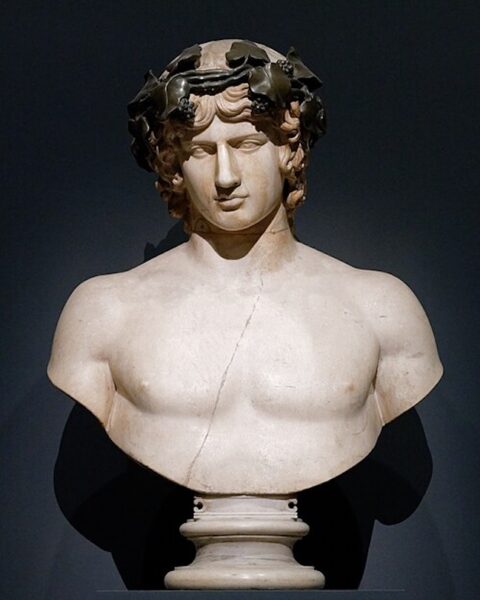
 When, in 130 AD, the 19-year old Antinous drowns under mysterious circumstances, a middle-aged Hadrian is devastated. “Greater good” gives way to dictatorship as he makes plans to mummify his young lover and seal him a tomb fit for a pharaoh. Declaring Antinous a god, Hadrian encourages a cult of the handsome boy and even founds Antinoöpolis in the Egyptian desert. Yourcenar describes all of this grand memorializing sympathetically, but for me, it’s akin to the aggrandizing impulse that built Putin’s moldy Italianate palace and the tacky monster-mansions of Papa Doc, Ferdinand Marcos, Mobutu, and Yanukovych (among so many others). Even more inexplicable is why Yourcenar finds women so uninteresting. Plotina, briefly active, is the novel’s only woman of spirit and judgement and she withdraws to her country estate immediately after helping Hadrian to the throne. We know that there were Roman women who broke the mold of hostess and mother, and Yourcenar might have portrayed one or two, if she’d been interested. She was not, and this novel might as well be taking place on a Cold War submarine; it’s male-centric.
Yourcenar once said that she could not write about women because their lives were filled with secrets. Perhaps by allowing Hadrian to inhabit her imagination, she transcended her own retiring, secretive life and lived in full color, full throated. Did she find in the triumphant general, administrator, ruler, and lover, all that she wished to be? When in 1978, at the age of 78, she became the first woman inducted into the Académie Française, it may have comforted the stuffy academicians standing at attention in their feathered bicorne hats that her celebrated novel barred women from the action – as the Academy had done for 400 years. Resistance to her candidacy had been great – as one member commented: ‘The greatest homage one can pay a woman is to admire her without electing her” – but better she than Collette, Simone de Beauvoir, Simone Weil or Marguerite Duras. They were women who wrote about women,
***
I remember standing beside Marguerite Yourcenar’s red velvet armchair in her living room. The fireplace was inches away and there was an elbow lamp screwed into one of the ubiquitous bookshelves. I noticed words scrawled on the lampshade with a marker; they read: animula, vagula, blandula. “That is the first line of a poem by the Emperor Hadrian,” the docent told me. “His last poem, dictated from his deathbed.”
I gave the lampshade a second look because the word blandula is like my name. “It means,” said the docent, “pleasant, charming. It is how he describes the soul.”
“Animula,” she continued, “means both animal and soul.” I know a few of those, I thought to myself.
This is W.S. Merwin’s translation of Hadrian’s poem:
Little soul little stray
little drifter
now where will you stay
all pale and all alone
after the way
you used to make fun of things.
And here is Yourcenar’s version. It is with this that she ends Memoirs of Hadrian:
“Little soul, gentle and drifting, guest and companion of my body, now you will dwell below in pallid places, stark and bare; there you will abandon your play of yore. But one moment still, let us gaze together on these familiar shores, on these objects which doubtless we shall not see again… Let us try, if we can, to enter into death with open eyes.”
Did this poem, where body speaks to soul and soul responds, mirror her own idealized relationship with Hadrian? The Memoirs are the evidence of an inhabiting possession recorded by – imagined by – a middle-aged woman exiled to an isolated island. Yourcenar described her process as keeping “one foot in erudition and the other in magic: or more exactly, and without metaphor, in that sympathetic magic which consists in projecting oneself by thought into another’s inwardness.”
Well said. I hope that Marguerite Yourcenar discovered in her own “little soul” the strength to “enter into death with open eyes.”