Before embarking on my first translation 20 years ago, I consulted a few translators and read the books they recommended. As a former graduate student in French language and literature, I’d read my share of translations (especially those from Old French), but my interest was primarily in deciphering the meaning of the original texts rather than evaluating how well that meaning had been conveyed. As an emerging translator, I welcomed the advice these translation books offered regarding such topics as whether the translator should mute their own voice, how closely they should follow the structure of the original text, and how much should they deviate from the meaning of the original text. These “how to” books also discussed how “foreign sounding” or “domesticated” a translation should be. One of my biggest takeaways was that translators had to choose between remaining “faithful” to the meaning of the text or trying to produce a “beautiful” translation.
At the time, I wasn’t interested in questions of why we translate, who has the authority to translate a particular work, or even what translation is or can be. After translating my first author, René Char, considered the greatest French poet of the 20th century, I was drawn to living authors from the Caribbean and Africa — authors who were not widely known in the Anglophone world and were often marginalized in their own countries. They tackled issues of social justice, such as Mauritian writer Khal Torabully’s Cargo Hold of Stars: Coolitude (Seagull Books, 2021), where he gives voice to the suffering of millions of indentured workers from the turn of the 20thcentury. Translating books like Torabully’s became an act of social justice for me.
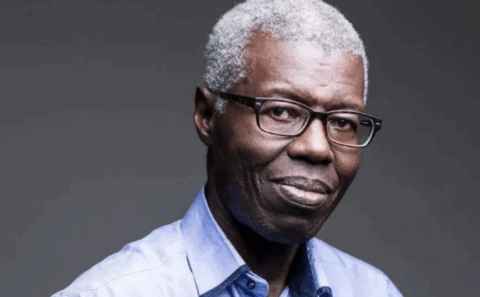
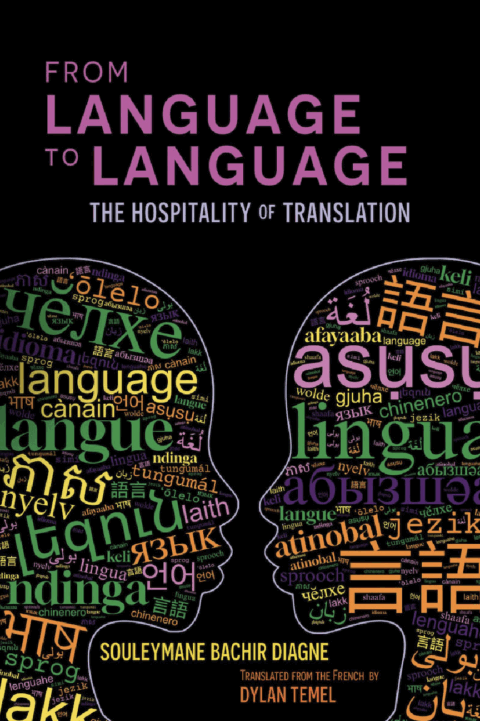 Books that approached translation from a non-Eurocentric point of view were rare when I started my translation career and continue to be hard to find. It was with delight that I accepted an invitation two years ago to review river in an ocean: essays on translation (Trace Press, 2023), edited by Nuzhat Abbas, which views translation from a feminist, anti-racist, and decolonial perspective. Similarly, I was thrilled to learn about From Language to Language: The Hospitality of Translation by Senegalese philosopher Souleyman Bachir Diagne, and seamlessly translated by Dylan Temel — a series of translation-focused lectures previously delivered by the author. I was already acquainted with Diagne through my work translating Djiboutian writer Abdourahman A. Waberi’s Naming the Dawn (Seagull Books, 2018) — a book dedicated to Diagne, who also wrote the foreword, praising Waberi’s poems, which “sing of the path to truth and beauty.”
Diagne himself is a seeker of truth and beauty. From Language to Language presents two main theses in the preface: 1) no one human language is of greater value than another, and 2) translation is the one thing that best demonstrates this equivalence. The conclusion he draws from these two theses is that translation is a “humanism.” The ensuing chapters flesh out these arguments and are at once esoteric and accessible. Drawing on an impressive line-up of philosophers, scholars, authors, artists, and literary critics, living and dead, who hail mostly from Africa and France, Diagne highlights such luminaries as Rwandan philosopher Alexis Kagamé (1912-1981), Kenyan novelist Ngũgĩ wa Thiong’o (who died on May 28, 2025 at age 87), Senegalese poet Birago Diop (1906-1989), French literary critic Pascale Casanova (1959-2018), and South African artist Ernest Mancoba (1904-2002).The 15 pages of notes at the back of the book, meticulously translated by Temel, expand on the ideas articulated in the main text. Like Damion Searls’ focus on philosophy rather than theory in the recent The Philosophy of Translation (Yale University Press, 2024), Diagne’s musings transcend the day-to-day decisions of translators to develop and demonstrate a coherent and compelling philosophy of translation.
Although this philosophical approach may sound intimidating, it is tempered with many references to pop culture, such as the science fiction film Arrival, released in 2016 and starring Amy Adams as a linguist recruited by the United States army to devise a way to communicate with extraterrestrials. He also weighs in on the Amanda Gorman controversy concerning who is best suited to translate a particular text, observing that more dialogue on this topic would have allowed for a more nuanced decision-making process. Before getting into an academic discussion on translation, Diagne shares in the preface a bit of his personal history, including an anecdote about a meal at a Burger King in Evanston, Illinois, where he and his family were overheard speaking in Wolof by a mother and her children seated at a neighboring table. Rather than intervening, their mother made no attempt to use this experience as an opportunity to teach her children how Wolof is just as worthy of respect as Anglo-American English — a lesson Diagne and his wife had long ago imparted to their own children.
 Every chapter of this slender volume supports Diagne’s premise that translation should be viewed primarily as an act of “hospitality.” Even the book’s epigraph — a quote by French Catholic scholar of Islam Louis Massignon (1883-1962) — asserts that “to understand the other, we must not annex it but become its host.” The preface warns against a sociopolitical view of translation that might frame it as a way for one language to dominate another “by immediately establishing a hierarchy among those that are the most translated or receive the most works in translation.” Indeed, this perspective was espoused by David Bellos in his popular book, Is That a Fish in Your Ear (Faber and Faber, 2011), where he maintained that translation occurred either “up” (toward a target language more prestigious than the source language) or “down” (toward a target language less prestigious than the source language). Bellos described how this concept impacted the translation process: “translations toward the more … prestigious tongue are characteristically highly adaptive, erasing most of the traces of the text’s foreign origin, whereas translations down tend to leave a visible residue of the source, because in those circumstances foreignness itself carries prestige.” Diagne associates this kind of approach to translation with colonialism and what he calls its “symbolic violence.” He argues that the translator has an ethical duty to honor what has been expressed in another language. Taking this idea one step further, Diagne observes that translation might be considered an act of love on the part of one language for something created in another.
One of the things I enjoyed most about this book was how each chapter begins with a thought-provoking epigraph to further support Diagne’s premise that translation is an act of generosity between equals. For example, the Introduction, “Translation Against Domination,” begins with a quote by French philosopher and translator Antoine Berman (1942-1991): “The essence of translation is to be an opening, a dialogue, a crossbreeding, a decentering. Translation is ‘a putting in touch with,’ or it is nothing.” (As an aside, I would not have chosen the politically charged word “crossbreeding,” with its racist overtones, to translate the French word “métissage” — especially in a book that looks at translation through a decolonial lens.) In a lengthy footnote, Diagne riffs on Berman’s suggestion that we research all the key words that the various languages use to define translation, as he shares three words in Wolof that all can mean “to translate”: sotti literally means “to pour from one vessel to another,” as in “decanting”; tekki literally means “to unknot or to untie”; and firi literally means “to undo braids.” These definitions go beyond the conventional Western metaphors I’ve encountered to capture the very elusive process of translation. The fifth chapter, “Translating the Word of God,” opens with the following citation of George Steiner (1929-2020), a Franco-American philosopher and literary critic: “Translation is ‘impossible’ concedes Ortega y Gasset in his Miseria y esplendor de la traducción. But so is all absolute concordance between thought and speech. Somehow the ‘impossible’ is overcome at every moment in human affairs.” What is most striking about this chapter’s discussion on translating sacred texts is that Diagne, steeped in philosophies of the Islamic world, doesn’t stop at the Bible, as does the Bellos book and most other translation books I’ve read, but focuses on the Quran.
When practicing translators discuss the various elements of any given source text, they often will mention considerations such as its general meaning, tone, structure, diction, sound patterns, and cultural and historical contexts. For Diagne, the cultural context must always be front and center. He suggests that a translator “is someone who has a complete cultural understanding of a situation, and that this is what is imparted, rather than a mere conveyance or transferal from one language to another.” Diagne concludes that translation is “the language of languages,” a “decolonizing force,” and, indeed, a space in which we may share our common humanity.
[Published by Other Press on September 30, 2025, 128 pages, $24.99 hardcover]
To read Johannes Göransson’s review of Damion Searls’ The Philosophy of Translation (Yale, 2024), click here.