“It’s about my journey of going back home to the place I love most,” Aiden Heung said about his debut poetry collection, All There Is to Lose. In an interview in Ampersand, the newsletter of the College of Arts and Sciences at his alma mater, Washington University, he added that he had somehow found himself “unable to return to [his home] the same way.”
Heung’s work touches upon the universal sorrow over the loss of an irretrievable past but individualizes that experience by focusing on the poet’s own loss and pressuring it into something stranger – an ethics of sacrifice, in which the poet offers up the self to the lost past. Rooting his poetry in his native Muli, a Tibetan Autonomous County nestled in the remote reaches of Sichuan Province, Heung brings the readers back to the snow-capped mountains, harsh weather, and resilient inhabitants in his hometown, channeling grief and memory through a place that was once intimately familiar to him but has irrevocably changed since then. The themes of homecoming, loss, and searching for meaning are closely intertwined and weave a tapestry of devotion and devastation, where love and nostalgia eventually lead to the quiet yet aching acceptance of self-loss.
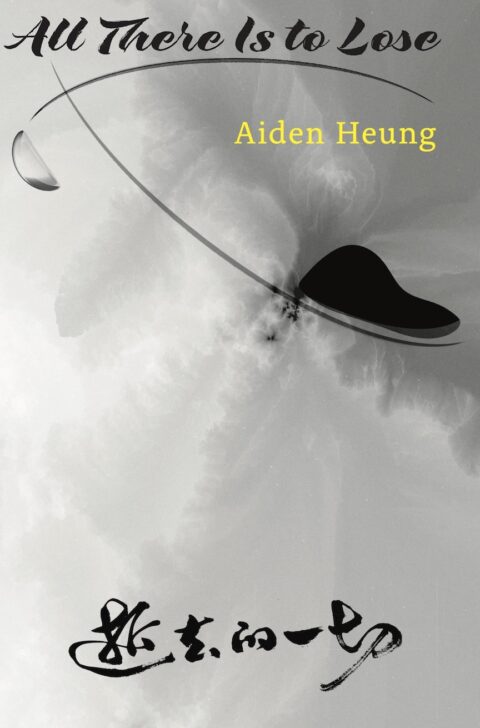 The word that drives the whole collection, as Heung notes in the interview, is the adjective “unable,” which captures the poet’s inability to return home (and more). Heung’s poems face head-on the question this situation raises – if such a return is impossible, what can a book of poems about homecoming actually do? The tension between the desire to return and the impossibility of it, along with the self-destructive impulse that looms over the entire collection, is manifested in the opening prose poem “At the End of the World.” With unidentified faces carved and buried in the ground, the valley covered in ice, a golden eagle circling above and offering uncertain mercy, the cold sun and the scent of rosin on his skin, the speaker surveys the Tibetan landscape, which unfolds with visceral specificity. Yet each sensory detail is immediately undermined by absence and distance, thus slipping out of the poet’s grasp:
“… I reach out my hand; air flees from my grasp. If only I could be lifted like a thought. I offer myself, a mantra to a past undone piece by piece, atomized even. A surgeon of memory, I cut myself open.”
From “reach,” to “offer,” and finally to the shocking “cut,” the speaker moves from failed retrieval to ritual offering and self-dissection. When the past cannot be grasped, he does not retreat into description but puts himself on the altar to be sacrificed. With no preparation, we are faced with a final, horrifying gesture of self-dissection: “I cut myself open.” We walk into that wound, only to discover nostalgia as a place with paradoxical beauty that shimmers as both wonderland and wasteland.
This opening poem is followed by 49 poems distributed over five sections, each beginning with an elegy. Heung’s collection builds an arc from chasing memory to confronting death, ultimately collapsing into a chaotic blending of self and other, life and death, and past and present. Formally, Heung refuses consistency: prose poems alternate with free verse, and stanzaic structures sometimes give way to visual compositions. This restlessness mirrors the thematic dissolution at the collection’s heart, as the reader, like Heung’s speaker, is never allowed to settle, never able to find stable ground.
The first two sections are devoted to the people in the village – stories of the poet’s mother, father, father’s father, as well as mythical encounters with a Tibetan couple, a woman called “Old Mother,” a man from the mountain. The emotional experience is complicated here – sadness, happiness, bitterness, all wrapped in the calmness of Heung’s language, leading us to a first encounter in the collection with the word “lose” in the poem “What Was Carried in the Dark”:
A sunset. Time was an angry mother.
I hid. At midnight, I saw the onyxes
of his eyes. When morning broke,
he was gone. He never came.
He became all there was
to lose –
This mysterious “he” is never identified, although we cannot help but link “him” to the childhood self of the poet. When the morning of adulthood comes, “he” naturally disappears, so thoroughly as if “he never came.” Heung’s “he” exists in that strange liminal space where he is present enough to haunt but also sufficiently absent enough to slip away. This paradox becomes the measure of loss itself, and the entire past converges into one figure, transforming the poet into the embodiment of what his title captures: “all there was to lose.” Moreover, it ends not on a period but a dash, broken off at the instant of naming what is gone, refusing to give it a closure.
In her villanelle “One Art,” Elizabeth Bishop famously claimed that “The art of losing isn’t hard to master,” which Heung echoes by insisting that following our darkest hour, “[w]e’ll learn to live on.” Yet contrary to Bishop’s playfulness and deliberate understatement that transforms catastrophe into a kind of sardonic shrug, what Heung presents to his readers is an honest confusion:
We’ll learn to live on,
much less
than we –
The poem from which these lines are taken, “Darkest Hour,” ends abruptly without illuminating what the experience of living on is compared to. Heung’s incomplete sentence urges us to ask whether the loss of the other half of that sentence also implies the loss of a future or, rather, signals openness to it. Heung doesn’t provide us with an answer. Instead, he undermines the linearity of time by folding the future onto the past and breaking the boundaries between the dead and the living. In “What the Dead Wanted,” living on means “to keep our dead warm,” and in “In the Dark,” hope for the future means hoping “the sunrise will lift the darkness, the way a mortician lifts a coffin’s heavy lid.” For Heung, loss is not to be mastered or retrieved but to be incorporated into the experience of living one’s life. To invoke Bishop, the art of losing here becomes the art of losing oneself. It is only through this dissolution that one can finally reach, however briefly, the foreign country of the past one can never truly inhabit.
Nowhere is this dissolution more complete than in “Tomb Sweeping,” a poem that takes its name from Qingming Festival (also known as Tomb Sweeping Festival), the rite in which the living clear the weeds from their ancestors’ graves and, in tending them, reaffirm the bond between the generations. However, Heung observes the form of the rite only to hollow it out, turning an act of restoration into one of self-erasure:
Easier to go on foot, where roads docked into grass. Rocks, effaced, re-faced, yielded to sere bracken. No sound, except a gust huckstering dust and gnats to dry hills.
The slope climbed higher, scraping the gut of a copse. Such fear as the sky slushed
down. August smoke adhered.
I heaved a sigh – too much of myself among stones.
In just three brief stanzas, this poem undoes both the way home and the self who seeks it. The first thing to notice is who has agency here, and the answer is: everything but the speaker. In the first and second stanza, every verb belongs to the surrounding world: roads “docked,” rocks “yields,” a gust goes “huckstering,” the slope “climbed,” the sky “slushed down,” smoke “adhered.” The landscape once walked by the ancestors is busy while the speaker has no grammatical existence at all. The mourner who has come to do something to the grave is already syntactically displaced from his own pilgrimage, relegated to the past, before he is even referenced. He is the one who was supposed to perform tomb-sweeping, to clear the road, brush dust off the rock, pull away the weeds, and restore a name to legibility, but in this poem, everything else already yields, climbs, scrapes, and sticks, without his participation. It is not until the final stanza, consisting of only a single line, that the “I” surfaces at last, and only to confess its own dispersal. The one who has come to sweep the dead ends up being scattered among the graves. The rite that was meant to mark the boundary between mourner and mourned instead erases it. And in that erasure lies precisely the self-loss that the poet comes to name, at the end of the collection, as his destiny.
That isolated final line, arriving without preparation and breaking off the moment the self appears, is typical of Heung’s style. The same refusal to round a poem off once the self has been undone leaves “What Was Carried in the Dark” trailing on a dash and lets “Darkest Hour” simply linger on. Across the collection, the poems break at the instant of loss rather than after it, because for Heung the vanishing of the self is not a thing to be mourned and resolved but the end toward which his poems were written. “To lose myself – that is my destiny.” This sentence – a manifesto of some sort – at the very end of the collection crystallizes the self-sacrificial ethics that seeps through the collection. Poetry, for Heung, is not self-expression or therapy, nor even testimony in the ordinary sense, but instead a tool to open up the bodydissolve the self, so that one may build a life from what the self has left behind.
The fact that Heung is writing in an acquired language also adds to the complexity of such surrendering. Using English to recreate his Tibetan childhood only separates him further, with each word, from the land, haunting the collection with a more profound sense of loss. We are reading Heung’s poems in a language that his people have never spoken, or even known about, a language different from the one in which he himself felt, named, and mourned his loss. Yet this impossibility to recapture that experience is not failure but a source of power. By losing himself in English, Heung performs the very sacrifice his collection demands, and thus, paradoxically, makes his way home.
When reading Heung’s poems, I could not help but recite to myself a Tang poem known to every schoolchild in China called “Impromptu Writings on Returning Home”:
I leave home young and return old;
my native accent is unchanged but my sideburns grow thin.
Children see but do not recognize me;
they ask smiling, “From where does this guest come?”
Confronted with the children’s innocent question, the speaker sighs. In the epilogue, Heung depicts a similar moment of alienation: “… When I returned, I sat beneath my parents’ low eaves and tried to recognize the faces I had once sewn into names – names buried in my memory like a song I always knew I’d forget. I had forgotten I was no longer that child.”
In the Tang poem, children do not know who the time-beaten speaker is, while in Heung’s poetry, he is the one who fails to recognize the people he has left behind in the village. The emotional bond with his home runs deep (perhaps deeper than memory itself!); yet time, a relentless chisel, whittles away one layer after another. What remains is not only the loss of others but also the poet’s loss of the self, a self submerged in a past that it cannot reclaim, leaving behind a wound so raw that nothing can close it.
[Published by Four Way Books on March 15, 2026, 119 pages, $17.95 paperback]