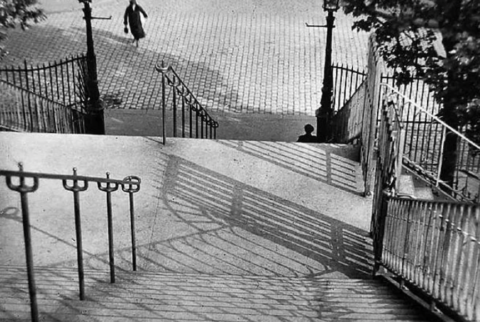
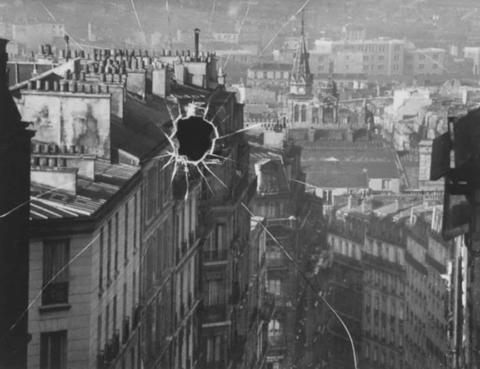
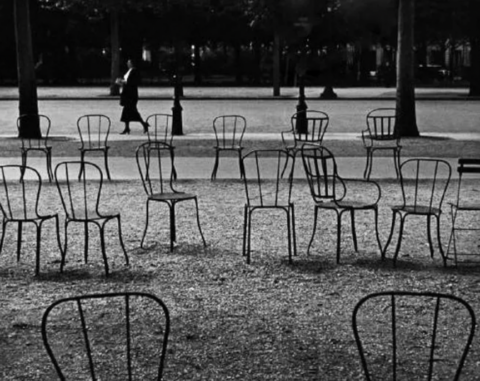
It’s funny how art – of all kinds – sometimes comes to us in what feels like linked sequences, as if some external logic demands that we pay attention now, to look here, to take notice of something we never have before. I started Patricia Albers’s excellent new biography, Everything is Photograph: A Life of André Kertész, about a pioneering but underknown Hungarian Jewish photographer who was also an American immigrant, just after finishing The Outcasts of 19 Schuyler Place, a 2005 novel by E. L. Konigsburg. A child of Hungarian Jewish immigrants herself, Konigsburg told a story about two Hungarian Jewish outsider artists in America. It felt like an odd coincidence, if you believe in those (I don’t much, especially when it comes to art), but it is a good reminder of the mysterious ways that what was once invisible can quite suddenly come into view. Hungarian artists in America, for example. Or a photograph. André Kertész made art from whatever was all around him, revealing moments, people and places we too often fail to see.
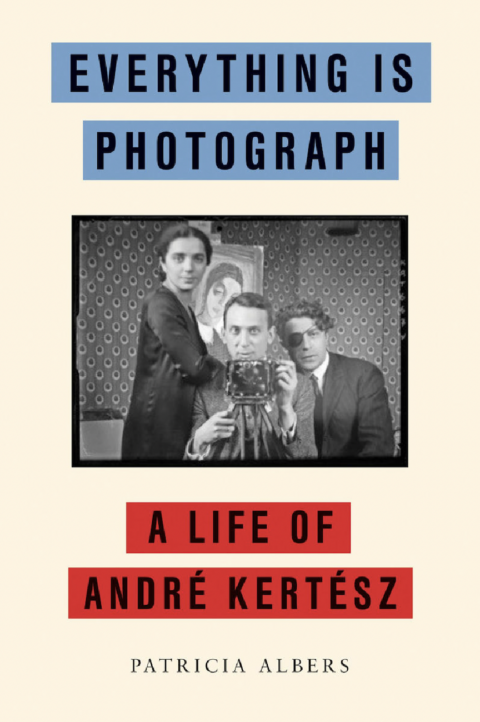 Geography is one factor that might cause artists to be overlooked. Those from countries on the periphery of major movements – like Hungary – often have difficulty finding the spotlight. Language can be another obstacle, as it certainly was in the case of Kertész, who even while spending much of his adult life outside Hungary never adequately learned either French in Paris or English in America. But when it comes to recognition in art and history, some luck is always essential. Kertész was wincingly aware during his lifetime of what he saw as his artistic misfortune and neglect, but by posthumously landing Albers as his biographer, he’s gotten lucky.
Albers is the author of the indispensable biography Joan Mitchell, Lady Painter (2011), and well aware of the many ways artists fall (and are sometimes pushed) through the cracks of notice. Her biography of Mitchell was published years before Mary Gabriel’s celebrated Abstract Expressionist group biography, Ninth Street Women, and a decade before a major traveling Joan Mitchell retrospective made the artist’s name and work recognizable to broad audiences. Perhaps something of the same may happen for Kertész, as Albers amply demonstrates in her beautifully written and comprehensive account how much he deserves wider recognition as a modernist pioneer.
Born Andor Kohn in Budapest in 1894, the twilight years of the Austro-Hungarian Empire, Kertész died late in the following century, in the United States, bearing a name he created for himself while working in Paris between the wars. I’d vaguely heard of André Kertész before picking up Everything is Photograph, but didn’t have a clear bead on him or his work (though I did send holiday cards one year featuring his lovely New York snow scene, “Washington Square, Winter”).
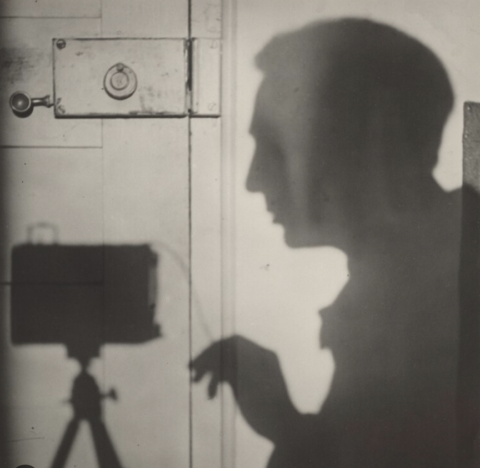 While his name may not be familiar to general readers, the names of those photographers in his debt – both artistically and otherwise – likely will be, from Henri Cartier-Bresson to Robert Doisneau, to fellow Hungarians in Paris, Robert Capa and Brassaï. All achieved the acclaim Kertész felt he was likewise due. In the same way that Picasso called Cezanne “the father of us all,” Kertesz might be considered the father of modern photography, one whose breadth and depth of influence is so encompassing as to be almost ubiquitous. By taking up the handheld Leica and taking it to the street, Kertész celebrated the energy and beauty of everyday people, places and events that anticipated an entire genre of street photography still very much alive today. At the same time, his acute receptivity to light and shadow, shapes and perspectives, pointed to new potentials for photography that eschewed romanticism for a visual language on par with that of modernist painting and sculpture. As Henri Cartier-Bresson famously put it, “We all owe something to Kertész.“ And by “we,” he meant all photographers who have come to the art after Kertész.
In her painstaking reconstruction of his long life, Albers demonstrates how Kertész’ pioneered some of photography’s most revolutionary possibilities, beginning when he marched into battle in WWI with glass plates in his rucksack in order to document daily life at the front, to being one of the first street photographers to take up the now revered Leica camera and face it towards the fleeting moments of urban life, to his modernist genius for evocatively capturing light, volume, presence and absence.
As an eminently trustworthy guide, Albers possesses both the technical knowledge of photographic processes and the beguiling ability to describe how given photographs look and how they work – formally, emotionally, historically. Of seeing Kertész’s photographs for the first time, she writes, “I realized – though I didn’t word it that way at the time – that photographs could be poetry, not prose.” Her own prose is poetic enough to convey the power of her subject with pithy insights, such as: “Every photograph is a momento mori, none more so than one by a soldier-photographer.”
Albers is equally good at describing the complicated political and cultural forces that informed Kertész’s life: his Budapest childhood in a sprawling, assimilated Jewish family; mobilizing to the front as part of the Austro-Hungarian army as a young man in WWI; decamping from his deadening Budapest bank job into the fulgent art world of interwar Paris; and finding refuge in mid-century America, where he made a living with his camera, but where his artistic fortunes faltered for a time.
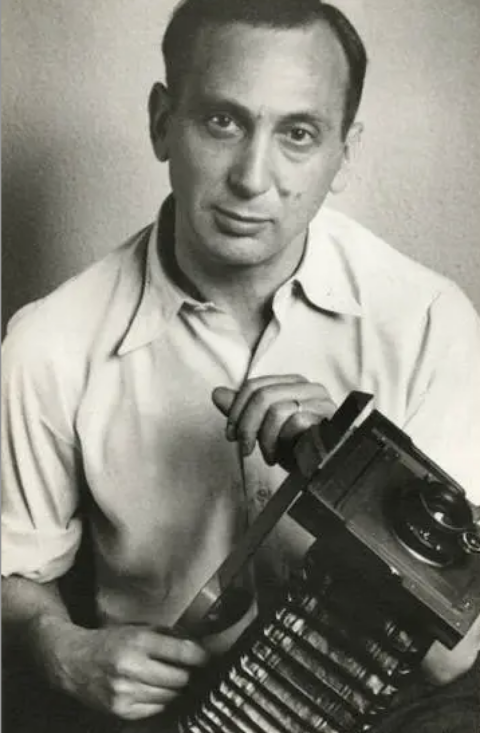 America was not an ideal fit for Kertész, who linguistically and artistically didn’t really mesh with American expectations. After spending more than a dozen years working for a Condé Nast salary with House & Garden, where he published more than 3,000 photographs, he had a hospital bed epiphany after undergoing a hernia repair: “I think over my American existence, and I decided I don’t want to give in, even if I have nothing to eat … Is more important with this son of a bitch life to hold on and do what I want, honestly, humanly, artistically.” He was 67 when he left Condé Nast and was still taking photographs, on his own terms, until the end of his life at the age of 91.
Albers’s title, Everything is Photograph, comes from a comment made by Kertész about his process as an artist, ultimately his process regarding life itself, while reflecting his lifelong difficulty with languages, even his native Hungarian. As it turns out, photography was the language he spoke most fluently. His photographs might prove “baffling” to some (according to one American editor), but should be far more widely understood as beautiful, haunting, influential and, ultimately, as Albers trenchantly reveals, central to the art and history of photography.
[Published by Other Press on January 27, 2026, 517 pages, $49.99US/$69.99CAN, hardcover]