Translators’ Introduction
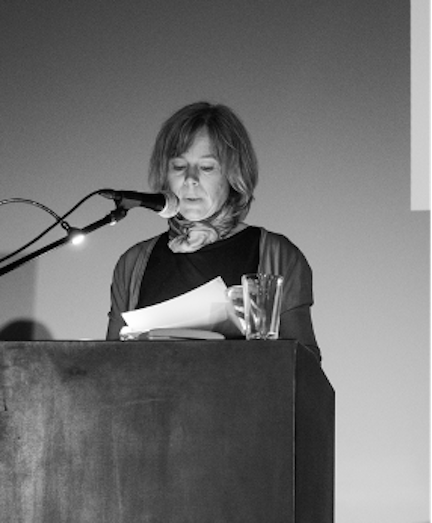 So the Day Begins: Grief Refrain, from which these poems are excerpted, presents the German poet Anja Utler’s radical rethinking of poetry in response to the Russian war on Ukraine. The volume consists of 209 verses, one per page, each of which starts with “So the day begins.” The verses, mostly quatrains, are syllabic, based on the haiku form, with lines usually comprising 5 or 7 syllables each. Utler wrote them during the period of intense grief she experienced when Russia invaded Ukraine. The poems’ structure offers strictures that push within and against her themes of disintegration, power and powerlessness, relation and alienation, spurred by the repetitive, unbearable but unending work of mourning. The poems explore grief as a crucial element of life alongside, close to but not part of, the violence of war. In our time of violent crises, Utler’s writing gives honest voice to the complexities of witness, to the place of feeling as we live through the beginning of each day. [Photo of Anja Utler by Viktorija Paškelytė]
— Aimee Chor and Kurt Beals
/ / / / /
So the day begins,
with stones and moss around its
base, where does it end,
just 1 or 2 yards deeper —
So the day begins
bones out of place, the rest is
blanketed in skin
just chewed-up gum: skin
So the day begins,
kettle vibrates, something in
the sink is clinking
chatter of metallic teeth
So the day begins,
to fertilize it, set the
heart in grass, tick-tock
thicken, drink I whisper drink
◆
So the day begins;
plastic corks and paradise;
touch only occurs
where someone lies down.
So the day begins.
The floor, floors, bed, and I are
places to lie down:
lying down, nothing gives way
So the day begins.
And the moon is still half full.
It will be|,| ok.
A fist, naked, full, enthroned.
So the day begins
and spreads across the time zones
evenly, fairly,
as only the day can do
◆ ◆ ◆
Es beginnt der Tag,
mit Stein und Moos auf seinem
Grund, wo hört er auf,
schon 1, 2 Meter drunter –
Es beginnt der Tag
mit Knochen fehlplatziert sonst
flächendeckend Haut
ausgekauter Gummi: Haut
Es beginnt der Tag,
Wasserkocher, der vibriert
im Becken klirrt was
Außenzähne aus Metall
Es beginnt der Tag,
zum Düngen gib das Herz ins
Gras, es düngt was dickt
und tickt, schluck ich flüstre schluck
◆
Es beginnt der Tag;
die Plastikstöpsel und das
Paradies; nur wo
wer aufliegt, ist Berühren.
Es beginnt der Tag.
Der Boden, Böden, Bett, die
Liegefläche ich:
liegen auf, nichts gibt da nach
Es beginnt der Tag.
Eine Hälfte Mond noch da.
Doch|,| das wird wieder.
Faust, die nackt und ganz und thront.
Es beginnt der Tag
und verteilt sich gleichmäßig
und ganz gerecht auf
Zonen wie nur er das kann