Translator’s Introduction
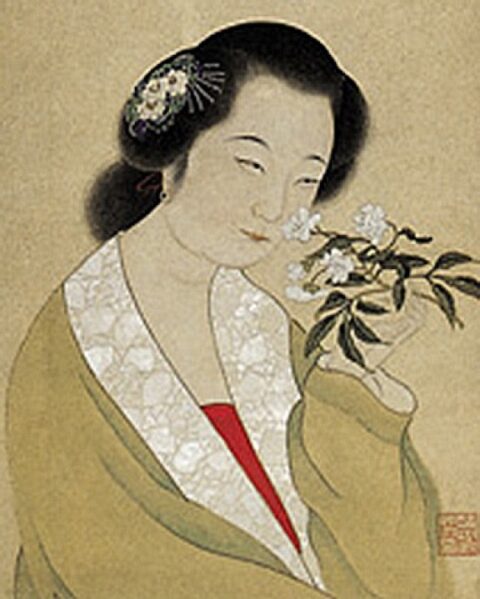 李清照 Li Qingzhao (1084–1155) poet and essayist of the Song dynasty, hailed from a prestigious scholar-official family. Married to the poet-politician Zhao Mingcheng, she collected with her husband numerous books, sculptures in bronze and stone, paintings, and calligraphies, lost during the Jin-Song Wars. The couple often wrote love poems as letters to each other, even as a playful competition, when Zhao was absent from home for official business. Of course, Li always won. Zhao died of typhoid fever en route to an official post during the Jin-Song Wars. Li never recovered. Her later life was marked by imprisonment, exile, and poverty. She kept working to complete her postscript to Catalogue of Inscriptions on Metal and Stone that mentioned the documents Li and Zhao collected. She wrote poetry until the end of her life and is regarded as one of the greatest poets in Chinese history.
The four poems below appear in Study of Sorrows: Translations, published by Copper Canyon Press in October, 2025.
This Evening
TO THE TUNE “HUAN XI SHA: SILK WASHING BROOK”
My little courtyard
deep in the deep
current of spring.
The curtains unrolled,
the room heavy
with shadows.
I sit quietly,
tuning the zither.
The far peaks
deliver the clouds
like a message
that asks for
another veil of rain
before dusk.
This evening,
I am so afraid I cannot
keep the pear blossoms
from shriveling.
◆ ◆ ◆ ◆ ◆
[After illness my earlocks]
TO THE TUNE “TAN PO HUAN XI SHA: VARIATION ON SILK WASHING BROOK”
After illness, my earlocks
are blemished
with another shade of frost.
Through the gauze,
the moon waning.
I boil the cardamom seeds
along with their twigs.
There’s no need for two cups.
I read poetry in bed.
Rain paints the view lovelier
outside my doorstep.
All day, the only benevolence
I receive comes from
the osmanthus blossoms.
◆ ◆ ◆ ◆ ◆
[Who planted the banana tree]
TO THE TUNE “TIAN ZI CHOU NÜ ER: VARIATION ON UGLY DOLL”
Who planted that banana tree
before my window? Its shadow brimming
my courtyard. My courtyard
under its huge shadow. Each leaf curls
about the sprout like a slim hand
clasping a heart. Heartbroken
on my pillow, and then this midnight rain.
Each raindrop batting a leaf.
Each leaf takes the raindrops in.
It saddens this woman from the north,
who is not used to the sorrow
of this southern night. What can she do?
Get up and listen quietly until dawn.
◆ ◆ ◆ ◆ ◆
Feelings in Spring
TO THE TUNE “NIAN NÜ JIAO: REMEMBERING THE SINGING LADY”
The courtyard seems more desolate in drizzle.
Doors must be latched.
Cold Food Festival is near with unpleasant weather.
I finished a new poem
with risky rhymes and a hangover.
To mail my feelings
those enlisted barn swallows are useless, as usual.
Spring chill is unbearable.
I put down curtains and don’t even go on the balcony.
The coals burn out, so I must get up.
In dawn light and dew, the world seems floating.
Early sprouts of sycamore trees.
Should I take a walk
somewhere, like those happy, healthy people?
Let me wait for the sun to dissipate the mist and see
whether this is really a good day.
/ / / / /
浣溪沙
李清照
小院闲窗春色深,重帘未卷影沉沉。
倚楼无语理瑶琴。
远岫出云催薄暮,细风吹雨弄轻阴。
梨花欲谢恐难禁。
/ / / / /
摊破浣溪沙
李清照
病起萧萧两鬓华,卧看残月上窗纱。
豆蔻连梢煎熟水,莫分茶。
枕上诗书闲处好,门前风景雨来佳。
终日向人多酝藉,木犀花。
/ / / / /
添字丑奴儿
李清照
窗前谁种芭蕉树,阴满中庭。
阴满中庭。叶叶心心,舒卷有馀清。
伤心枕上三更雨,点滴霖霪。
点滴霖霪。愁损北人,不惯起来听。
/ / / / /
念奴娇· 春情
李清照
萧条庭院,又斜风细雨,重门须闭。
宠柳娇花寒食近,种种恼人天气。
险韵诗成,扶头酒醒,别是闲滋味。
征鸿过尽,万千心事难寄。
楼上几日春寒,帘垂四面,玉阑干慵倚。
被冷香消新梦觉,不许愁人不起。
清露晨流,新桐初引,多少游春意。
日高烟敛,更看今日晴未。