The Vivisectors tells two stories at once about one person. The suspenseful tension between them pulses at the heart of the novel’s poignance, humor, and winning personality. On the one hand, it’s the story of a young woman, the daughter of a revered writer and academic, who leaves her university and her family after her mother tries to commit suicide, moves in with her intelligent but comfortably unremarkable uncle, and works for an academic whom she despises. Eventually she meets a nice young man and falls in love. On the other hand, it’s the story of a seething, irrepressible malcontent who, though attractive and calm on the surface, denies and resists many aspects of her existence in order to … survive? Be superior? Control everyone else? Deconstruct her own narrative? It’s never clear, though the real story could also regarded as the gradual evolution from that person into someone in touch with themselves and others — a movement which is, despite the book’s stated resistance of such feelings, romantic. The narrative voice is so convincingly grouchy and dismissive that one might be tempted not to believe those moments in which the tone shifts — and yet those swerves are believable as well.
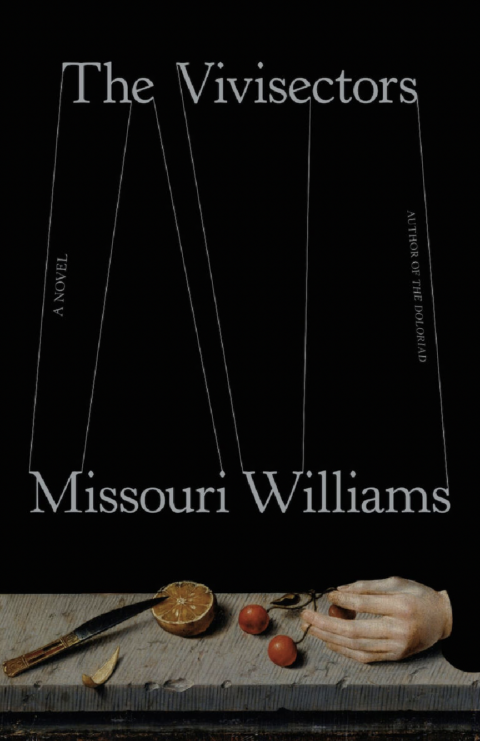 The form of the book is an apt mould for its crucial contradictions. Agathe, the narrator, gives us information in lengthy and sometimes scathing headlong paragraphs, interrupted at times by scripted speeches by groups of characters that resemble analytical and reflective choruses. (Williams is also a playwright and film scholar, and her knowledge of the different ways characters project themselves and their opinions outwards is on display steadily here — as is her sense of dramatic irony.) Agathe “goes deep” on things that bother her, of which there are many. The earliest victim is her boss; Agathe doesn’t like her egotism, neediness, arrogance, anger, and appearance. Working as the boss’s secretary, Agathe sabotages her by not doing her job very well, but in ways the careless boss isn’t likely to discover. Agathe’s rants rise steadily and then just as quickly subside or change focus, not so much feverish as restless, She hates her father who, in the isolated scenes of their interaction, treats her neglectfully and abusively, a psychologically absent presence who often seems to blame his daughter for said absence in fairly blunt terms.
Another thing Agathe addresses is the world around her, an indication of a mind that finds everything fascinating, even if she would disavow this. Sometimes the focus is cultural; at one point, Agathe dismisses contemporary writers’ attention to landscapes, calling their books “relics” describing a “dead world.” She states that people are now immersed in online life, and that if they were to give as much attention to “describing the objects in our hands and the shattered worlds within them, the books we would produce would be as alive and maximalist as the books of the past, brimming with figures and forms and full of new names, and written in a language that sounded as if it were falling to pieces, as if it couldn’t take anything for granted.”
At the same time, the intensity and lyricism of Agathe’s descriptions of her physical surroundings cast into relief any cultural or social perspectives. Here she is, hypnotized on mass transit on her way to visit her father and her very tranquilized mother:
“Enormous oaks thronged the high banks of the road: their broad branches extended high above our heads before knitting together and partially blocking out the sky. The sunlight that slipped through them streamed into the carriage and made squares of light on the floor. As we plunged in and out of the canopy these broke into gleaming, irregular pieces, but by the time we reached the station the panes of light were solid and unwavering.”
For someone who describes herself at one point as “a dumb, voiceless listener, a statue,” this description of the floor of a commuter train is surprisingly vivid and voluble, virtually constituting an expression of longing.
 Adam, the nice young man Agathe meets, is not really that nice on the surface, but for this story and its narrator’s life, he is a catalyst. The two meet by chance, which is fortuitous for Agathe’s boss. She had had a relationship (platonic but on the brink of more serious) with Adam, and when she hears that the two young people have met, she more or less asks Agathe to spy on him. After Adam argues with a professor (the loudest of many clashes with others — he is outspoken), he is virtually ostracized by the academic community, and Agathe’s boss becomes curious about his psychological state even though their friendship has paused. The two young people meet, one conversation turns into another and, while Agathe had been prepared to dislike him, she now finds he is not so bad after all. She lives in such a closed-off world, within her mind, that the close physical presence of another person presents an inherent challenge. Adam adds to that challenge by getting her to communicate; in one truth-telling conversation, he articulates an unexpected insight about Agathe that stuns her. It’s one of the novel’s most tender moments.
Sturdily structured, the novel ties things together at its end in a way that might strike some as blunt but could also be taken as gratifying, a surprisingly open expression of freedom. Agathe is, to use her word, “maximalist” at heart; her desire for independence leads her to avoid those who seem to be authorities in her environment, from her boss to her parents to the gardeners who perpetually attempt and fail to scale back the city’s foliage. And so if agency is finally granted to her, I root for her. Williams’ first novel, The Doloriad, included a character named Agathe, at an earlier stage in her personal and public education — it would be nice, for me at least, to see this rebellious and highly intelligent person continue working through, over, and around her life in a novel to come.
[Published by Farrar, Straus & Giroux/MCD on May 26, 2926, 273 pages, $28.00US/$39.00CAN hardcover]