In his new book on Bob Dylan, Inside Bob Dylan’s Memory Palace, poet and biographer Robert Polito takes the road less traveled in the burgeoning field of Dylan studies, and it makes all the difference. Rather than focus on the incendiary music that catapulted the singer to worldwide celebrity in the 1960s — still a central focus of Dylan-related books — Polito’s subject is the second thirty years of Dylan’s career, marked by the release of two solo acoustic albums of folk songs and covers, Good As I Been to You (1992) and World Gone Wrong (1993). In retrospect, it’s clear that Dylan’s purpose in making these recordings was to recharge his creative batteries by reconnecting to his folk music roots. However, not even Dylan’s most devoted fans could have anticipated what came next. His next album of original compositions, 1997’s Grammy-winning Time Out of Mind, was not only a return to form but an unexpected career high point, occurring at a time when even Dylan’s most devoted fans had stopped paying attention. Not only was Dylan back, he would soon reach new, younger audiences, if not through radio airplay, then by dint of the relentless touring schedule that the singer adopted in the late 1990s.
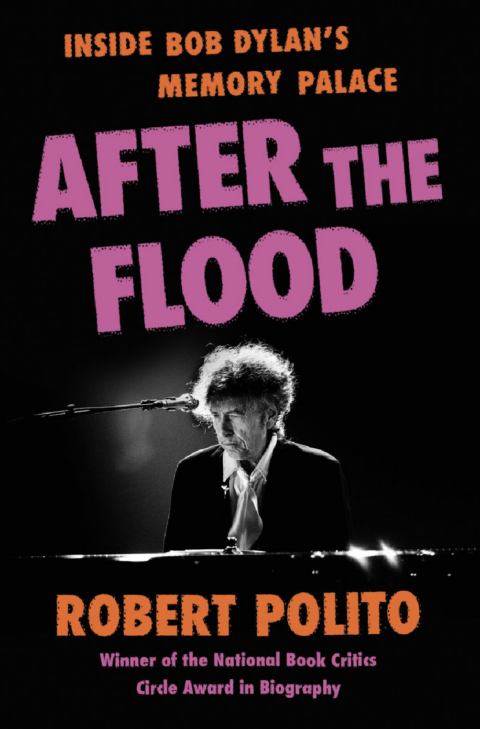 Since the release of Time Out of Mind, Dylan has entered a second period of extraordinary creativity, writing songs and making records that are much more than mere footnotes to the path-breaking music of his early career. As Polito’s book makes clear, Dylan has had a stunning second act that warrants as much careful study as the work he produced in his “glory days,” and that is important not only for what it reveals about Dylan, but for what it can teach us about the larger phenomenon of late-career artistry.
Polito’s confidence that Dylan’s late career arc compares favorably to the achievements of the heavyweights of modern art is a large part of what makes his study such fun to read; he’s a passionate, unabashed advocate for the greatness of “late Dylan.” For Polito, “those second thirty-odd years alone would surpass the lifetime achievements of approximately anyone else I could summon for resonant parallels — whether musicians, composers, poets, novelists, philosophers, or painters. I don’t readily see parallels for those second thirty years. (Whom might you care to nominate … Conceivably Melville …? Stravinsky …? Wittgenstein …? None exactly).”
It’s a provocative claim, but not unreasonable on the face of it, even if you consider only the breadth of Dylan’s prodigious output since the early 1990s. Besides Time Out of Mind, which Polito regards as the true “departure point for the coming new century,” there is Love and Theft (2001) and Modern Times (released in 2006, his first no. 1 album since 1976’s Desire), albums that are now regarded as continuing a golden run of recordings and that received an even more rapturous critical reception than did TOOM. Dylan’s most recent album, Rough and Rowdy Ways (2020), including “Murder Most Foul,” Dylan’s first Billboard no. 1 song, was likewise released to universal critical acclaim. We can also add to this roster of achievements the film Masked and Anonymous (2003), in which Dylan co-wrote and starred as the lead character, Jack Fate, and three more feature films, Gus Van Sant’s I’m Not There (2007), Martin Scorsese’s No Direction Home (2005) and most recently A Complete Unknown (2024), starring Timothée Chalamet (admittedly inspired by Dylan’s 1960s career achievements and not his later work, hosting a radio program on XM Satellite Radio that highlighted the singer’s extremely eclectic musical taste, Theme Time Radio Hour, originally aired from May 2006 to April 2009), international exhibits of his paintings and welded sculptures, and writing two best-selling books (his memoir Chronicles: Volume One [2004] and a book of essays on 66 songs by other popular artists, The Philosophy of Modern Song [2022]). This is not to mention what Polito fittingly describes as Dylan’s “vast, staggering concert tours” of over 3,000 shows since the late 90s. Considered in the context of such productivity, being awarded the Nobel Prize in 2016 seems almost a footnote to the real story here of Dylan’s continuing, prodigal creativity.
While the scale of Dylan’s work makes Polito’s claims for Dylan’s unique achievement more credible, it presents a daunting problem for the biographer-critic: how to do justice to the full range of Dylan’s work without overwhelming the reader? In an inspired move, Polito found a form capacious enough to frame his panoramic story: the abecedarium, traditionally a means of teaching children their ABCs. Each of the 26 letters (chapters) in the book focuses on a major topic in the songwriter’s multitudinous (to use another descriptor of late-era Dylan popular in Dylan Studies) post-1990 career, including his concert shows, feature films, or his religious faith. Polito’s abecedarium initiates the reader into the “higher mysteries” of Bob Dylan’s multi-level artistic output over the last thirty years. If you have the time and inclination to do an in-depth study of the subject, Polito’s book can serve as an excellent reference guide. That noted, this is an abecedarium for adults and can be read piecemeal; a reader can dip in and out of the Dylan story, treat each chapter as a mini-survey course on a subject or as a prompt for their own investigations into the wide-ranging artistic output of later Dylan. Any old way you choose it, After the Flood is a book built to be lived with and lingered over, read and reread.
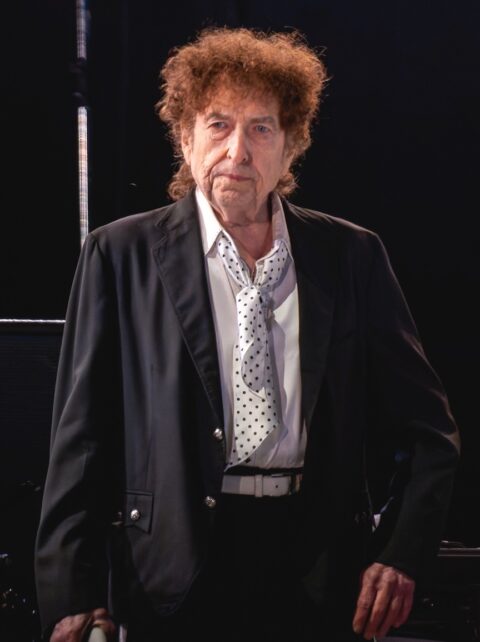 My earlier roster of Dylan’s late-career achievements emphasized the singer’s productivity. But if quantity were the distinguishing feature of Dylan’s post 1990s career, it’s hard to imagine that Polito would have bothered with this project. It is clearly the singular quality of Dylan’s late-era aesthetic that moved Polito to write this book. For Polito, Dylan’s post-90s songwriting is both the culmination of the singer’s long-standing relation to American folk music and a distinctly new “take” on that tradition. Bob Dylan has always been prodigal about his myth-making, carefully constructing songwriting persona and just as ruthlessly discarding them. However, late-era Dylan seems to represent something bigger than a new mode of public presentation. Since the 1990s, Dylan’s writing has assumed a new impersonality; his work in various platforms and mediums seems to hint at a new desire to be respected as a curator of American roots music, and not simply as a creator. In the new context of his late career, Dylan’s vocals, always a centerpiece of his musical identity, assume an even greater symbolic significance. The tarnished, weather-beaten voice assumes a new luster; it’s ideally suited for the lyrical reflections on mortality that have become the prevailing theme in his post-1997 songs, a perfect blend of form and content.
Although less frequently remarked upon, even by Polito, another key feature of Dylan’s late aesthetic is his embrace of humor — death’s head humor, but humor nonetheless. Late Dylan will often say the most outrageous things about himself, and move to the next line without missing a beat. The 16-minute epic “Highlands” is a roller coaster of a song, and like most of the songs on Time Out of Mind, it touches on the dark side, as when the singer admits he “(f)eel(s) like a prisoner in a world of mystery / I wish someone would come /And push the clock for me.” Yet the song has more than its share of gloriously silly moments as well, including a shaggy-dog story about the narrator’s hopelessly weak attempt to chat up a waitress, and his complaint that people yell at him to turn down the stereo when he plays his Neil Young records too loud. Dylan would deploy the same comic pose and deadpan delivery in his 2000-era Theme Time Radio. This time around, the humor was balanced by the host’s performance of expert knowledge about what seemed to be the entirety of American popular music. The program had script writers of course, but Dylan played the role of music curator with unquestionable authority. Self-deprecating humor is a common feature of late Dylan-era songs, suggesting that he learned as much from the great vaudevillians of the pre-WWII era of popular music as he did from the great folk and blues artists that he pays fond tribute to in his memoir, Chronicles, another late era Dylan milestone. One senses that the singer’s newfound comic persona had the serious purpose of fending off those in his fanbase who still revere Dylan as a prophet, for his trail-blazing earlier work. Whatever the virtues of the prophet, they rarely include a sense of humor.
If there is a core argument to this inclusive book, it’s that Dylan’s obsession with memory, both personal and collective, is the beating heart of his late career aesthetic. Polito quotes several sources close to the artist who bear witness to the singer’s uncommon powers of retention. There’s Terri Thal, Dylan’s first manager, who notes that: “Bob had and still has, I presume, a kind of odd ability to take in information. He can retain the parts of it that he wants, discard the parts of it that he doesn’t want, and tuck away parts of it for future. Which most people, I think can’t do … They don’t remember it. If they want it, they can’t pull it out. He can.” Sylvia Tyson, of the 1960s Canadian folk duo Ian and Sylvia, echoes Thal: “The thing most people don’t realize about Bob Dylan is that he has a kind of photographic memory of things. He literally remembers everything he’s ever heard or seen.” Dylan met Ian Tyson and Sylvia Fricker in 1962, at the start of his singing career in Greenwich Village; fast forward nearly sixty years later to “Murder Most Foul” from Rough and Ready Ways, and Polito detects the same “urgency of memory: ‘If you want to remember, better write down the names.'” Of course, Mnemnosyne was always recognized and honored as the mother of the muses, but as Polito details in Chapter T (“… Opened/Before My Time …”), Dylan’s capacity for recalling, revisiting, and eventually revising his initial ideas is truly remarkable. “The surprise,” he writes, “is how someone so seemingly impulsive can always take a distant view (of his past): many decisions, much work framed ahead for years, maybe decades.”
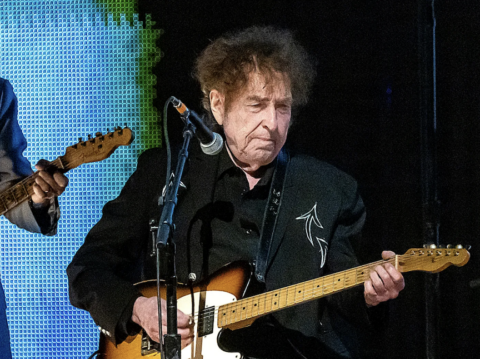 So yes, memory: but also a fierce, dogged determination to keep things in mind close at hand, for creative purposes. In one of the notes from the early 1990s that Polito discovered in his research in the recently opened Dylan archive in Tulsa, the singer gives himself the terse reminder: “Read Ovid.” It took over a decade, but Dylan followed though on his to-do list. In Polito’s wonderful phrase, “Ovid surges through Modern Times (2006), inspiriting ‘Nettie Moore,’ ‘Workingman’s Blues #2,” and “Ain’t Talkin’.” Dylan’s will-to-remember seems to have produced his own version of the “cut-up” writing method pioneered by William Burroughs and Brion Gysin. Since Love and Theft, Dylan’s lyrics have become increasingly impersonal, post-human even: an artful arrangement of seemingly (but perhaps only “seemingly”) personal statements and half-remembered passages from Latin poets or the Civil War histories that, judging from the recent interviews that Polito references, are his constant study. As the controversy over the many borrowed phrases from confederate poet Henry Timrod and Junichi Saga’s Confessions of a Yakuza embedded in the lyrics on Love and Theft suggests, Dylan seems capable of extraordinary acts of intentional forgetting as well.
Early on, Polito makes a summary claim about the relation between Dylan’s powers of recall and his artistic revival that could stand as the book’s thesis: Dylan’s “fierceness of empathy and memory powered Dylan’s extraordinary revival as a writer, performer, and even public figure … His vertiginous intuition is that the past erupts into the present, an intuition he then embodies and renders literal through allusion and collage.” Dylan’s careful cultivation and equally purposeful fragmentation of his hyperactive memory is the crucible where he forges his late style aesthetic.
Perhaps the secret of Dylan’s late stage creativity resides in his ability to store and process an enormous database of information about himself and the history of American folk music. Or perhaps not. No matter how adept the interpreter, the mysteries of creativity will remain mysterious, and it’s the mystery that matters and that makes us read and listen again. That said, Polito has done a great service to both Dylan scholars and the Dylan-curious in compiling, framing, and contextualizing all the hard facts surrounding Dylan’s late stage creativity.
One last point: I’ve emphasized the value of the book for the Dylan-curious, but nearly every chapter contains new information that Polito gathered from his immersive study of the songwriter’s published and unpublished lyrics housed in the Dylan archive in Tulsa. For this reason alone, Polito’s book will be essential reading for those who take a professional interest in Bob Dylan’s life and career.
[Published by Liveright/W.W. Norton on January 27, 2026, 384 pages, $31.99 hardcover]