Anna Badkhen has seen her share of human sorrow, or, as she puts it in Bright, Unbearable Reality (2022), “real-life-wretchedness.” As a war correspondent, she has seen people murdered and entire landscapes devastated. But, as she well knows, war only brutally worsens what is the daily experience of millions of people on the move, humans displaced by violence, disease, poverty, and climate change. Born in 1975 in St. Petersburg, Russia, Badkhen is an exile herself, though one who left her country voluntarily. As she explains in To See Beyond, her latest collection, she came to the United States “because I was looking for a better life for me and my children.” Which would make her, she adds, an “economic migrant.” Having just pronounced that phrase, she stops herself: “Who, me?”
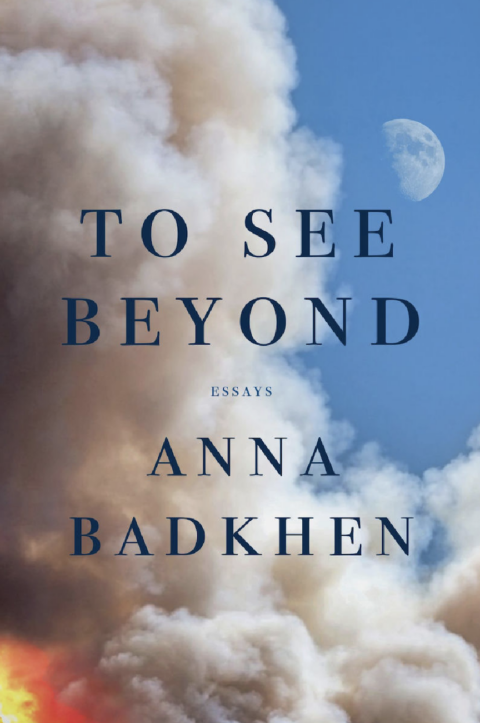 Whatever reasons Badkhen might have had for leaving Russia, her travels didn’t end after that. Being on the move has become her way of life. She has lived with carpet weavers in a remote village in Afghanistan (an experience she recreated in The World Is a Carpet, 2013) and has sailed with the fishermen of Joal in Senegal (Fisherman’s Blues, 2019). In her new volume, she travels to Russia, Chechnya, Iraq, Germany, Poland, Ethiopia, Mali, Senegal, Tenerife, and Hawai’i. Her sense of displacement — the topic of “The Anatomy of Lostness,” one of the central essays in To See Beyond — is a blessing in disguise. It makes her particularly attuned to other people similarly disoriented on a planet both supremely beautiful and utterly terrifying: a world on the brink of environmental collapse, controlled by “the avarice of the world’s richest,” with icebergs melting, rivers drying up, and heat-struck birds falling from the skies. It would seem impossible to “see beyond” here. And yet Badkhen feels a moral obligation at least to try.
Badkhen’s prose is rich and evocative, animated by an obvious delight in the power of words to conjure faraway places and distant people, allowing us to imagine them as if we were right there with her: the Fulani herdsman, for example, tall and thin, “whittled lean by hundreds of generations of milk-only diet,” his “limbs stretched to chase clouds across the savanna and deserts of Northern Africa,” who happens to share a ride with her across the desert, or the old Senegalese fisherman, too frail to still go out in a boat, whose intense blue eyes still retain the memory of the waves he traveled for so long.
Never averse to hyperbole, Badkhen writes as though she were discovering, with each well-chosen word and finely wrought sentence, the capacities of the English language anew, a quality that reminds me of the Polish-born British novelist Joseph Conrad, who was also writing in an acquired language. Indeed, the best of Badkhen’s descriptions sent me back to Conrad’s Lord Jim (1900). There’s that wonderful moment when the novel’s protagonist, plying the Arabian Sea, sees the moon as “a slender shaving thrown up from a bar of gold.” Now compare with this Badkhen’s representation of the moon during an eclipse, “sliding off the sun like a lid off a cauldron.”
Badkhen’s rootlessness-by-choice might be one of the reasons she is so extraordinarily good at getting people to talk to her, from Amadou, her tour guide in Mali, skilled in the art of medicinal remedies, to the unnamed keeper of the cave of light (Xûnt-mi) on the Atlantic shore of Dakar, where God is said to have created light, to her Indigenous friend Enrique Madrid, a mystic living in San Antonio, Texas. A liminal figure herself, Badkhen is fascinated by the extremes of what it means to be human. Thus, she travels to where humanity began, where the oldest skulls of Homo sapiens were found: Herto Bouri, in the African Rift Valley, Badkhen’s “biological Eden.” And she descends into Hell, or our modern version of it, places where humanity seems to have come to an end: Auschwitz in Poland and, less familiarly, the site of a former concentration camp in Cologne, Germany. Reflecting on the German “Stolpersteine,” commemorative brass-plated cubes put in the ground before the houses from which Germans dragged their Jewish neighbors to kill them, she envisions the Palestinian desert paved “many times over” with such stones, gleaming in the unrelenting sunlight.
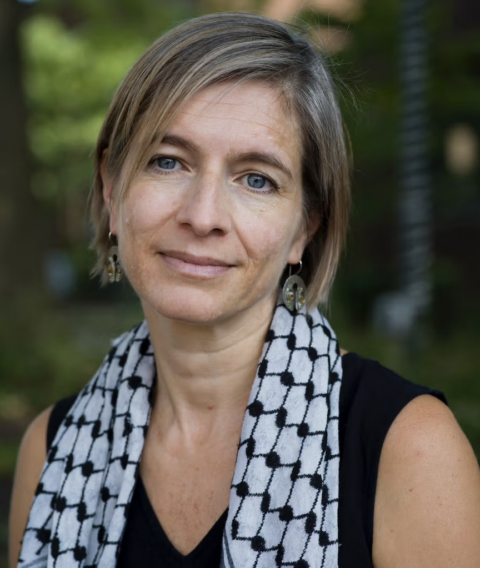 In “Ars Poetica,” Badkhen draws parallels between the piles of children’s shoes amassed at Auschwitz, the shoes left by the dead hostages of Beslan in the North Caucasus, a school seized by Chechen fighters and then stormed by the Russians, and the scorched flip-flops found in Mazar-i-Sharif where an Afghan boy touched an unexploded shell. Writing, to Badkhen, is a way of looking down, of acknowledging the debris left by human violence. But at other times it may also be a way of lifting one’s arms up in prayer, of sending a kite flying high into the sky, as the boys in war-shredded Afghanistan do every spring, a fragile thing as precarious as their hopes for a better future. Not a believer herself, Badkhen vividly recounts an experience of spiritual uplift she had during Friday prayer in the Great Mosque of Touba in Senegal.
The late Barry Lopez, author of Arctic Dreams (1986), once told Badkhen that the writer’s task was to “help readers be less afraid,” to which she now responds: “Art does not alleviate my fear, but it does fill me with wonder.” To illustrate such wonder, she chooses a photograph taken by a friend, Thorne Anderson, on the east bank of the Euphrates in Fallujah, Iraq. Not far from there, American forces had, earlier that day, razed a village. And yet here he was, that beautiful boy, getting ready to dive into the river but now frozen in time in Anderson’s photograph, a human bird caught mid-air, “his wings two-thirds of the way to an upstroke, tips pointed like an albatross.” At its best, Badkhen’s prose also takes flight.
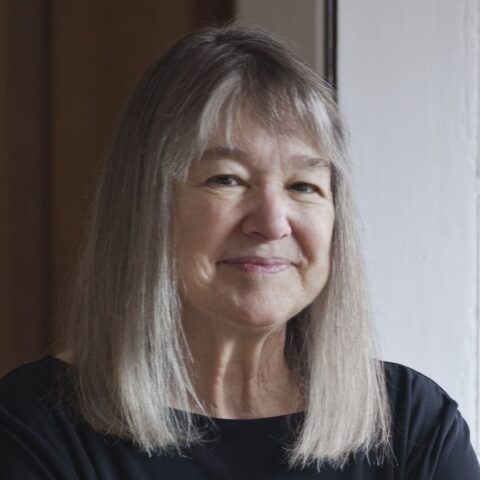
If Badkhen is interested in glimpses of a world beyond the muck of human life, Anne Fadiman, born in 1953, a former editor of The American Scholar and now a Professor in the Practice at Yale University, keeps a close eye on the world she knows best — her life at home in western Massachusetts and her classroom in New Haven. Fadiman’s business is, as Emily Dickinson once said about herself, circumference. Fadiman’s genre, as shown in her previous collections Ex Libris (1998) and At Large and At Small (2007), is the “familiar essay,” a mode sometimes maligned for its self-indulgence, for providing a platform for the author’s “unclothed egoism,” as Virginia Woolf once complained. But in Fadiman’s work, that intense focus on the private life is redeemed, I think, by a consistent disdain for introspective excess: we do get to know her, but never too much.
Fadiman fans certainly know that she can play the part of the skillful reporter, too. Her first book, The Spirit Catches You and You Fall Down (1997), was a heart-breaking account of the misunderstandings between a family of Hmong immigrants in Merced, California, and the physicians who treated their epileptic daughter, with disastrous consequences. Fadiman’s empathetic reportorial instincts can be felt in the new book, too, especially in the essay about an extraordinary student, Marina Keegan, whose life was cut short by a freak car accident (“Yes to Everything”).
If there’s one thing that holds Fadiman’s literary output together, it’s her infectious love of words. The bookish daughter of literati — her father was the prolific critic and editor Clifton Fadiman, her mother the journalist Annalee Whitmore Fadiman — she grew up listening to stories about Wally the Wordworm, a voracious invertebrate who shunned the “thin” words in picture books and gorged himself on the polysyllabic delights found in the dictionary, from “abracadabra” to “zymurgy.” Fadiman fondly recalls her father’s storytelling in her memoir, The Wine-Lover’s Daughter (2017).
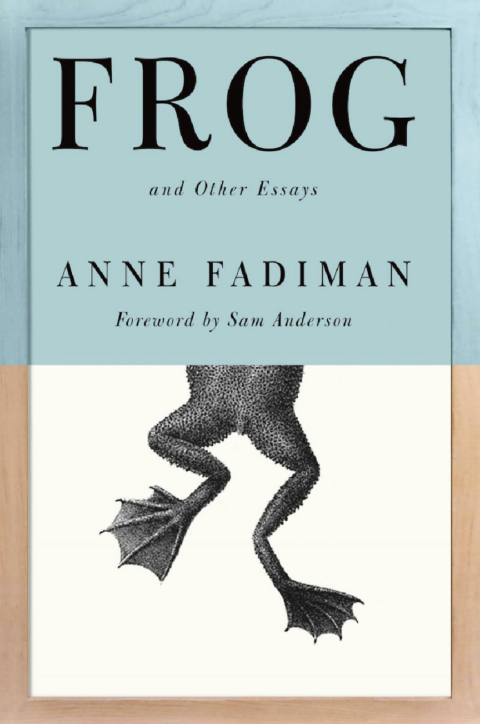 To no one’s surprise, Fadiman grew up to become a writer, too, a fastidious word maven horrified by careless typos or dangling participles. The shape of letters on the page matters to her. In Frog, when a beloved printer becomes too costly to maintain, she mourns the machine’s demise with a tenderness others would reserve for humans (“My Old Printer”). If this essay begins in the satirical mode, it ends as an elegy. To Fadiman, her dying printer is a metaphor for human obsolescence, the fate we all share: “We are all HP LaserJet II printers.” Note the pleasure with which Fadiman immerses herself in the arcane language of printer technology (“separation pad,” “fuser roller,” “transfer corona assembly”), flinging around technical terms with the nonchalance of a seasoned tech support consultant.
Precisely because they are so circumscribed, the essays in Frog mesmerize when the outside world forces the author to acknowledge its existence, when, for example, the pandemic makes her step into the terrifying world of Zoom. Suddenly, her writing students, logging on from their homes in far-flung places, have turned into postage-stamp-sized squares on a computer screen (“Screen Share”). In “All My Pronouns,” Fadiman recounts what happens when her sense of linguistic propriety is dislodged by some of her students’ insistence on using the syntax-defying singular “they/them” pronoun. At the end of the essay, we watch as Fadiman, having assured herself that such ambiguities were already well-known to the likes of Chaucer, composes her first paragraph applying the new pronoun.
One of the most remarkable intrusions of the outside world in Frog happens in “South Polar Times,” in which Fadiman admits to her lifelong fascination with Arctic travel. As an adult, she finally gets to realize her childhood dream — not, of course, by actually going to the South Pole, but by doing the next best thing: reading about it. She acquires a review copy of an expensive new reprint of The South Polar Times, the only newspaper ever published, in just one copy, in Antarctica, during Robert Falcon Scott’s two voyages there. Leafing through the pages of the reprint, Fadiman finds herself drawn to the delicate illustrations of Arctic birds by Edward Wilson (1875-1912), the expedition‘s surgeon and naturalist. Wilson saw his avian portraits as “attempts to praise God,” though Fadiman fears that Wilson really wanted to colonize the birds: “Antarctica had no natives to civilize.”
The sentence in which she describes Wilson’s pictures is an excellent example of Fadiman’s writerly restraint, her ability to dab her words with just the right splashes of irony: “Wilson’s penguins frolic through the pages of The South Polar Times, waddling, preening, swimming, incubating eggs, breeding chicks, and, in one case — decades before it had become a cliché — wearing evening dress, complete with black tailcoat, white waistcoat, poke collar, and white bow tie.” Fadiman does not engage in Badkhen’s verbal fireworks. What we get instead is a kind of sarcastic piling on — and the more hints of the birds’ alleged activities Fadiman gives us, the clearer it becomes that, in fact, they weren’t actually doing any of those things: Wilson’s happy penguins existed only in his shivering imagination, only on the pages of a handmade newspaper with the smallest circulation in the world. The final sentence of Fadiman’s paragraph reminds us of the sacrifices Wilson underwent to make his fantasy birds frolic. In temperatures below -30, “his eyes inflamed by snow-blindness, he ungloved his hands for a few minutes at a stretch to draw with a soft pencil”: a memorable image of a man doing what he has no business doing in a landscape where he has no business being.
 If Badkhen, against all odds, hopes to see the human spirit soar, Fadiman, assuming the position of the wry observer, watches it crash. “Frog,” her new collection’s brilliant title essay, also recounts a human-animal encounter, of the prolonged sort. Yet this time the animal, through no fault of its own, is where it shouldn’t be. Incidentally, the essay has one of the best openings I know: “Until last summer, we had a dead frog in our freezer.” I can’t quite say why this sentence is so effective and funny. Is it the slight whiff of disgust it elicits, asking us to imagine the deceased amphibian next to pizzas and burger patties? Or is it the aura of mystery attached to the “we had”: how in fact did the frog get there? By magic? Or is it the alliteration, “frog” and “freezer,” that makes me smile?
The protagonist of Fadiman’s essay is Bunky, an African clawed frog, a pale, strong-legged, web-toed weirdo. Grown from a kit given to Fadiman’s daughter, Bunky spent 16 long years in his aquarium at the Fadimans’, far more than his allotted lifespan. Cut off from the world of his ancestors, he never showed any obvious interest in the lives of the humans who kept him, completing his daily rounds in a too-small aquarium, thinking God knows what. If Michel de Montaigne, the grandfather of all essayists, was sure that his cat had an inner life, Fadiman fears that Bunky might have none. And yet, unpettable pet that he was, Bunky also became, in a strange way, Fadiman’s buddy. Writing late into the night, she would descend to the kitchen at 2 a. m, and there he was, still paddling around, “softly calling for a mate he would never meet.”
Googly-eyed and appallingly translucent, neither loved nor unloved, Bunky loomed in the background of the Fadimans’ lives, as “the single most WTF-inducing thing in the house.” Even after he died, no one knew what to do with him. His funeral, the conclusion of an ignominious six years in the freezer, turned into a surprisingly somber affair. Writes Fadiman, evoking the pallid-limbed, long-faced figures in the work of a master of early Flemish painting: “In his delicacy and nakedness, with one foot crossed over the other, he reminded me of a Hans Memling crucifixion.” Searching for words – how does one mourn the passing, six years prior, of an African clawed frog? – Fadiman’s husband, a writer himself, offered a helpless eulogy: “you did everything a frog should do.” Did he really? For starters, left without the chance of finding a partner, Bunky never procreated, normally an animal’s first and most important job in the wild. More important, did his humans, in their dealings with Bunky, do everything they were supposed to do? Fadiman admits to worrying that Bunky’s aquarium was too small for him — but not enough to do something about it.
If Anna Badkhen’s domain is the planet, Fadiman’s world might sometimes seem as small as Bunky’s aquarium. But this is deliberate. For what underlies Fadiman‘s writing is the same humbling insight that also shapes Badkhen’s work, except in Frog it is more concentrated, more pronounced: that the things we don’t know will forever exceed the things we know.
To See Beyond by Anna Badkhen, published by Bellevue Literary Press on April 28, 2026, 192 pages, $17.99 paperback; Frog and Other Essays by Anne Fadiman, published by Farrar, Strays & Giroux on February 10, 2026, 170 pages, $26.00US/$36.00CAN hardcover]