Translator’s Note
Two noteworthy facts about Rokhl Korn draw me toward her work. She wrote nature poetry, rare for Yiddish writers of her time. And she came to Yiddish late, after she had published in Polish, to acclaim. Pogroms turned her against the Polish language and she started studying Yiddish. For a poet, this could not have been an easy decision; she didn’t grow up with the language as mother tongue, as most Yiddish writers did. Her husband, though, was a native speaker and somehow Rokhl Korn managed to learn it well enough to write in Yiddish for the rest of her life. She published her first Yiddish poems in 1919 and went on to win just about every prize in Yiddish literature.
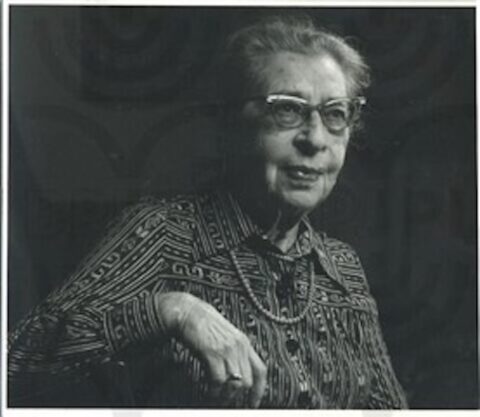 Korn’s work in Bashertkeyt (Montreal, 1949), where these selections appear, qualify as free verse. Of these four, only “The Smile Grieves” and “Beginning of a Song” present something close to a consistent meter, mostly four-line stanzas, with two rhyming lines each. Internal slant and half-rhymes appear intermittently. In my translation, I didn’t attempt rhymes, but I retained the original’s stanzas and line breaks whenever possible.
The imagery in this work is grounded in nature. Even when a poem begins, as “My City” does, in an urban setting, with streets, trains, fevering stations, bridges, its metaphors hew close to the rural landscape. “Beginning of a Song” qualifies as an ars poetica, with references to the kind of abstract emotions that come with artistic life — angst, pain, thought — and still the poem moves toward nature for its imagery — twilight’s grey shroud, the far shore, a raptor’s nails, falling stars. This poem, had it followed Korn’s usual pattern, might have had “My Angst” as its title. Instead, the final words aptly serve for what becomes the opening poem of the collection. It is dedicated to the Yiddish poet Kadya Molodowsky, Korn’s contemporary and peer.
About Korn’s titles — three of the four featured here are made up of the first words of the poem. Unlike other poets, Korn doesn’t put titles to work, providing information not available in the lines of the poem itself, about location or time, for instance. Perhaps this is because Korn has no need for information. These are not narrative poems and they are not obscure. Her lyrics evoke mood and atmosphere, that is their point, and the imagery, always vivid, moves toward the profound.
/ / / / /
My City
My city is always yearning
for you —
streets, like lips,
want to collapse at your feet.
Trees come in dream, lean against
my windows on long, wintry nights.
They eye me with anger & suspicion,
& bloom dark blossoms of ducks and crows.
Trains come and go,
always on the run, always in a hurry.
In arteries of branched rails, longing flows
to a tiny dot, in a large world.
The station’s heart fevers,
flattens the rainbow out of the bridge on the other side,
& stretches toward your unknown,
your faraway, fairytale shore.
My city is always yearning for you
& waits —
if a white bird will flutter
its fine black feathers of letters
& in one breath, call out
our names, the city’s and mine,
& maybe, just perhaps
forecast your arrival, your coming.
♦ ♦ ♦ ♦ ♦
Beginning of a Song
for Kadya Molodovsky
Angst, endless terror,
the way on the threshold of grief & pain
something unfamiliar, silent at the door
stands heavy, swaddled in twilight’s grey shroud.
It’s a first, and first of all, unrecognizable.
The shore, toward which the heart alone swims,
leaves all beloveds behind, leaves home & dream,
& goes toward engagement with pain.
A thought, curdled in blood,
with nails of a raptor, aggressive & deep,
that won’t let go until it feels
the body’s last, awful twitch.
Every drop of blood flows toward sacrifice
redeemable from beneath,
& stop the angel’s unsheathed sword,
a homeless, wanderer’s clang.
Suddenly all goes so still within,
you hear the weeping of the falling stars
& become a pitcher, a thirsty jug
that collects the blue glint of tears.
The world seems flatter now
& maternal earth tunes into every wanderer’s step.
Even God alone will fall to his knees
for this, the one and only, the holiest minute —
and this is only the beginning of a song.
♦ ♦ ♦ ♦ ♦
My Hands
My hands —
Two worlds,
with straight lines made crooked
by seas, mountains, tunnels.
Through narrow, thin ravines,
carved over thousands of years
my fortune flows, like an unknown, tragic river,
sometimes to you, sometimes from you,
& sometimes to an unknown faraway destination.
Ten rose-white, pale half-moons never set
over the trembling waves of my blood.
Eternal witnesses, they watch over
the sweet secret of my fingertips.
And if they find themselves in a void of time
these separate worlds of our hands,
they’ll stay for a minute, motionless, silent,
foggy with unexpected luck,
two red suns & our two bodies.
♦ ♦ ♦ ♦ ♦
The Smile Grieves
The smile grieves for my lips
which have become estranged,
from each other,
like a pair of quarreling lovers
in a cavern of tearful distance.
From my glance, which seeks a place to anchor,
comes a cloudy gloom overhanging the mirror,
like a harsh frost that lands
its white cold stamp.
And like the first brown leaf
on summers green tree,
my first gray hair hides itself in shame,
buries itself quietly over the dreams of my youth.
/ / / / /
מיין שטאט
מיין שטאט איז שטענדיג זשעדנע
דיך—
גאסן, ווי ליפן
ווילן צופאלן צו דיינע טריט.
קומסט צו חולם די ביימער אנטקעגן מיין פענצטער
אין לאנגע, ווינטערדיגע נעכט.
קוקן זיי דאן ארויף צו מיר מיט בייזקייט און חשד
און בליען
מיט טונקעלען צוויט
פון קאווקעס און קראען.
צוגן גייען און קומען
אין אייביקן געלויף, איו אייביקן געיאג.
מיט אדערן פון רעלסן צעצוויגטע
פליסט די בענקשאפט
צו א קליינעם פונקט
פון דער גרויסער וועלט.
דאס הארץ פון דער סטאציע פיבערט
און ווארפט ארויס דעם רעגנבויגן פון דער בריק
דיר אנטקעגן
צו אומבאקאנטע, בלויז געאנטע ברעגן
מיין שטאט איז שטענדיג זשעדנע דיך
און ווארט—
טאמער וועט א פלאטער טון א וויסער פויגל
מיט דריבנע, שווארצע פעדערלעך פון אויתיות,
וואס וועלן אויסזינגען אין איין איינציקן אטעם
דער שטאטס און מיין נאמען,
און אפשר, אפשר
אנזאגן דיין קומען.
—-
דער אנהויב פון א ליד
קאדיע מאלאדאווסקיו
ס׳איז אנגסט, ס׳איז אנענדיקע שרעק,
ווי אויף דער שוועל צו גרויסן צער און לייד,
גלייך עס וואלט עפעס פרעמדס געשוויגען ביי דער טיר
איינגעהילט אין שווערן, גראעם דעמערקלייד.
עס איז בראשית׳דיק און נישט דערקענט
דער ברעג, צו וועלכן ס׳שווימט אוועק דאס הארץ אליין.
לאזט איבער אלץ, וואס ליב, לאזט איבער היים און טרוים
און גייט אנטקעגו דער פארקנסונג מיט דער פיין.
ס׳האט א געדאנק זיך אייגעקראלט אין בלוט
מיט נעגל פון א רויבפויגל אחזריותדיק און טיף,
און לאזט נישט אפ, ביז וואנען ער דערפילט
דאס לעצטן, שליכצענדיקןצאפל פונעם גוף.
און ס׳פליסט שוין יעדער טראפען בלוט צו דער עקידה,
ווי ס׳קען בלויז אויפלייזען פון אונטערגאנג
און אפשטעלען דעם מלאכס נאקעטיקע שווערט
- נע-ונדער, וואגלענדיקערקלאנג.
- און פלוצים ווערט עס אזוי שטיל אין דיר,
אז הערסט ס׳געוויין פון פאלנדיקע שטערן,
און ווערסט א קרוג, א לעכצענדיקע קרוג,
וואס זאמלט איין אין זיך דעם בלאעם שיין פון טרערן.
און ס׳דאכט,די וועלט איז רייפער איצט געווארן
און מוטערלעך די ערד צו יעדן וואגלערס טריט,
און גאט אליין וועט פאלן כורעים
פאר אט דער איינציקסטער, דער הייליקסטער מינוט—
און ס׳איז דאך בלויז דער אנהויב פון א ליד.
—-
מיינע הענט
מיינע הענט—
צוויי וועלטן,
מיט ליניעס גלייכע, קרומע
פון טייכן, בערג און טאלן.
דורך שמאלע, דינטשיקע ראוועס,
איינגעקריצטע פון טויזנטער יארן
פליסט מיין גורל, ווי אן אומבאקאנט און טרויעריק וואסער—
טיילמאל צו דיר,
טיילמאל פון דיר,
און טיילמאל צו אן אומבאקאנטן, ווייטן ציל.
די צען ראזע-ווייסע, בלאסע האלב-לבנות
לעשן זיך קיינמאל נישט אויס
איבער די ציטערדיקע כוואליעס פון מיין בלוט
און היטן, ווי אייביקע עדות
דעם זיסן סוד פון מיינע שפיצנפינגער.
און אז עס טרעפן זיך טיילמאל אין חלל פון צייט
די באזונדערע וועלטן פון אונדזערע הענט,
בלייבן דעמאלט אויף א רגע
אומבאוועגלעך, שטיל,
ווי פארנעפלט פון צופיל אומגעריכטן גליק
די צוויי רויטע זונען אין אונדזערע לייבער.
—-
דער שמייכל טרויערט
דער שמייכל טרויערט שטיל נאך מיינע ליפן —
זיי זענען פרעמד געווארן איינס דעם צוויטן,
ווי צוויי ברויגזע געליבטע
אין הוילן חלל פון פארטרערטע ווייטן.
פון מיין בליק, וואס זיכט זיך ערגעץ צו פאראנקערן
ןןערט מונטע-טריב די אויבערפלאך פון שפיגל,
ווי ס׳וואלט דער שטרענגער פראסט געשטעלט אויף אים
זיין ווייסן, קאלטן זיגל.
און ווי דאס ערשטע, ברוינע בלאט
אויף זומערדיק צעגרינטע בוים,
באהאלט זיך אויס פארשעמט מיין ערשטע גראע האר
און קברט שטיל איבער מיין יונגן טרוים.