on My Mother’s Silver Fox by Alois Hotschnig, translated from the German by Tess Lewis
I’m struck again by the question: “What is it to enter a way of thought in a language not one’s own?” Or to try to enter – not just the language, but the attitude, the rhythm of thought. The question was asked by François Jullien in The Book of Beginnings (Yale, 2015), in which he said, “In order to translate, it is necessary to help another possibility [his emphasis] get through and not to hurry this transition, not to step over the difficulty, not to mask it, but to unfold it … it is a matter of maintaining at the breach as long as possible.”
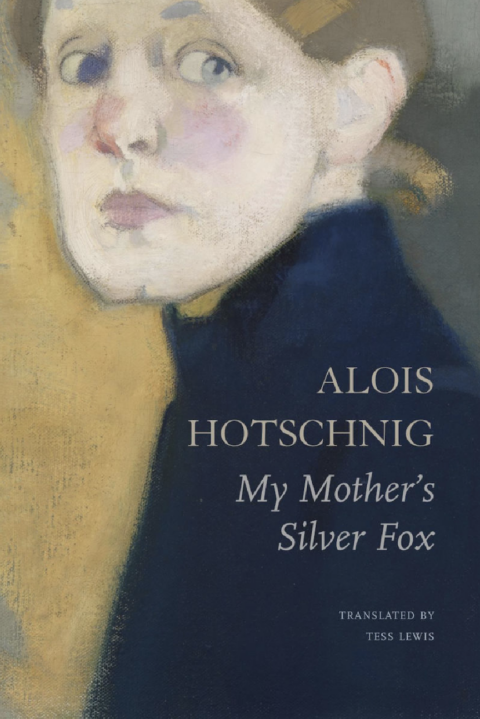 Alois Hotschnig’s novel, My Mother’s Silver Fox, portrays a turbulent state of mind that seeks to understand itself through flickerings of family history, childhood memories, and experiences in early manhood. This story is told by Heinz Hörvald, born in 1942 in Kirkenes, Norway to a local woman named Gerd and an Austrian soldier during the Nazi incursion. Repudiated by her family, Gerd travels south with the man to Austria – but he and his family reject her (he soon claims that “a Russian who drowned” was the actual father, and Gerd herself sometimes suggests that Heinz isn’t her child). She places the infant in foster care as part of the Nazi Lebensborn program (his blood was deemed “pure”). At the age of 4, Heinz and his mother are reunited in 1946 and settle in Lustenau near the Swiss border after being sheltered by a Jewish couple, survivors who later commit suicide. At any mention of Heinz’s father, Gerd falls into a seizure. Heinz’s stepfather physically abuses him. As for Gerd’s fits: “With each attack, a bit of her was lost, and eventually she went insane. She too, suddenly appeared next to me with a knife and started chasing me. She chased my friends with one, too. She would change, from one moment to the next …”
Here we find what are usually the ingredients for a trauma memoir, narrowing one’s attention to the sufferer’s unabating hurt, and castigating everything that permits such injury. But Hotschnig‘s Heinz is neither a proselytizer nor an object of pity. This is where Tess Lewis’ facility as a translator allows her to discern the sound of “a way of thought” that doesn’t comport with pain-and-epiphany narratives. Beginning with his earliest fiction in the 1990s, Hotschnig sustained his preceding generation’s focus on “the burdens of history and guilt, the fluid realm between lucidity and insanity, the dark comedy and pathos in human relations,” as Lewis wrote about him in a 2008 essay. But Hotschnig did not, she continued, “turn the act of close observation into metaphysical study” (like Peter Handke) nor “turn provincial defects and linguistic ingenuity into politically and ideologically pointed social critique” (as did Elfriede Jelinik).
 Born in Carinthia, Austria in 1959, Hotschnig based this novel on the life of the actor Heinz Fitz who was born in 1942. The two of them met in the late 20-teens to discuss the past, meaning Fitz had long considered his life story. (The original edition was published in 2021.) Entering Heinz Hörvald’s mentality is largely a matter of registering his tone when he speaks of his mother – since this troubled relationship leads directly not only to his acting career, but to the unique aspects of his psyche that underlie his life story as rendered by Hotschnig. In Kirkenes, Gerd had acted on the stage of her uncle’s amateur theatre; in Lustenau, young Heinz discovers a copy of Peer Gynt in his mother’s suitcase:
“One day, I put it in her lap and asked her to read from it, out loud, for me. Which she did. I didn’t understand a single word and yet I understood everything … whether I’m hers or not, what I do owe her is the fact that I am the way I am. She read out loud to me and by doing that, she took me away from that place into a world that hadn’t existed before, not for me. In her room, on her bed, with this book in her lap, through her acting, she brought me into this world a second time. My second birth, and this time she definitely was the mother and I was the right one.”
Frightened and fascinated by his mother’s seizures, Heinz acts out her “journeys” – “I wanted to understand and I wanted to feel the strength she had in those moments when she was unconscious.” We hear about his early experiences on stage: “I learnt to be different, to leave myself behind and yet to stay with myself and in this way to ultimately become myself.” Isn’t he acting for us now, as he tells this story? In performing the shape of his life, in projecting its sound, Heinz wants us to hear its necessary self-invention, comprising the provisional, that is, the improvised.
At age 16, Heinz sees his father, named Reinhard, in the man’s butcher shop in Hohenes. Forty-four years will pass before Heinz sees him again. In time, some of Gerd’s Norwegian family reconnect with her. Everything occurs within the atmosphere of post-war shock. As a boy, Heinz wanders through the woods at Alter Rhein, close to the Swiss border, where fleeing Jews had been gunned down. All of this is told in a recursive manner, which erodes linear time to create the dual effects of allegiance to and freedom from the past. There is both wariness of and engagement with others – and we his audience are the others whom Heinz charms, at arm’s length, through performance.
[Published by Seagull Books on November 4, 2025, 144 pages, $25.00 hardcover]
◆ ◆ ◆
on Exercises 1950-1960, poems by Yannis Ritsos, translated from the Greek by Spring Ulmer
 Collected in his book Parentheses, 1946-47, “The Meaning of Simplicity” was written by Yannis Ritsos after the withdrawal of Axis forces from Greece in 1944 which led to the Greek Civil War. He had been fighting the Axis forces alongside members of EAM-ELAS, the coalition of democratic and communist National Liberation Front guerrilla squads. From 1943 to 1945, they battled the Greek government’s army. On January 5, 1945, the EAM-ELAS leadership ordered its forces to withdraw from Athens and regroup in northern Greece, and Ritsos was sent with fellow actors and writers to Kozani, the capital of Greece’s Macedonian region where he helped to establish the Popular Theatre of Macedonia. The civil war ended with a declaration of victory by the government, and Ritsos returned to Athens. Then in July 1948, he was arrested and taken to the Kontopouli prison camp on the island of Lemnos. I’m guessing that “The Meaning of Simplicity” was written during his hiatus from open conflict in Athens.
The Meaning of Simplicity
I hide behind simple things so you’ll find me;
if you don’t find me, you’ll find the things,
you’ll touch what my hand has touched,
our hand-prints will merge.
The August moon glitters in the kitchen
like a tin-plated pot (it gets that way because of what I’m saying to you),
it lights up the empty house and the house’s kneeling silence –
always the silence remains kneeling.
Every word is a doorway
to a meeting, one often cancelled,
and that’s when a word is true: when it insists on the meeting.
In this translation by Edmund Keeley we find Ritsos’ meshing of the personal and political – though each gives way to a third thing, the urgency for connection. Ritsos’ preference for “simple things” is persistent in his work; if we don’t find him there, it is not because he has withdrawn. Ritsos is often described as a poet who inspires us to firm up our resolve for what lies ahead, but he strikes me more as someone who has emerged intact from adversity and now wants to address the moment – of his writing and our reading. He had experienced grief and fear as a child. Born on May 1, 1909 in Monemvasia, Ritsos at age 12 watched his older brother die from tuberculosis, and then his mother succumbed to the disease. From 1926 to 1930, Ritsos contracted and slowly recovered from TB. His father, a gambling addict who was later institutionalized, as was Ritsos’ sister, lost his acreage during earlier radical land reforms and the family struggled.
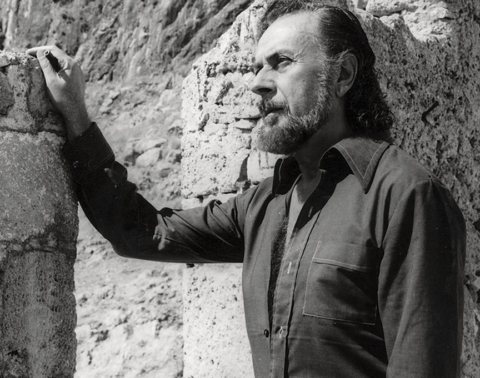 Ritsos was released from detention in 1952. Rae Dalven, another essential translator, said Ritsos “enjoyed physical, mental, and spiritual comfort for the first time in his life” over the next 15 years. He married Falitsa Georgiadi, a doctor, in 1954 and the next year their child was born. This is the period of Exercises 1950-1960, translated with an ear attuned to Ritsos’ poise by Spring Ulmer. Meeting Ritsos in 1966, Paul Merchant, who translated his Monochords, was told, “My poetry does not adopt poses. I don’t achieve effects through irony or sarcasm, but try for a neutral tone. If you are translating these poems, you will need the most up-to-date lexicon, the most demotic. Translate thew words exactly as you see them.”
When in “Not Political,” he writes that a certain “he” said, “you, Revolution, widen our avenues / for human encounter,” it is as if a mutual drawing of attention, and not some end-goal (forever elusive?), is the main reward. The poem ends:
If we’ve won nothing else – he said – we’ve learned at least
that we’ll meet again tomorrow. We teach this,
we preach this by way of not preaching at all,
because whoever says he loves what he loves doesn’t preach,
he only says what he can’t help but say.
It seems essential to Ritsos to clarify his approach to exhortation, and also to implant the notion that a politically committed writer “can’t help” but cherish the simple things that are endangered by the violence of regimes. Ulmer gets it right, I think, when she says, “What shimmers throughout these micro-narratives (and they are little parables, little lessons or exercises) is simply life in the wake.” The reason for the conflicts he witnessed is seemingly inexplicable; there is little expression of an us-vs-them mentality. Ritsos’ testimony is not just about the shedding of blood; he also testifies to behaviors that lie beyond our powers of explanation, even as we (or some of us) deplore those behaviors.
Toward the end of these years of relative freedom, he wrote the semi-surreal “And Still Here,” ever prescient about pending turmoil while ever attentive to the moment at hand, shadowed by past struggles and handled with a “strict gentleness”:
And Still Here
At the end of the day there was nothing left,
— no word, leaf, image, person –
Just a heavy emptiness, he touched it with his hands
For so long he stopped for a second to shift its weight
To a more comfortable spot in his arms.
And there was a strict gentleness to the spring evening,
you could even say a tenderness like the smile
of an unshaven warrior who puts an infant to sleep –
an infant found in an abandoned house
in a foreign, plundered state.
In April 1967, on the very day a right-wing military junta usurped control of the government, Ritsos was arrested again in Athens and taken to the secluded island of Yiaros. He was released four years later.
[Published by Ugly Duckling Presse on May 10, 2025, 202 pages, $20.00 paperback]
◆ ◆ ◆
on Winter Light: On Late Life’s Radiance & Winter Dreams: A Historical Guide to Old Age by Barbara H. Rosenwein
“Old age takes everyone by surprise, and no one really comes to terms with it,” wrote Jill Lepore in “Twilight” for the New Yorker in 2011. At the time, as she noted, “the fastest growing segment of the population is people over eighty-five,” a result of falling birth rates, and the median age “is thirty-six and rising.” The world’s oldest state leader is Paul Biya, president of Cameroon, soon to celebrate his 93rdbirthday. Fifth oldest is Ali Khamenei of Iran (86); tenth oldest at age 84 is Sergio Mattarella, president of Italy. Donald Trump will turn 80 in June. Like King Lear, these men continue to wear their crowns and retain power even while younger generations deserve more responsibility — though unfortunately, unlike Lear, dangerous elders like Trump and the Ayatollah don’t head off into the wilderness. They don’t come to terms. But there is plenty of evidence to suggest that for many of us, advancing age inspires not only reconciliation with its conditions and capabilities, but opens the way to innovation.
 In his final article for The Observer, “The Rage of the Old,” published in 2004 a year after his death, Edward Said turned his attention to the “late style” of certain artists whose work refutes the notion that old age entails a mellowing of approach, “the accepted notion that age confers a spirit of reconciliation and serenity on late works.” The prerogative of late style, he wrote, is “the power exactly to render disenchantment and pleasure without resolving the contradiction between them.” In Winter Light: On Late Life’s Radiance, Douglas Penick complements Said’s perspective and “explores inner discoveries that emerge in old age and decline” as depicted in the work of several artists. Both Said and Penick reflect on Beethoven’s later work; for Penick, Beethoven’s “music drew on further reserves if inwardness, entering ever deeper currents of grief, frustration, longing, and resolution.” Penick has much more to say than Said about the experiences of aging themselves.
“Now I am 79 years old,” Penick writes, “In the unfamiliar spaces revealed by different kinds of loss, chance patterns emerge and resonate momentarily.” He quotes David Hockney who, looking at Constable’s late landscapes, says “look how free and fresh … Old, you’re freer. You don’t care so much what other people think.” Penick’s situation informs and is affected by the works he discusses, since he finds that “perceptual shifts change the world which we, the old, are seeing, hearing, smelling and tasting. We are not living in the same perceptual world as we once did.” And later, while looking at Titian, “The world is not holding on to us, but is becoming less accessible, more difficult, more demanding. We can no longer impose ourselves. But it is also more subtly communicative as we, the viewers, listeners, knowers, are fading from its grasp.”
Penick’s five essays pivot between sketches of artists in their later years and his ongoing observations of life as a senior. “We are waiting,” he writes. “Sometimes we are afraid, more often we are simply not paying attention. But as we move further into old age, a certain objectless clarity opens out within and around us. It is expansive, direct, present. It feels like we are returning to somewhere we left long ago.” He may begin or end one of his biographical sketches with such a statement – a generous if bold assertion that such experience pertains to, and is felt by, all of us. On the other hand, he may be asking us, on the slant, to pay attention to our own perceptions, pleasures and pains. Perspectives on the artistic or literary works in the sketches are the results of his own looking or reading.
For instance, there is Jan Rhys, who was “uniquely placed to know the polluted and cruel shallows which characterized the moral life of twentieth-century England,” a “difficult person” who lived a chaotic life and “couldn’t bear getting old and losing her looks.” She published four popular, disquieting novels before World War II and then vanished for the next 16 years. Having discovered Jane Eyre, she was inspired to compose Wide Sargasso Sea, begun in her fifties and finished when she was 76. Rhys’ surrender to this new impulse leads Penick to say, “When we were younger, we busily engaged the world in ways we thought to be to our advantage; now this is no longer quite possible … We are seeing something new. It seems that something is whispering to us.” In the end, one must speculate about Rhys’ internal workings as her greatest novel coalesced over those many years. But the wonderment is a basic feature of old age Penick-style.
Penick mentions his early years living in New York City when he met many creative notables and worked on Emilio Ambasz’ Universitas Project at MOMA. He then withdrew to study, practice and later teach Buddhism for 20 years. He collaborated with Peter Lieberson on musical pieces reflecting Central Asian epic traditions, wrote theater pieces centering on The Tibetan Book of the Dead for the National Film Board of Canada, wrote two novels, and translated work by Pascal Quignard. So now, when he considers the later years of Robert Walser, for instance, who was committed by his sister to a Swiss mental institution at age 51, he sees a man who …
“… as if he were a spy sending messages to an alien power, [he] wrote tiny essays and stories in minute, self-invented coded script on the back of random bits of paper, which he carefully hid away … What was he doing? In this writing, Walser seems to have found a way of simultaneously unifying, concealing, exploring, and preserving the voices that surfaced in his awareness … The journey in words led him further and further away from the ordinary world but allowed him to remain, even now, in a realm where we can meet him still.”
The long periods of aloneness and radical departures experienced by Rhys and Walser may not typify the later years of most artists. But Penick is telling us that such experimental freedoms are available. “There is nothing to do now, but wait for a deeper and unknown pattern to become visible,” he counsels, “an order so immense and devoid of boundaries that it cannot be distinguished from space itself, a self-sentience without object or subject, never before imagined. The world is moving away.” Such arrivals of new patterns and sounds presage unforeseen artistic departures, no longer a moving ahead but a moving out.
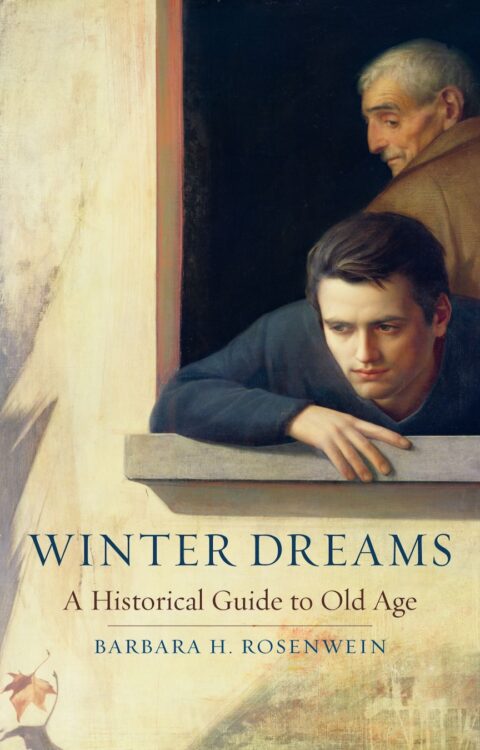 Barbara Rosenwein, a self-dubbed “historian of emotions,” says that her “quest” in writing Winter Dreams: A Historical Guide to Old Age, is “to understand what our emotional responses to old age might be in the present given our cultural and intellectual legacies. I am interested in two issues: how people in the past felt about the old, and how the old themselves felt about being old.” But the emphasis here is clearly on the history, beginning with old age as regarded in Greek and Roman oratory, literature, habits, and laws. In Sparta, she finds that the elderly exercised a “sense of entitlement,” while in Athens the elderly faced ridicule and were often depicted as misers and contended with “youthful mistrust.” In Rome, Cicero’s Cato the Elder appeared as “an extraordinarily upbeat account of old age,” depicting Cato at 84 in the year 150 BCE, who claims that a vibrant intellectual and political life is available to all senior, and if they become senile it’s their fault for not exercising their powers. Earlier in China, Confucius made xiao, or deep respect for elders, a priority in his teachings: “ageing was empowering., the culmination of ethical training.”
By mid-book, Rosenwein is looking into the spread of Christianity and Island in which the elderly poor “were incorporated into a circle of charity that benefited the giver as well as the recipient.” But regardless of the era under consideration, “a constant theme is how horrible and ugly and miserable it is to be old. It was already articulated in Greece, as when Homer’s Laertes needed the help of Athena to be vigorous, and Sappho complained of her creaking knees. The characters in Rosenwein’s text rarely have “winter dreams” of stimulating or easeful ageing. Furthermore, she writes with a sense that “valuing the elderly is a blip in the otherwise steady deterioration in their status in the West.” So it comes as a relief to read Rosenwein’s take on Petrarch’s Seniles, begun when the poet was 57 in 1361 just as a new wave of plague arose: “Petrarch understands very well why he continues to toil and exult: his writings are his ‘little children,’ then progeny that will keep him alive and speak to posterity.”
In neither book do we find a general belief that old age confers wisdom on their progeny or times. In Penick’s Winter Light, the ageing artist’s wisdom is the willingness and instinct to incorporate speculation and the expansion of space (the concerns of daily life having dropped away) into a mode of work. In Rosenwein’s Winter Dreams, there is no coherent pattern for such discernment. History leads directly to Vladmir Putin, 73 years old and numb to his own condition.
[Winter Light, published by Punctum Books on February 27, 2025, 190 pages, $23.00 paperback; Winter Dreams, published by Reaktion Books on September 9, 2025, 260 pages, $30.00 hardcover]
To read Douglas Penick’s “Carried Onward to Our End,” click here.
◆ ◆ ◆
on Tangerinn, a novel by Emanuela Anechoum, translated from the Italian by Lucy Rand
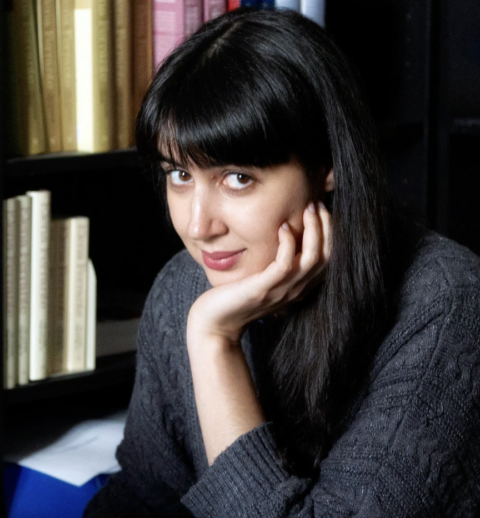
Emanuela Anechoum was born in 1991 in Reggio Calabria, a city on the southernmost tip of Italy that faces west across the Strait of Messina to Sicily, just five kilometers away. Like Mina, the 26-year old narrator of Tangerinn, Anechoum went to London to find a job (in publishing), while Mina worked as an executive’s aide at the headquarters of a fast-food chain “famous for their avocado toast.” She rents a room in Liz’s two-room flat (“she wanted to be seen with me in bars in Soho” and “sometimes, I peed in her conditioner bottle”). After six years of London life, and upon the death of her father, Mina returns to her family: “We lived in a house by the sea, in a provincial mafia-run town that had once been called one of the best villages in Italy.” This, her mother’s hometown, is a destination for migrants; her father had emigrated there from Casablanca, and Mina inherited his looks.
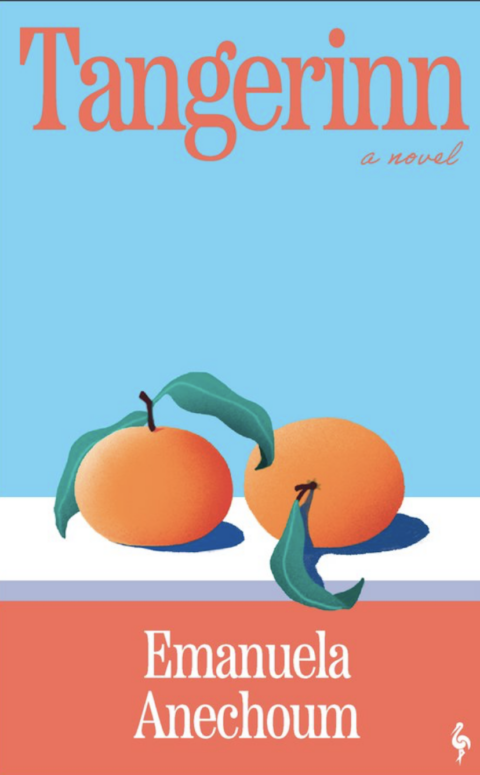 Mina’s narrative toggles between memories of her youth and her father’s stories, reflections on life in London, and her renewed life in Calabria. Her assessments are often harsh – she portrays her London friends satirically, she resents her Italian mother’s detached and disturbed behavior, and she critiques her town’s attitude toward migrants. And now her father, to whom all of this seems to be addressed, has died. Anechoum is a shrewd writer; she inspires our empathy for Mina and exploits our professed attitudes toward the familial and societal habits that irritate her, but she won’t let us bask in self-satisfaction. The core dynamic of Tangerinn is the unstated question that triggers Mina’s anxious telling: How should I live my life?
I was never quite certain about the present moment of telling – how much time had elapsed between what is told on the final page and Mina’s status, but I assume not much. “Tangerinn” is the name of the local bar her father ran, now in the hands of her affectionate older sister Aisha, a practicing Muslim. Returning home, Mina revisits her father’s history, since just like Mina, he had aspired to achieve something of his own in the world, as an athlete in Europe. His reasons for not exploiting the opportunity presented, and for sustaining an unsettling marriage with Berta, are both unclear — and that’s the point: such understandings are often slippery. Mina also grapples with her feelings of inferiority among the London women, and sense of superiority on returning home.
Tangerinn is thus a search for something, a halting probe made concrete by Anechoum’s fluid scene-generation and faultless ear for both conversation and Mina’s measured but worried take on her world. Her parents have everything to do with her misgivings; here, she addresses her father, whose ashes are kept in a jar under her bed:
“Just naming you in front of her made Berta explode with a violence I’d never seen before. She broke chairs and glasses and screamed at us that we were shits, useless creatures she wishes she’d never given birth to. Nothing new, really, but what worried us was the weakness of her voice, how she tired more easily day by day, in a hunger strike that was the slowest death of all. Part of me wanted her to get stronger because if she didn’t she’d never be able to say sorry to me, and then we would never be able to make up and I would be a true orphan forever, not because you were both dead, but because you had both died without me knowing whether or not I was loved.”
This isn’t nuanced language, and unlike the Hotschnig novel, Mina’s narrative doesn’t present unique aspects of tone or motivation for the translator to work out. But Anouchem’s portrayal of Mina is replete with assertions and hesitations, insights and blockages, and she has built her novel with an ear attuned to the rhythms of youthful wonder.
 Aisha says, “Nobody taught us how to love ourselves – this is the only way I know.” Mina responds, speaking to her lost father: “Sometimes I look at beauty outside and I feel beautiful too, but only in its reflection. It’s all outside of me, and I limit myself to admiring the image I’ve created of my life, but I never know if it’s real or not., I look at it and say: it’s such a beautiful picture, and if I’m living it, it must be true, right?” Mina is introduced to a Turkish man named Nazim, a potential lover perhaps, but even here Anouchem won’t indulge a rom-com impulse; the two get along and their conversation has a provocative edge, but they are both extremely careful with their affections.
There is something transgressive about our listening. Invited to a party at Tangerinn, Mina says, “The idea that there might be some happy or joyous occasion I’d be expected to enthusiastically take part in made me feel like I was being tested; what if I wasn’t sufficiently happy? … I seemed to have discovered that I was no longer capable of pretending. Yet the prospect of accepting whatever mood I was in at any given moment and showing it to others, just as it was, felt like a luxury I couldn’t afford.” We are the “others” – and who are we?
[Published by Europa Editions on January 20, 2026, 256 pages, $19.00 softcover]