Things in Nature Merely Grow is Yiyun Li’s third book about suicide. The first, Dear Friend, From My Life I Write to You in Your Life (2017), is an essay collection largely about the novelist’s own 2012 suicide attempt. Her 2019 novel, Where Reasons End, is an imagined dialogue between her and her son Vincent, who killed himself in 2017, at 16. Nature was provoked by the suicide of her son James, who killed himself in 2024, at 19.
 None of the adjectives that immediately come to mind on the subject of suicide apply to any of the books. They are not grim or mournful. Li is not, in any overt way, traumatized. Although each book is in a way about her processing the experience, there is no trajectory toward healing or closure. Early on in Nature, she warns off any reader seeking such things from the book: “If you think suicide is too depressing a subject; if the fact that all things insoluble in life remain insoluble is too bleak for you, and if you prefer that radical acceptance remain a foreign concept to you, this is a good time for you to stop reading.”
Usually her tone in this book is not so sternly proscriptive, though she has a few choice words for the person whose sympathy note following James’ death included a solicitation to read his manuscript. The most intense emotion she communicates in the book is vexation — a recognition that she’s been shunted into an abyssal, inexplicable place, but is left with no choice but to press forward. She knows people raised eyebrows when she pursued piano lessons shortly after James’ death, but she refuses to frame that act in conventional terms of coping or suppression. She is, from her perspective, simply living. “What else can I do but to go on with the things I can do, to keep my body nourished and active and my mind occupied and sharp?” she asks.
Well? What can she do? It’s a question that she addresses in Nature not through desperation but simple logic, which is why she doesn’t engage in some of the things other writers might describe — weeping, praying. (She does garden, but not in the interest of anything like “renewal”; plants are simply a reminder of the stubborn truth of life and death.) Such things simply aren’t in her character. In Dear Friend, she wrote about how she’d been preternaturally capable of distancing herself from hard feelings. Of suicide, she wrote in that book, a “sensible goal is to avoid it.” In Nature, she describes how she bore her mother’s physical abuse as a child: “I would sit in the chair, wooden-faced and dry-eyed, knowing that other than exhausting herself, there was nothing she could do to claim victory over me.”
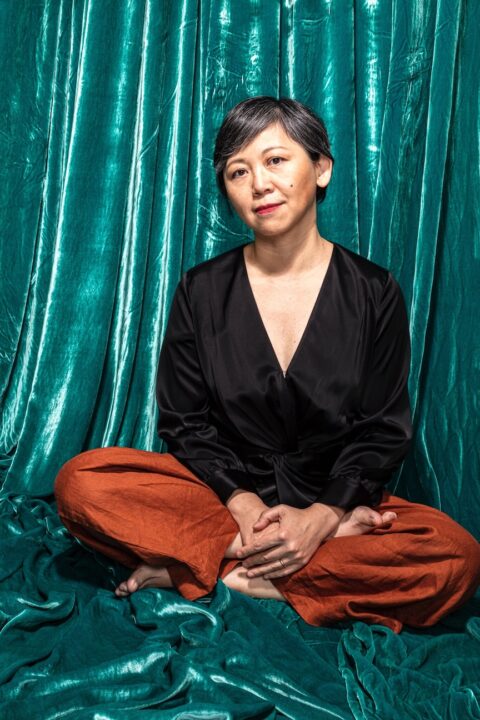 Li’s Spock-like, calm approach to life’s miseries evokes the stoics: The Roman philosopher Epitcetus once advised readers to kiss their children goodnight recognizing that they may be dead in the morning. But Nature isn’t in the business of offering advice to the grieving — and certainly doesn’t indulge the debate-me-bro macho brand of Stoicism that’s popular today. Yet none of this should suggest that Li is unfeeling in her thoughts about death; her idea of radical acceptance requires some kind of engagement with the tragedy. But what?
Plainly, writing a book is part of her chosen process for that. And a book can do double duty. It can be an empathy engine, as she has demonstrated; though all three of her books about suicide are defined by Li’s unusual calm, their characters are distinct. Dear Friend, informed by her engagement with books, is thick with literary references. (The title comes from a line by Katherine Mansfield.) Where Reasons End is shaped by her emotional discussions with Vincent; she describes it as fiction only because any conversation with the dead must be, but the reality of her conversations were deeply felt. Nature, her James book, is a more logical, philosophical affair.
In that regard, Nature offers the clearest sense of what “radical acceptance” might look like. Distance is essential, and writing is a useful distancing tactic: “Writing this book is a way to separate myself from that strange realm while simultaneously settling myself permanently into that realm.” (Call it Schrodinger’s grief.) But not all writing will do — at every turn she’s suspicious of anything that might give her experience a narrative arc. “ I have an intrinsic distrust of narratives, which are among the most misleading things in life,” she writes. “I have seen lives saved by narratives and lives derailed by narratives. That I’ve chosen to write narratives is an incongruity one has to acknowledge.”
So Nature, by design, isn’t a narrative; it’s a book about stasis, and living in it — “now and now and now,” as she concludes. In a passive way, the book does advocate for some of the most common healing tropes: She is plainly journaling, but not without interrogating the idea of writing. And she advocates for the importance of friendships, quoting often from their emails, largely taking comfort in the cases where they seem to have arrived at the clearest and most efficient way to characterize her loss. But even there, what she chooses to communicate isn’t warmth so much as understanding; her happiest exchanges are the ones that advocate for the need to press on. It makes for a book that’s aphoristic, but without the spirit of advice-giving that an aphorism suggests: “Our life is never going to be all right again, but we are doing all right,” she recalls explaining. Death has put her in a closed loop that’s impossible to explain and impossible to escape.
 Suicide, for Li, is a paradox. The urge to end life is deeply understandable, however sad; but the urge to live is understandable and sad, too. She wants to give her children her due: “No one commits suicide unthinkingly,” she writes. That the thoughts involved are unclear, or unkind, or hurtful, don’t matter so much to her — we humans are thinking creatures, and that’s just where our thoughts go sometimes. That’s what makes Nature so powerful and so frustrating at the same time — radical acceptance means accepting so much cruelty that we inflict on ourselves and others. She believes that compassion is meaningful — she disdained teachers’ advice to have her brilliant son James skip grades, to better to encourage him to have a more typical childhood. But compassion is not a preventive, and won’t ease the sense of loss after the loss occurs.
“If a way to the Better there be, it exacts a full look at the Worst,” Thomas Hardy once wrote. It’s a line I suspect Li would appreciate, though she might note that “better” is a vague and perhaps meaningless goal. Still, parents want something good for their children; every human in despair wants something better for themselves. Nature is written in that spirit, but also skeptical that we’ll get there, unsure of what it might get us. “There is no real salvation from one’s own life; books, however, offer the approximation of it.” Here, then, is Li accomplishing her mission — an approximation of salvation, but nothing more, because nothing more, if we’re honest with ourselves, is truly available.
[Published by Farrar, Straus & Giroux on May 20, 2025; 192 pages, $26.00 hardcover]